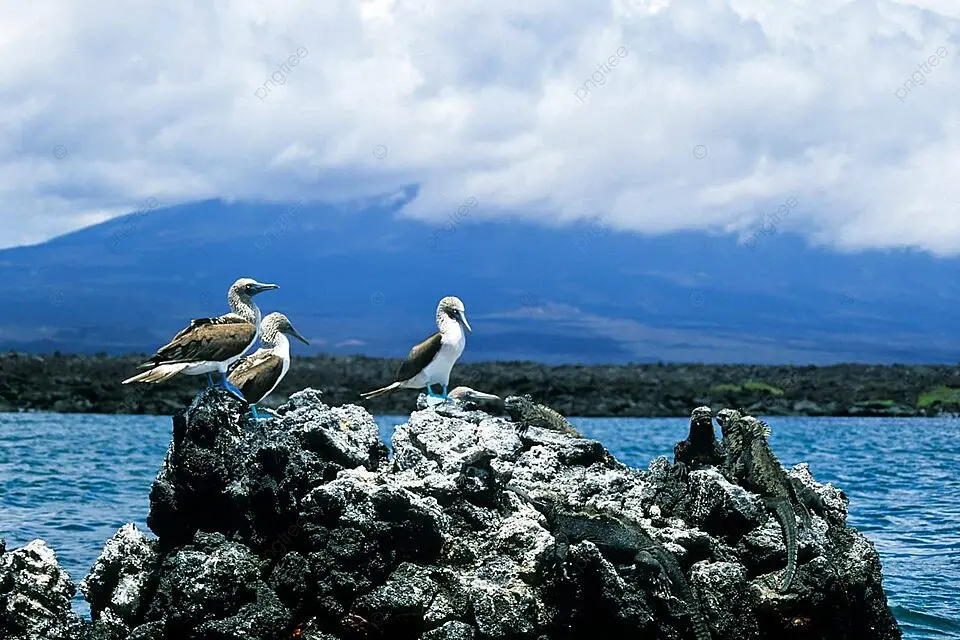
Blue-footed boobies and marine iguanas resting together on volcanic rocks with mountain backdrop | Ile Tours

ISOLATION • SCALE • EVOLUTION

Why Do Galapagos Tortoises Grow So Large?

Isolation doesn’t just separate ecosystems — it transforms them. In the Galapagos, it creates life forms that follow completely different biological rules.

Size Here Is Not Random

Giant tortoises in the Galapagos didn’t become massive by chance. Their size is the direct result of isolation, reduced predators, and long-term environmental stability.

When pressure decreases in some areas and intensifies in others, biology responds — sometimes by slowing down, and sometimes by growing larger.

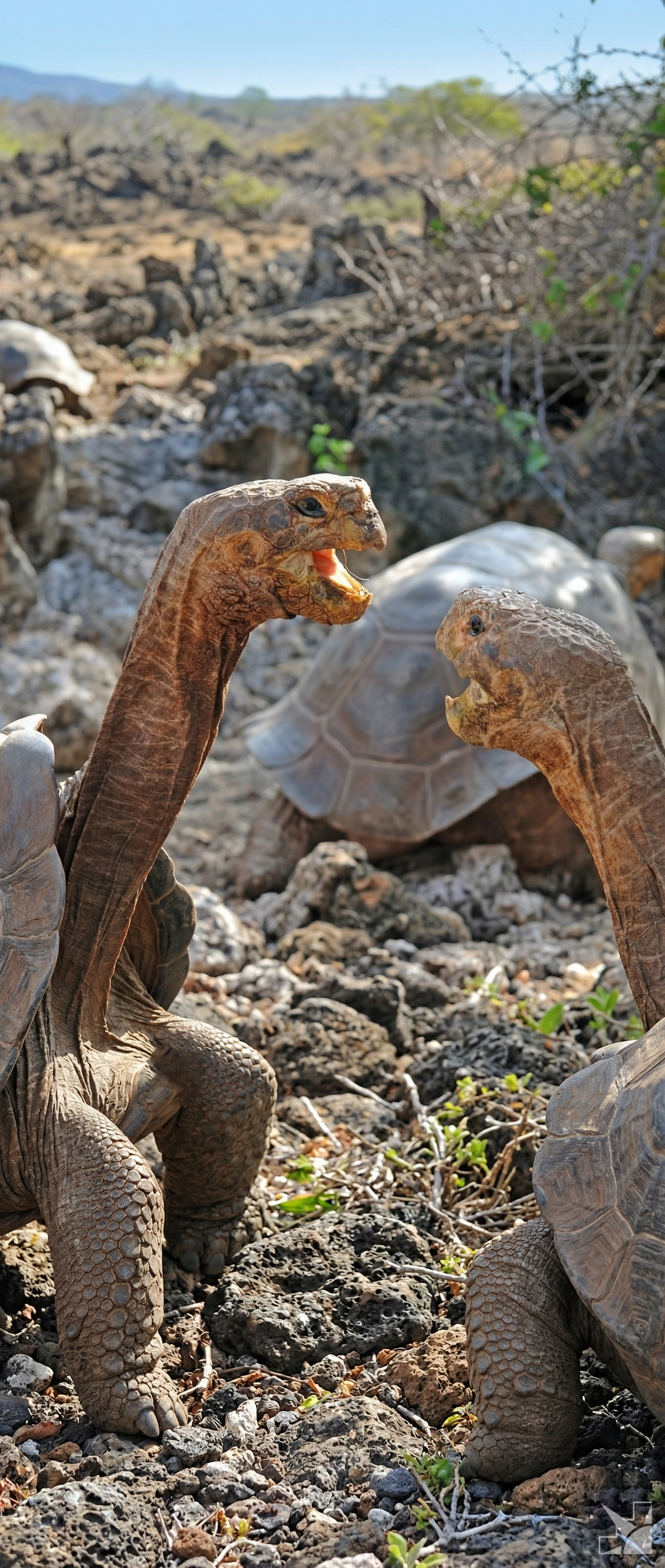
Two Galapagos tortoises facing each other in dominance display | Ile Tours

Biological Effect

Less predation allows longer lifespans and larger growth.


EXTREME ISOLATION

Darwin Island: Where Isolation Reaches Its Peak

Remote even within the Galapagos, Darwin Island represents the outer edge of the system — a place where environmental conditions are more extreme and biological patterns become even more defined.

Distance

Far from central islands, limiting species interaction.

Conditions

Strong currents and nutrient concentration shape marine life.

Outcome

More specialized and extreme biological adaptations.

TIME • SURVIVAL • SCALE

When Life Slows Down,
It Expands.

In isolated systems like the Galapagos, evolution doesn’t always accelerate. Sometimes, it slows everything down — extending lifespans and allowing organisms to grow far beyond typical limits.

Galapagos giant tortoise close-up

Extended Lifespan

With fewer predators and stable conditions, tortoises can live for over a century.

Galapagos marine ecosystem underwater

Low External Threat

Isolation removes many threats found on continents, changing survival dynamics.

Galapagos volcanic island coastline

Energy Efficiency

Slower metabolism allows organisms to conserve energy and sustain long-term growth.

Longevity Is Not an Exception Here

Some of the longest-living animals on Earth exist in environments like the Galapagos — not because they evolved to live longer, but because nothing forces them to live shorter lives.

Remove pressure, and time expands. Over generations, that changes everything — size, behavior, and survival strategy.

01

Isolation reduces threats

02

Lifespan increases

03

Growth continues longer

04

Size becomes advantage


ORIGIN • SCALE • MOVEMENT

The Galapagos Is Not Explained.
It Is Understood Through Movement.

Species didn’t appear randomly. They arrived, adapted, and survived under extreme isolation. What you see today is the result of millions of small adjustments — shaped by distance, ocean currents, and time.

Arrival

Organisms reached the islands by wind, currents, or flight — often by chance, but never in large numbers.

Adaptation

Isolation forced rapid specialization, creating species that exist nowhere else on Earth.

Survival

Only organisms perfectly aligned with the environment remained — everything else disappeared.

Galapagos marine wildlife ocean scene

Understanding the System Changes the Journey

The Galapagos is not about visiting locations — it’s about accessing the right conditions at the right time. That’s what transforms a trip into a high-value experience.

Plan My Galapagos Journey 

¿Tienes dudas? 

Chatea con nosotros