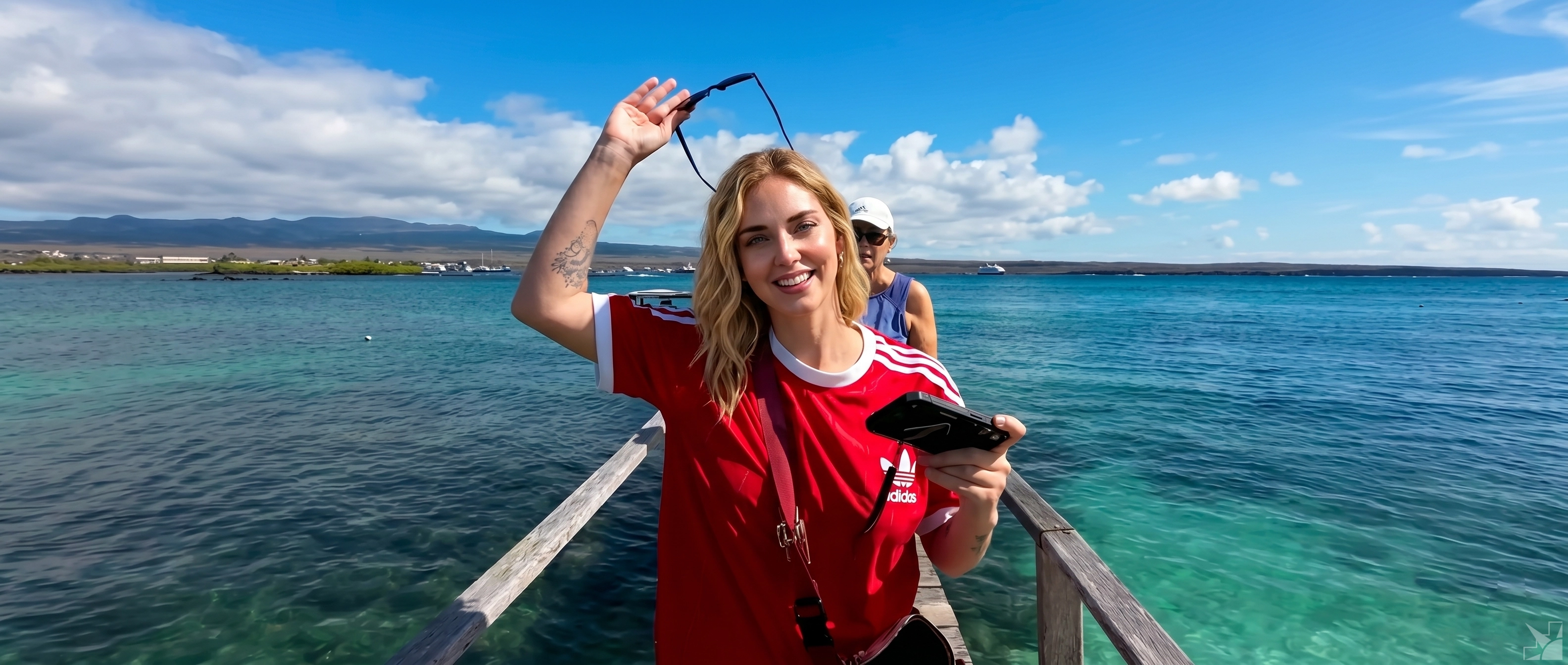
Why Galapagos Marine Iguanas Exist Nowhere Else
The Galapagos marine iguana became one of the rarest reptiles on Earth because the islands forced evolution into unusual directions. Volcanic coastlines, isolation, and Pacific ocean currents transformed an ordinary reptile into the only marine-feeding lizard in the world.
Today, marine iguanas remain one of the clearest examples of environmental adaptation visible in real ecosystems across the Galapagos archipelago.
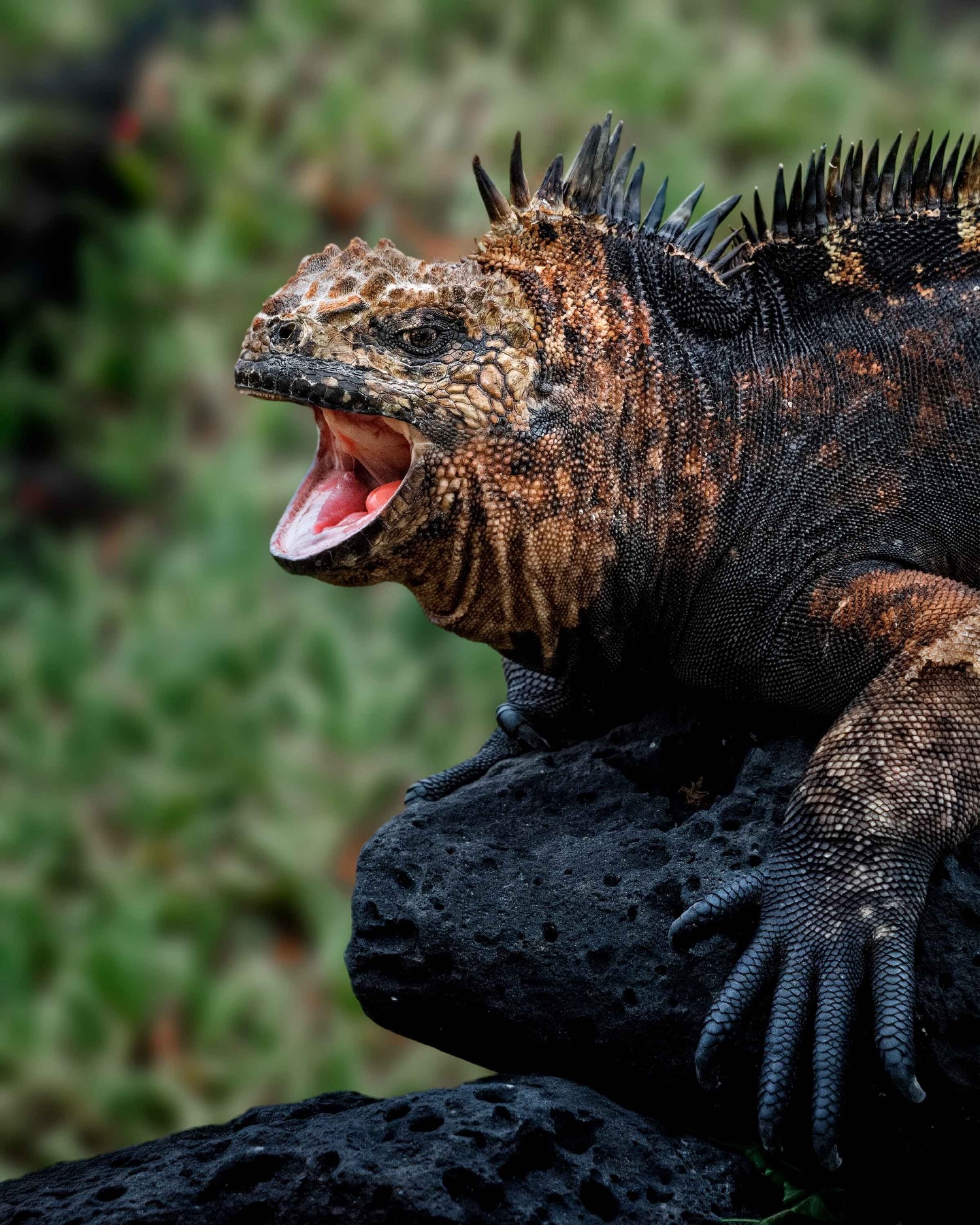
A Reptile That Learned to Feed in the Ocean
Marine iguanas adapted to harsh volcanic coastlines by feeding on underwater algae, developing flattened tails and salt-filtering systems unique among reptiles.
The Galapagos marine iguana remains the only lizard species on Earth capable of feeding in marine environments.
How Isolation Changed Reptile Evolution
The Galapagos Islands developed far from continental ecosystems, reducing competition and creating environmental conditions that reshaped species behavior over thousands of years.
Marine iguanas eventually adapted to coastal feeding systems impossible for most reptiles to survive.
Where Travelers See Adaptation in Real Time
Marine iguanas can still be observed resting on volcanic lava fields across islands such as Fernandina and Española, where wildlife behavior remains remarkably natural.
Why Marine Iguanas Changed Their Entire Biology
The Galapagos marine iguana did not simply adapt visually. Over time, isolation and volcanic coastal environments transformed feeding behavior, body structure, and even biological survival mechanisms.
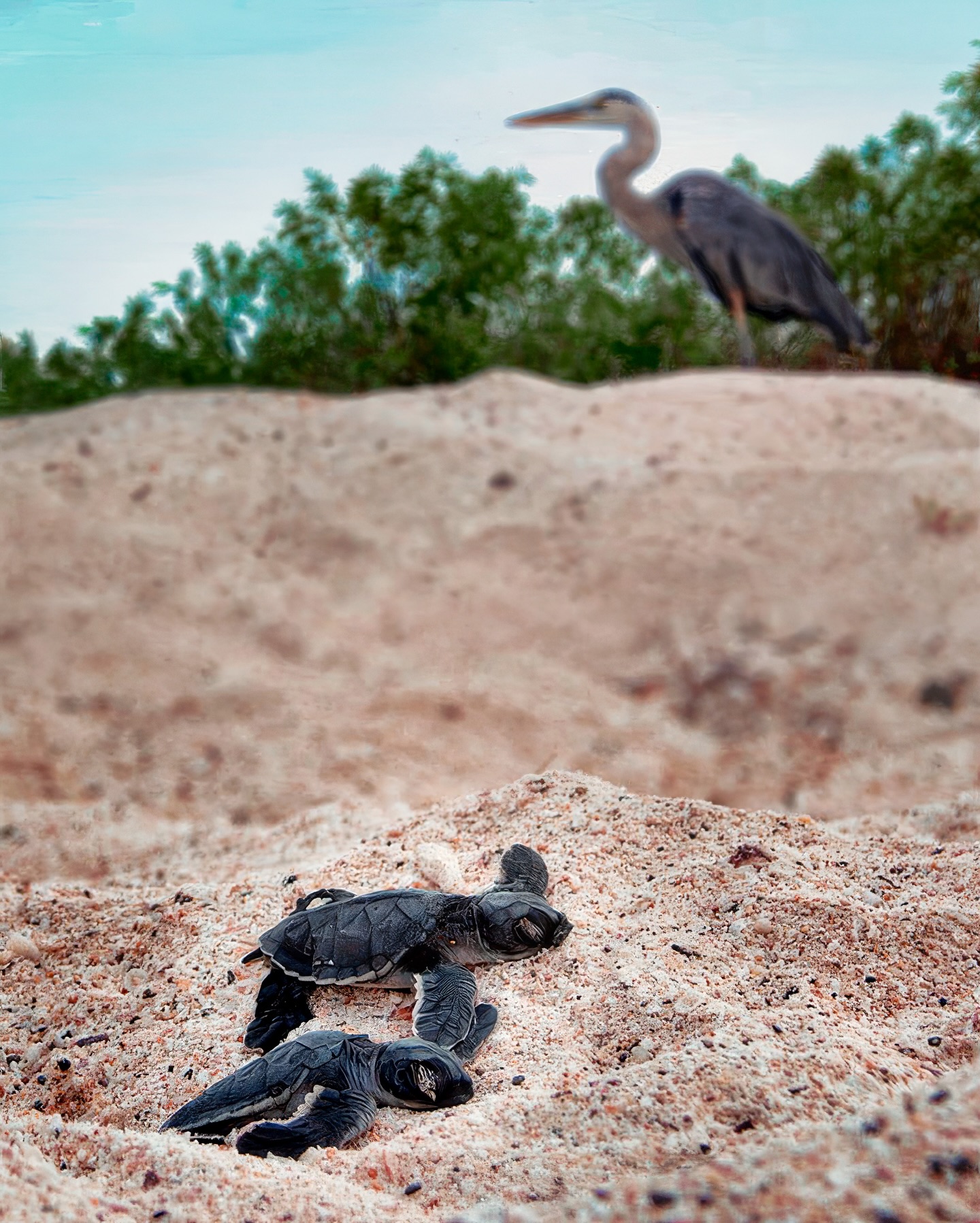
Marine iguanas dive underwater to feed on algae attached to volcanic rocks.
A Reptile That Began Using the Ocean
Most reptiles cannot survive in marine ecosystems because saltwater environments create severe biological stress. Yet Galapagos marine iguanas gradually evolved systems capable of handling those conditions.
Their flattened tails improved underwater movement while specialized glands helped remove excess salt absorbed during feeding.
These evolutionary traits transformed marine iguanas into one of the most extraordinary reptiles ever studied by scientists.
Black lava coastlines created harsh environments where only highly adapted species survived.
Marine iguanas evolved only in the Galapagos archipelago and nowhere else worldwide.
Environmental pressure gradually reshaped feeding behavior and body structure.
Why Scientists Continue Studying the Galapagos
The Galapagos remain one of the clearest environments for observing adaptation because species evolved under unusually isolated conditions.
Marine iguanas became a living example of how environmental pressure can gradually transform biological systems across generations.

Volcanic Isolation Changed Everything
Extreme environmental conditions forced species to evolve highly specialized survival systems throughout the Galapagos Islands.
Where Travelers Observe Evolution in Real Life
The Galapagos remain one of the few destinations on Earth where travelers can directly observe wildlife shaped by isolation, volcanic terrain, and oceanic pressure.
Marine iguanas resting on black lava rocks, giant tortoises crossing humid highlands, and penguins swimming near equatorial coastlines reveal ecosystems that evolved under entirely different environmental rules.
That combination of wildlife, geography, and scientific importance continues to make the Galapagos one of the most desired expedition destinations in the world.
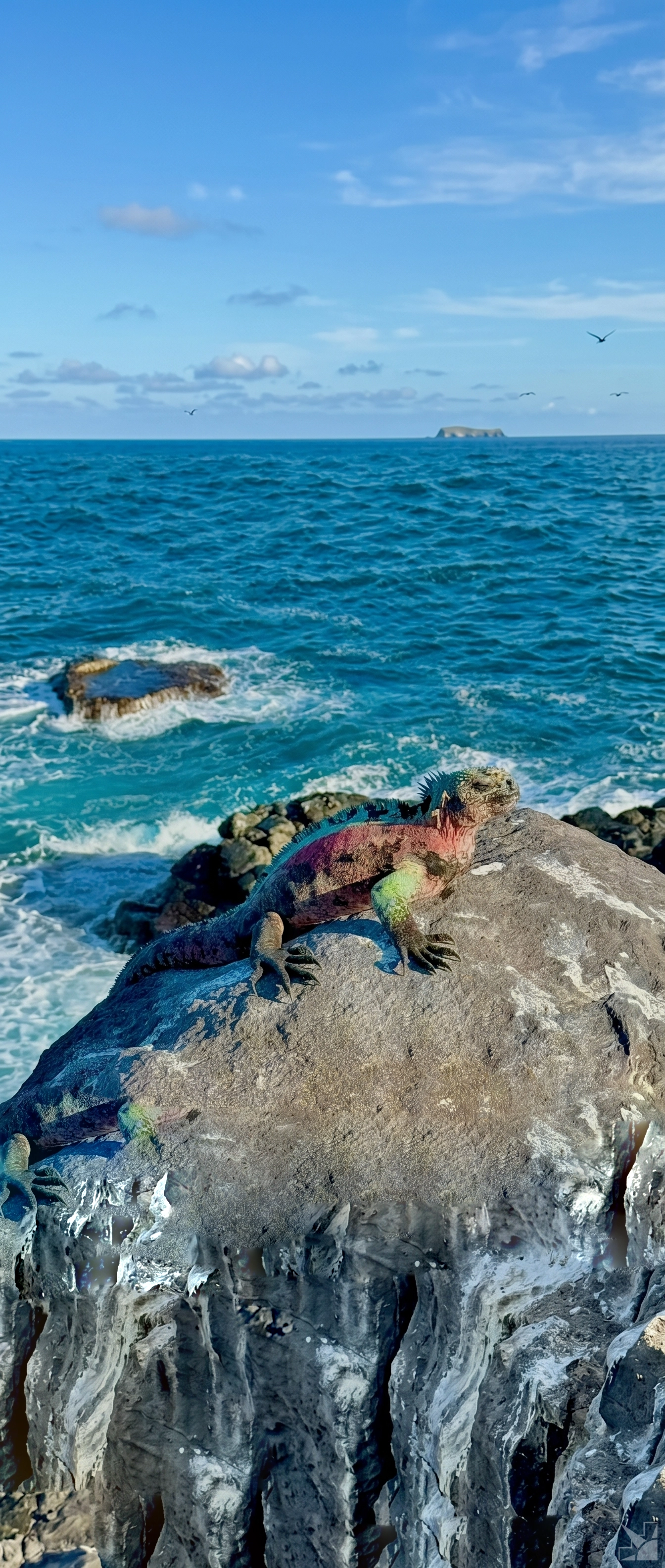
Modern Galapagos expeditions combine wildlife observation, conservation-focused travel, and luxury navigation across volcanic islands.
Galapagos & Machu Picchu
M/V Galapagos Legend
Navigate remote volcanic islands while observing endemic wildlife and marine ecosystems.
Galapagos Luxury Cruise Experience
Discover the Galapagos through premium expedition routes designed for wildlife-focused travel.