Avoid the crowded 300-passenger floating hotels. Discover why navigating the Nile on a private, luxury Dahabiya sailboat is the ultimate strategic upgrade.
"Most tourists envision an Agatha Christie novel. They book a standard 5-star cruise, only to discover they are trapped on a floating cafeteria with 250 other exhausted passengers, fighting for a spot at the buffet."
Sailing the Nile River is non-negotiable. It is the biological and historical artery of Egypt, and arriving at the temples of Edfu and Kom Ombo by water is a profound experience. However, the exact vessel you choose will dictate whether your journey is a luxurious historical immersion or an exhausting lesson in mass-market crowd control.
The internet is saturated with agencies selling "5-Star Luxury Nile Cruises" for unbelievably low prices. For the affluent 2026 traveler, these labels are highly deceptive. This intelligence briefing brutally dissects the realities of the mega-ships, the rigid schedules they enforce, and why the traditional Dahabiya sailboat has become the ultimate strategic upgrade for those who value absolute privacy and elite routing.
| I | The "Floating Hotel" Reality: Mass-Market Misery |
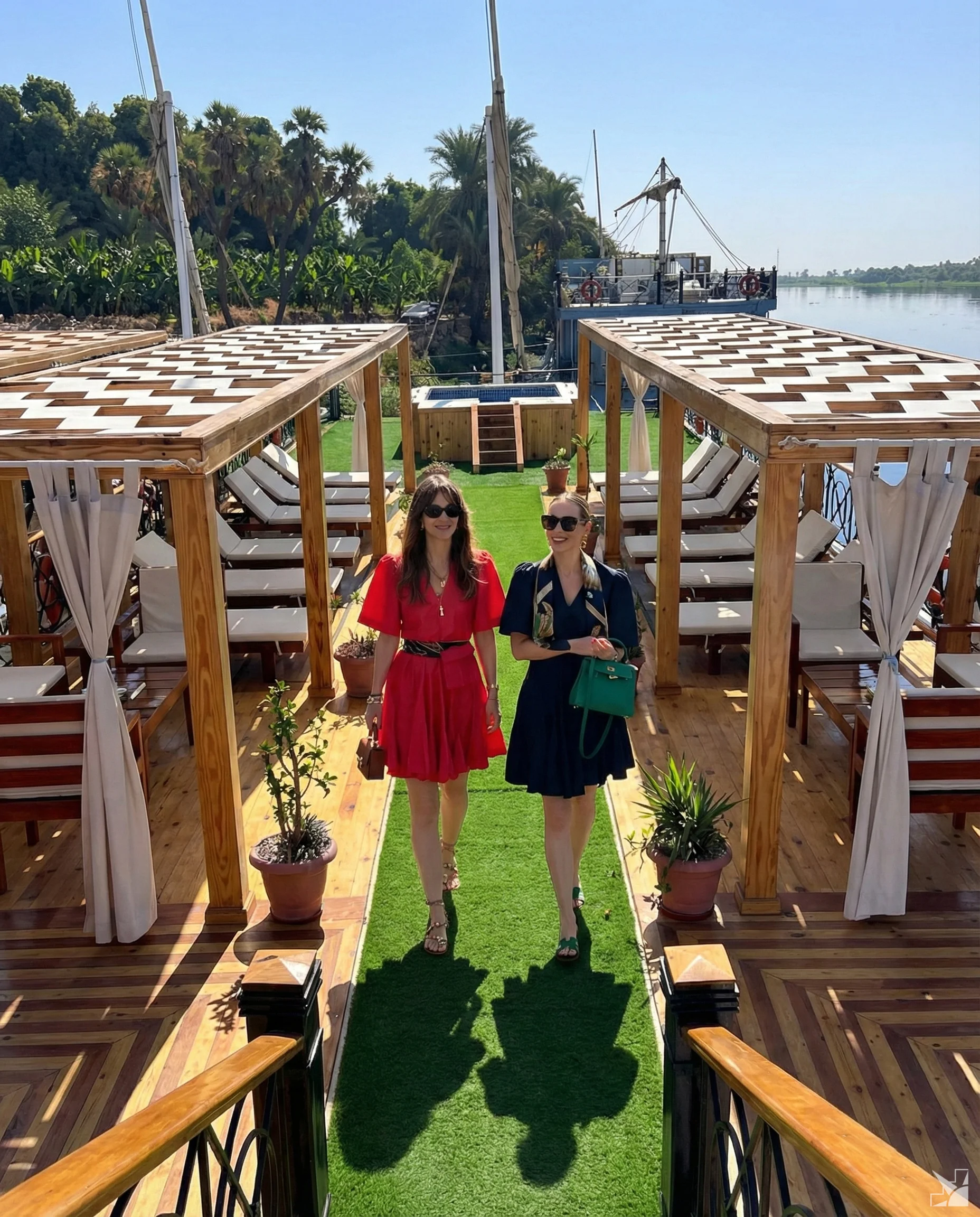
There are over 300 large, multi-deck cruise ships operating between Luxor and Aswan. They are effectively large, floating resort blocks. While their marketing brochures promise serenity, the physical and logistical reality of moving hundreds of people on a strict maritime schedule creates severe friction for the premium traveler.
The 4:00 AM Herd
Large ships cannot dock anywhere; they must fight for space at massive, concrete industrial piers. To adhere to their schedules, standard cruises will wake all 200 passengers at 4:00 AM to disembark simultaneously at the Temple of Horus, creating an instant, crushing bottleneck of tourists at the entrance gates.
The Rafting Effect
Due to the sheer volume of large ships, single-file docking is impossible. Ships tie up next to each other, often 4 to 6 deep. To reach the shore, you must physically walk through the lobbies of up to five other ships. Furthermore, if your ship is boxed in the middle, your "Nile View" window will look directly into the cabin of another vessel just three feet away.
Culinary execution drops significantly when cooking for 250 people simultaneously. You are relegated to repetitive buffet lines, assigned seating times, and the constant ambient noise of massive tour groups dining together. It is the antithesis of a private, romantic Egyptian expedition.
| II | The Dahabiya: The Ultimate Strategic Upgrade |
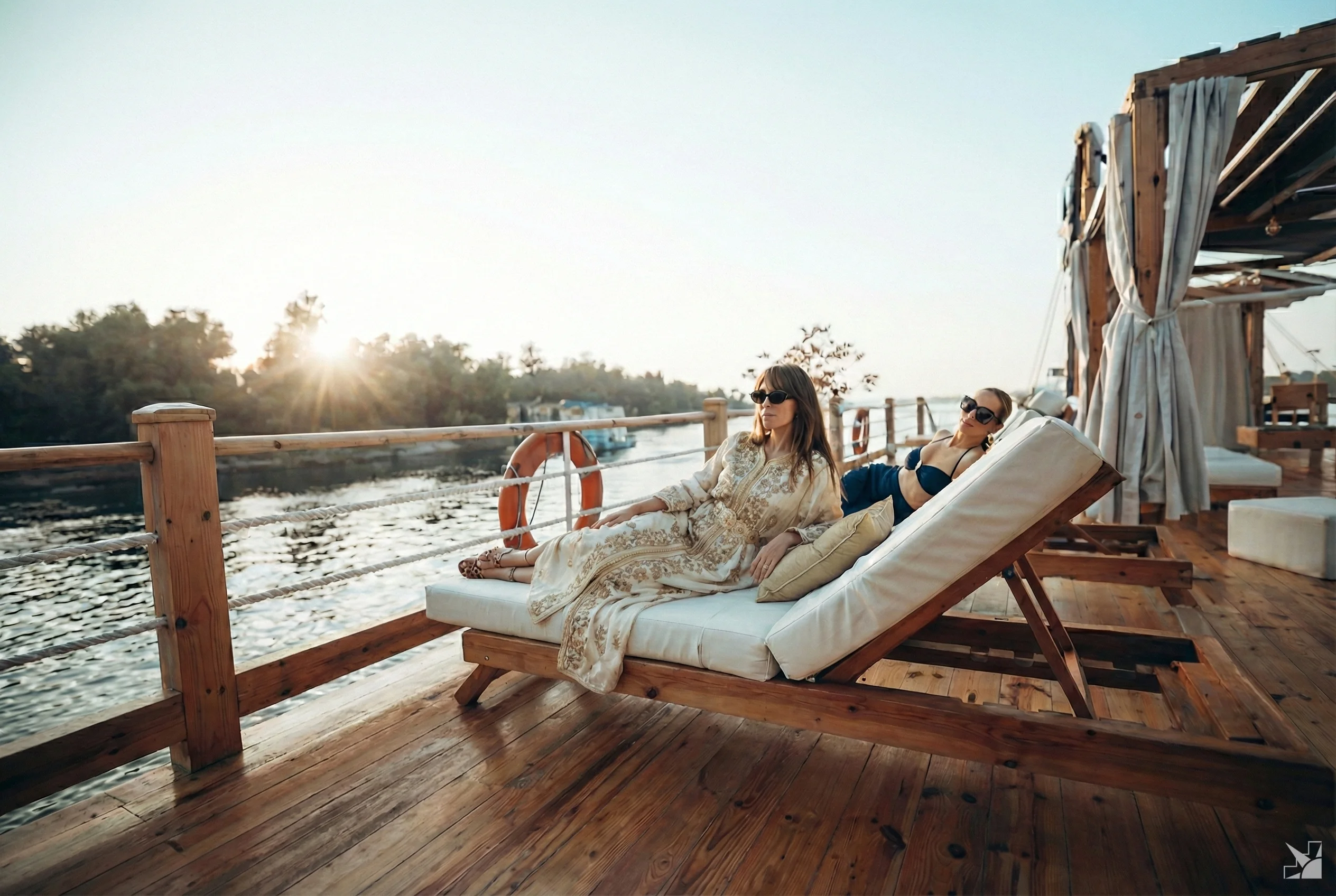
To completely insulate yourself from the mass-market friction, the only acceptable nautical deployment is the traditional Dahabiya. These are twin-masted wooden sailing yachts, historically utilized by 19th-century aristocrats and early explorers. Today, they represent the absolute pinnacle of high-margin, low-density luxury travel on the Nile.
Micro-Scale Exclusivity
A Dahabiya features a strict maximum of 8 to 12 cabins. You are sailing with an elite cadre of travelers, entirely eliminating the "herd" mentality. There are no buffets; a dedicated private chef executes gourmet, a la carte dining directly on the shaded upper deck, sourcing fresh ingredients from local markets along the river.
Tactical Docking
Because they lack the massive draft of commercial cruise ships, Dahabiyas are not forced into the chaotic concrete piers. They can literally pull up to pristine riverbanks, hidden islands, and remote villages that the mega-ships physically cannot access. You disembark onto soft sand, not industrial concrete.
Chronological Dominance
This is the ultimate weapon. Because a Dahabiya operates on its own independent timeline, your Egyptologist can orchestrate your monument visits perfectly out of sync with the 300 commercial ships. We arrive at the temples precisely when the mega-ships are docked for lunch. You experience the monuments in profound, cinematic silence.
The Acoustic Sanctuary
Standard floating hotels rely on massive, vibrating diesel engines running 24/7. A Dahabiya utilizes the wind when possible, or is gently pulled by a small, distant tugboat. There is zero engine vibration, zero exhaust fumes on your balcony, and zero PA system announcements. Only the sound of the Nile.
| III | The Southern Frontier: Navigating Lake Nasser |
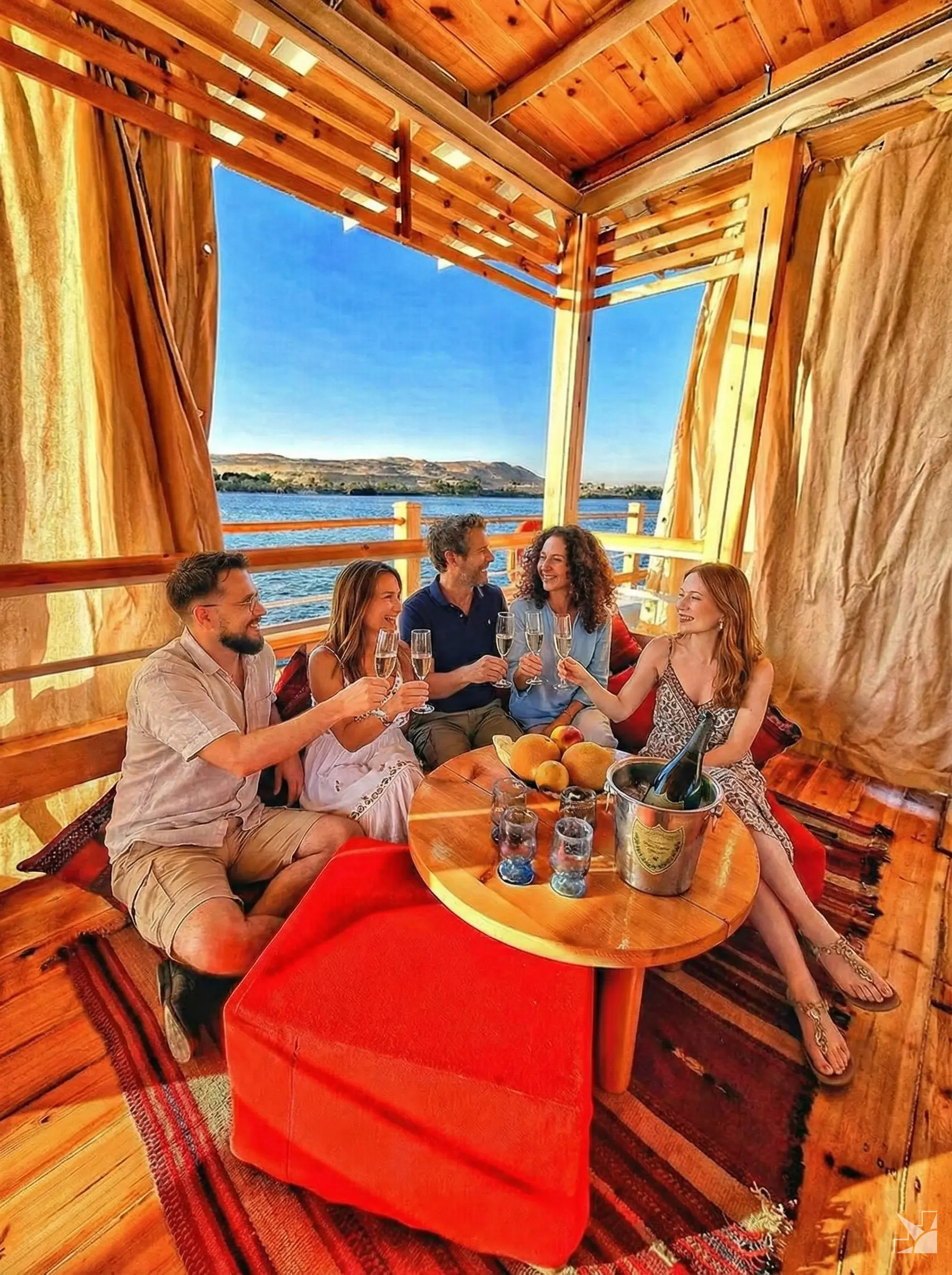
While the traditional Nile route (Luxor to Aswan) is mandatory, the true connoisseur of Egyptian antiquities looks further south. Lake Nasser, formed by the Aswan High Dam, is a massive, pristine body of water stretching toward Sudan. Navigating this logistical anomaly is the only way to arrive at the colossal temples of Abu Simbel by water.
Absolute Isolation
Unlike the crowded Luxor-Aswan corridor where 300 ships compete for space, Lake Nasser is heavily restricted. Only a handful of elite vessels are legally permitted to operate here. You will sail for days across deep, silent waters without seeing another tourist ship, arriving at magnificent relocated UNESCO monuments (like Kalabsha and Wadi el Seboua) completely alone.
Abu Simbel from the Bow
Most tourists endure a grueling 3 AM, seven-hour roundtrip bus convoy from Aswan just to spend 90 minutes at Abu Simbel before the midday heat hits. By executing a Lake Nasser deployment, you awake in your luxury cabin to witness the sunrise illuminating the massive statues of Ramses II directly from the deck of your private yacht. No convoys. No exhaustion.
Do Not Settle for the Mass Market
Booking a standard Nile Cruise guarantees that your schedule, your meals, and your monument visits are dictated by the logistical limitations of moving 250 people simultaneously. Protect your investment, your privacy, and your sanity by commanding your own timeline.