Strategic Insight 01
The Hidden Geography of Visitor Site Allocation
What most travelers never understand is that the Galapagos is not “open access.” Every landing site operates under a strict rotational system managed by the National Park.
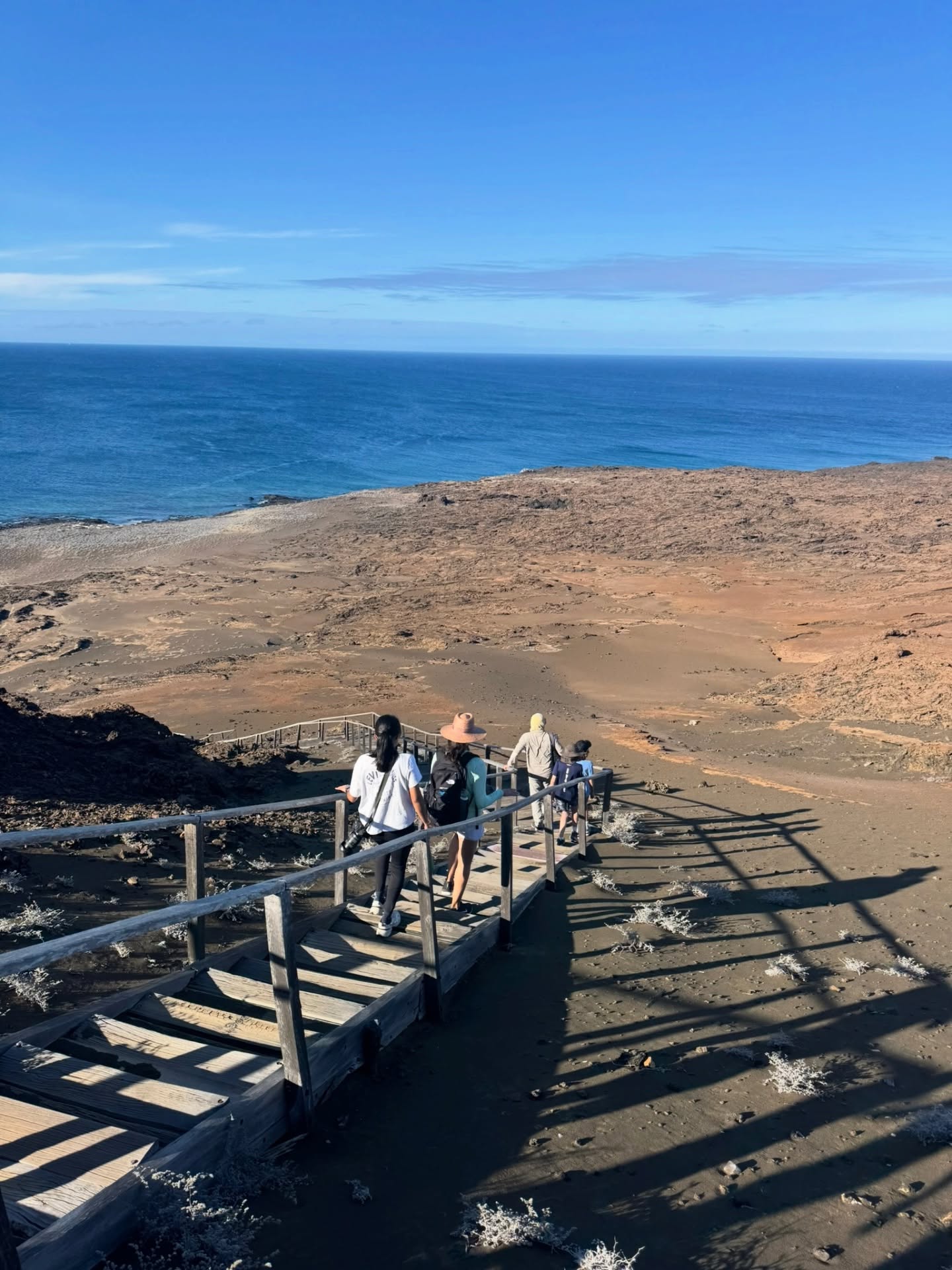
Large cruise vessels are locked into fixed itineraries assigned years in advance. This means that by 2026, the majority of travelers will be circulating through the same high-traffic nodes—Santa Cruz, North Seymour, Bartolomé.
The opportunity lies elsewhere: secondary and tertiary visitor sites that remain underutilized due to logistical complexity.
Key Reality
80% of Galapagos visitors see only 20% of the ecosystem.
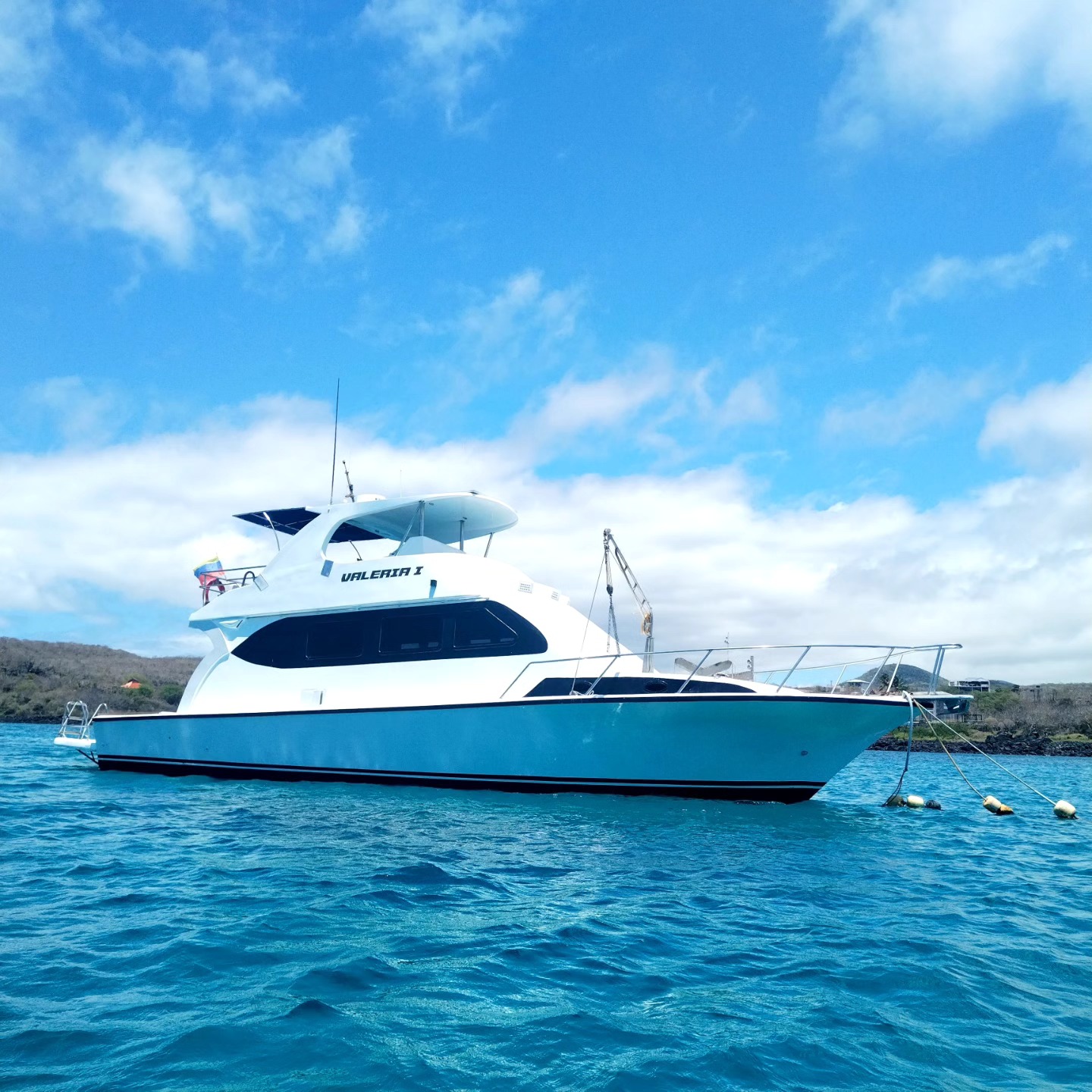
Private yachts break this limitation by accessing low-frequency rotation zones.
02 // Route Engineering
How Private Yachts Design “Invisible” Itineraries
True luxury in 2026 is not about amenities—it is about absence of competition.
Private yacht routing is engineered backwards: instead of asking “where to go,” it asks:
- Where are other vessels NOT scheduled?
- Which sites have low weekly rotation frequency?
- Where does wildlife concentration align with low human presence?
Execution Layers
Layer 1: Permit Analysis
Layer 2: Vessel Density Mapping
Layer 3: Wildlife Forecasting
Layer 4: Real-Time Adjustment
03 // Hidden Visitor Sites
The Sites Most Travelers Will Never See
Beyond the iconic landmarks lies a parallel Galapagos—one defined not by popularity, but by restricted rotational access. These are the sites that rarely appear in commercial itineraries due to permit limitations and logistical inefficiencies.
In 2026, these locations represent the true frontier of elite travel. They are not marketed. They are not crowded. And most importantly, they are not predictable.
Private yacht expeditions are often the only viable way to integrate them into a coherent маршрут without sacrificing flow or comfort.
Access Reality
Many visitor sites operate on weekly or bi-weekly landing permissions—making them statistically invisible to fixed cruise schedules.
This is where private routing creates exponential value.
Strategic Low-Density Sites for 2026
Punta Vicente Roca
Located on Isabela’s western edge, this site offers deep-water snorkeling with mola mola, penguins, and flightless cormorants—without the landing traffic of central islands.
Cerro Dragón (Off-Peak)
Often included in itineraries—but rarely optimized. Strategic timing transforms it into a near-private iguana habitat with zero overlap.
Elizabeth Bay
A mangrove labyrinth inaccessible to large vessels. Sea turtles, rays, and sharks dominate this silent ecosystem.
Punta Moreno
Volcanic terrain with brackish lagoons attracting flamingos—visited far less frequently than comparable eastern sites.
04 // Competitive Advantage
Why Traditional Cruises Cannot Compete in 2026
The structural limitation of cruise vessels is not luxury—it is rigidity.
Large ships operate under fixed permits, fixed timing, and fixed landing windows. This creates a predictable—and increasingly saturated—experience.
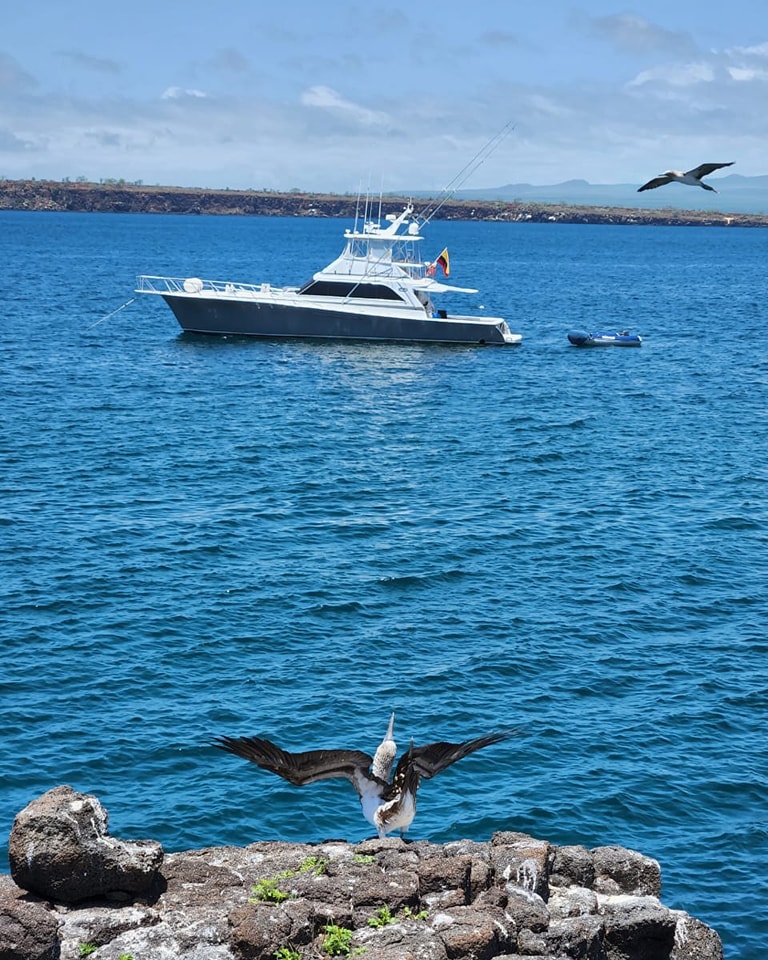
In contrast, private yachts operate as adaptive systems, capable of recalibrating routes based on real-time conditions, vessel density, and biological signals.
Cruise vs Private
Cruise Ships: Fixed routes, shared sites
Private Yachts: Dynamic routing
Cruise Ships: Peak-hour landings
Private Yachts: Off-cycle access
Cruise Ships: High density
Private Yachts: Near-zero overlap
05 // Transition to Biological Strategy
Access Alone Is Not Enough
Reaching low-density locations is only the first layer. The true advantage emerges when access is synchronized with wildlife behavior, tidal movement, and feeding cycles.
This is where most itineraries fail—and where elite expeditions dominate.
06 // Biological Positioning
Wildlife Is Not Seen — It Is Timed
The single greatest misconception in Galapagos travel is that wildlife encounters are guaranteed by location. In reality, location is only 50% of the equation.
The remaining 50% is governed by timing—micro-windows driven by tide cycles, light conditions, and feeding behavior. Missing these windows by even 30–60 minutes can mean the difference between inactivity and peak biological activity.
This is where private yacht mobility becomes an execution advantage, not just a comfort feature.
Critical Insight
A wildlife site can shift from inactive to high-energy in under 45 minutes depending on tide inversion.
Static itineraries cannot capture this. Adaptive routing can.
High-Value Wildlife Timing Windows
Marine Iguanas
Peak activity occurs during low tide when algae is exposed. Mid-day visits often miss feeding behavior entirely.
Flightless Cormorants
Hunting behavior aligns with specific swell conditions—not fixed times. Requires real-time positioning.
Galapagos Penguins
Most active in cooler currents during early morning and late afternoon feeding cycles.
Sea Lions
Social and hunting dynamics intensify at sunrise and pre-sunset periods.
07 // Experience Gap
The Difference Between Seeing and Witnessing
Most travelers leave the Galapagos having seen wildlife. Very few leave having witnessed behavior.
Seeing a marine iguana resting on volcanic rock is common. Watching a synchronized feeding group dive at the exact moment of tidal shift—that is rare.
This distinction defines the entire value gap between standard tourism and elite expedition travel.
08 // 2026 Planning Window
The Window for True Access Is Closing
As demand accelerates for 2026, low-density routes and private permits are being secured earlier than ever before. What remains available today will not exist in the same form within the next planning cycle.
The decision is no longer whether to visit the Galapagos—but how intelligently you do it.
Limited access routes. High-demand departure windows. Priority given to early planners.