Global Cities Index 2026
The Aztec Supremacy
Why Mexico City Has Officially Dethroned New York and Tokyo as the Capital of the World
Long Read • 25 Min
There is a specific vibration that occurs when a city becomes the Center of the World. It happened in Paris in the 1920s. It happened in New York in the 1980s. It happened in Berlin in the 2000s. It is a frequency composed of equal parts danger, money, art, and kinetic energy. In February 2026, that vibration has migrated South.
For decades, Mexico City (CDMX) was viewed by the global elite as a "stopover." It was a chaotic, smog-choked necessity on the way to the beaches of Tulum. That narrative is dead. Today, CDMX is the Final Destination. We are witnessing an unprecedented migration of "Cultural Capital." Michelin-star chefs are closing in Copenhagen to open in Roma Norte. Tech billionaires are buying floors in Polanco.
"While the 'First World' cities are becoming sterile museums of their former selves, Mexico City is exploding with raw, unpolished, glorious life. If you are not here, you are nowhere."
To understand the luxury of CDMX, you must first respect its scale. This is not a city; it is a dedicated organism. With over 22 million inhabitants, it is a high-altitude megalopolis built on the ruins of an empire, sitting in the crater of a volcano. It is dramatic by design.
In 2026, scale is a luxury asset. In a world of shrinking horizons, CDMX offers endlessness. But for the UHNW traveler, scale presents a challenge: Navigation. The city is a beast that will eat the unprepared. This is where Ile Tours steps in. We provide "teleportation." Our security-vetted drivers turn the Monster into a kitten.
The Trifecta of Power
The Fortress
Polanco
Old Money & Razor-Sharp Suits. The land of high walls and private security. Home to the Soumaya Museum and Pujol. If you want to shop for Cartier without a reservation, this is your sterile, safe, and impeccably manicured base.
The Laboratory
Roma Norte
The Hipster Aristocracy. The epicenter of the "Cool Capital." Art Nouveau architecture crumbling elegantly. This is where the global gastronomy is being reinvented in repurposed 1920s mansions.
The Garden
La Condesa
Art Deco Dream. The lungs of the luxury zone. Centered around Parque México, it feels like a tropical Paris. Greener, quieter, and residential. Perfect for sipping a Carajillo on a rooftop at sunset.
03. The Edible Revolution
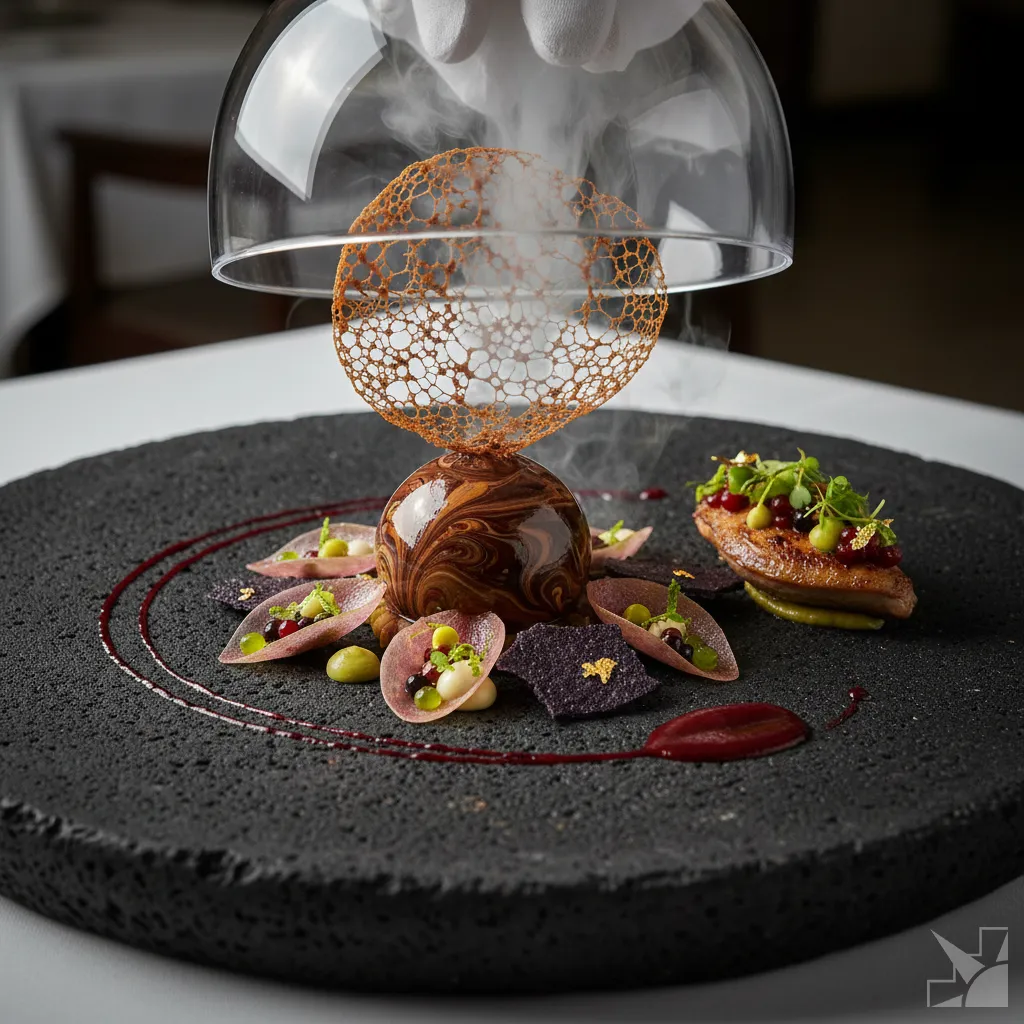
Let's address the cliché. Yes, the street tacos are the best in the world. But the private jets are landing at Toluca Airport for the New Mexican Haute Cuisine. In 2026, CDMX has arguably the most exciting fine dining scene on the planet because chefs are practicing "Archeological Gastronomy."
The Ile Tours Access
Dining at Quintonil or Pujol is not just about the food; it is about the access. We secure the Chef's Table where you can experience the "Mole Madre," a sauce aged for over 3,000 days. The flavors are intellectual, telling the story of the conquest and the future.
04. World Design Capital
There is a reason why every architect worth their salt is currently working in CDMX. From the Barragán-inspired colors to the neo-brutalist concrete of Santa Fe, the city is a visual playground. Our "Aztec Supremacy" circuit includes private visits to the Casa Luis Barragán. This is not a museum visit; it is a pilgrimage. We arrange for a private docent to walk you through the silent rooms where Barragán redefined emotional architecture.
The Deep Dive Series
ii
Part II: The Spiritual Battery of the Metropolis
In Part I, we conquered the concrete jungle. We dined at the tables of Polanco and walked the Art Deco streets of Condesa. But Mexico City is not just a modern capital; it is a palimpsest. It is a city built on top of a city, built on top of a lake, built on top of an empire.
To truly understand the dominance of CDMX in 2026, one must peel back the asphalt. The "Smart Money" traveler does not just come here to consume; they come here to connect with a frequency of power that does not exist in London or New York. We are heading to the periphery, where the silence of the Gods drowns out the noise of the traffic.
05. Teotihuacán: The View from Olympus
There is a wrong way to see Teotihuacán: arriving at 11:00 AM on a crowded bus, walking through the Avenue of the Dead under the punishing midday sun, surrounded by thousands of selfie-sticks. That is not luxury; that is endurance.
The Ile Tours Protocol is different. We wake you up while the city is still dark. We drive north in an armored SUV, leaving the chaos behind. You arrive at the launch site just as the dawn breaks over the surrounding mountains.
The Private Flight
"To see the geometry of the Gods, you must ascend to their level."
We charter a private hot air balloon. As the burner hisses and you lift off the ground, the scale of Teotihuacán reveals itself. The Pyramid of the Sun and the Pyramid of the Moon are not just piles of stone; they are a mathematical grid aligned with the cosmos. Floating silently at 2,000 feet, sipping champagne, you understand why the Aztecs—who found this city abandoned centuries after its collapse—believed it was the birthplace of the Fifth Sun. It is a spiritual battery that still holds a charge.
Upon landing, we do not join the queues. We have arranged access to the Underworld Tunnels underneath the Temple of the Feathered Serpent. These areas are strictly closed to the general public. Guided by a specialist archaeologist, you will walk the path that the high priests walked 1,800 years ago, surrounded by offerings of jade, obsidian, and mercury. This is access that money usually cannot buy—unless you know who to ask.
06. The Louvre of the Americas
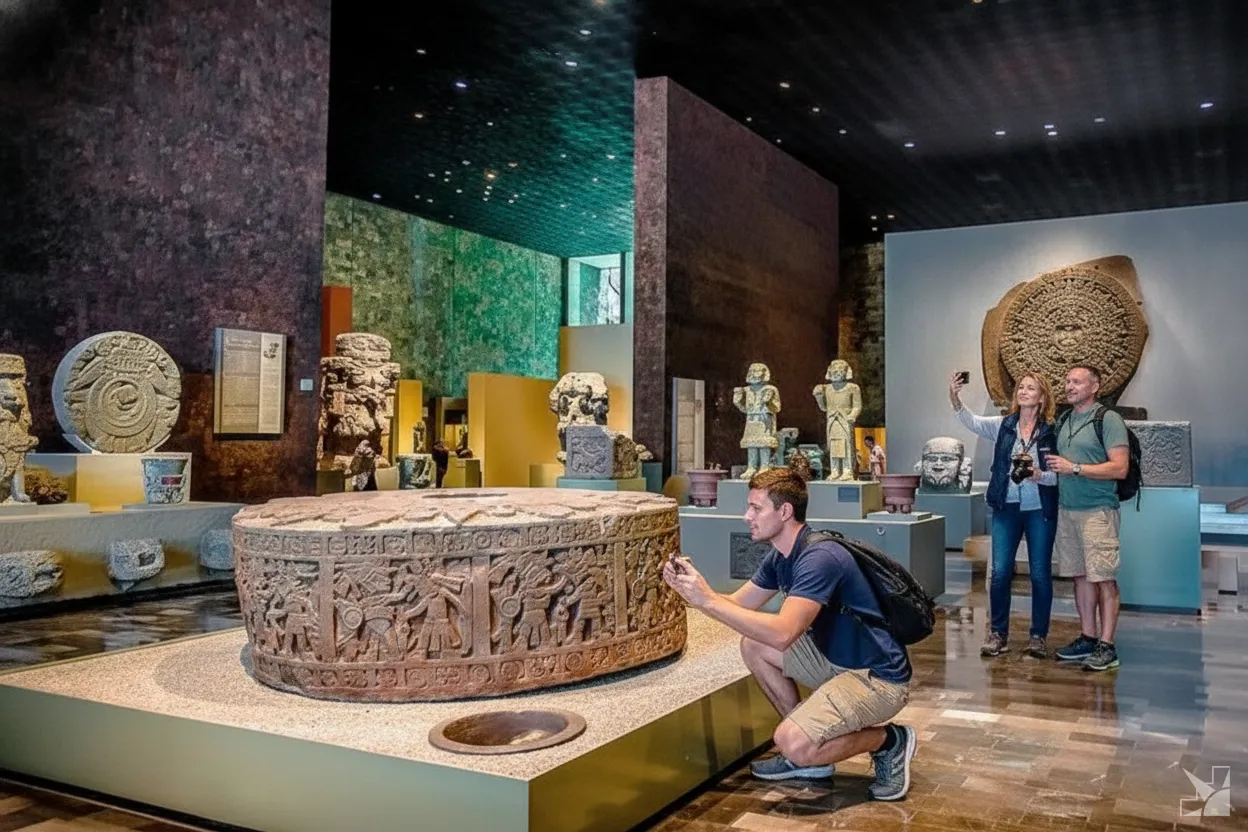
In the heart of Chapultepec Park lies one of the most important buildings on Earth: The National Museum of Anthropology. Designed by Pedro Ramírez Vázquez, the architecture alone—with its massive concrete umbrella fountain—is a masterpiece of modernism.
The British Museum Problem
In London or Paris, you look at artifacts that were taken from other cultures. The context is broken.
The Mexico Solution
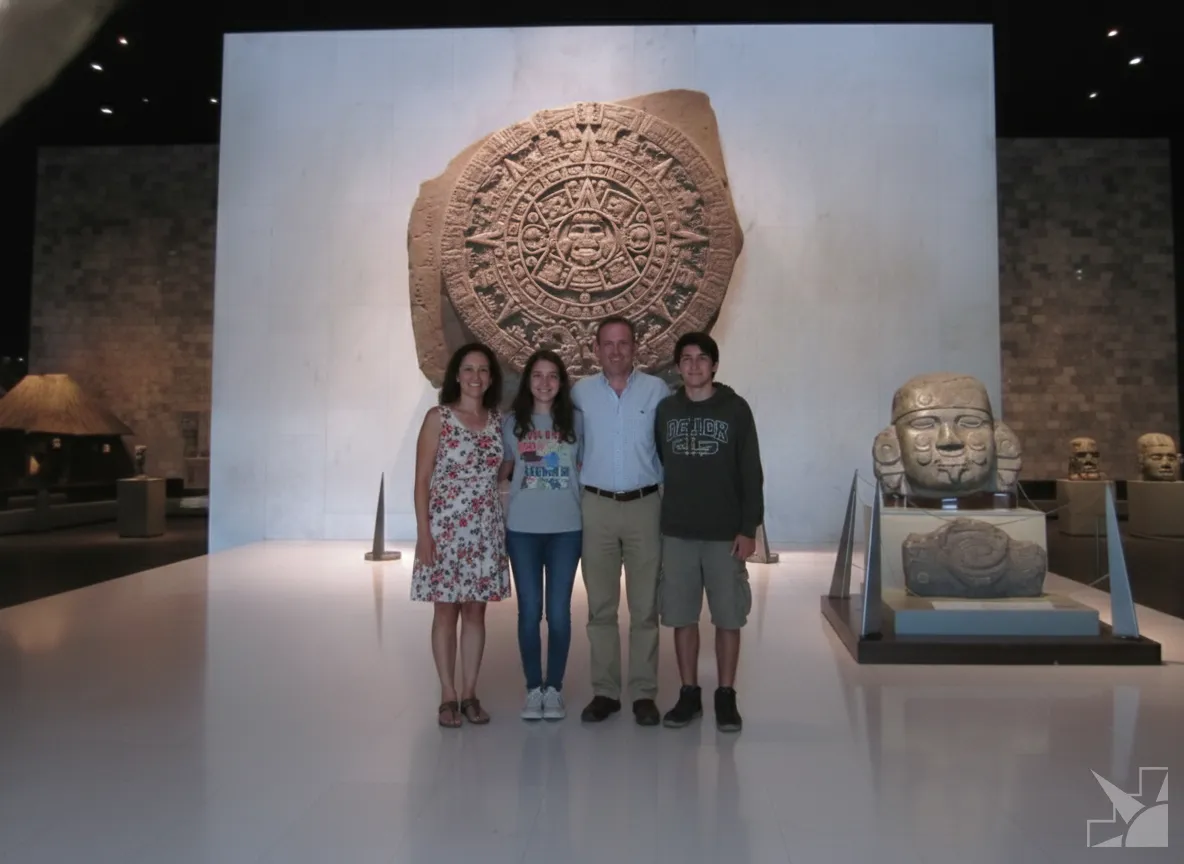
Here, the artifacts are home. The Aztec Sun Stone (Calendar) stands here not as a trophy, but as an ancestor.
The museum attracts 2 million visitors a year. To avoid the noise, we arrange After-Hours Private Access. Imagine standing alone in the Mexica Hall, face to face with the terrifying beauty of Coatlicue (the mother goddess), with nothing but silence between you and the stone. It is a confrontation with a civilization that was as complex, brutal, and artistic as Rome. It frames the rest of your trip: you are not just in a city; you are in the capital of a continuous 3,000-year history.
07. Coyoacán: The Original Influencers
We leave the monumental scale of the center and head south to Coyoacán. This is not a "neighborhood" in the traditional sense; it was a separate village where Cortés lived after the conquest, and later, where the intellectual elite of the 20th century hid from the world.
This is the realm of Frida Kahlo and Diego Rivera. The "Blue House" (Casa Azul) is the most famous house in Mexico. The line to get in wraps around the block. Naturally, we skip it. But the real luxury of Coyoacán is not the museum; it is the atmosphere.
Walking the cobblestone streets of Plaza Hidalgo, surrounded by colonial mansions and ancient churches, feels like stepping into a Gabriel García Márquez novel. We take you to the Leon Trotsky House, a fortress where the Russian revolutionary lived in exile. It remains exactly as he left it the day he was assassinated—books on the desk, bullet holes in the walls. It is a chilling, intimate snapshot of 20th-century geopolitics frozen in amber.
08. Xochimilco: The Agricultural Venice
If you search "Xochimilco" on YouTube, you will see colorful boats (trajineras) filled with beer, mariachis, and chaos. That is the tourist trap. We do not go there.
We take you to the Ecological Reserve side of the canals. This is the last vestige of the great lake system that once covered the valley. Here, the silence is absolute. We navigate through the mist on a private boat to visit the Chinampas (floating islands)—an Aztec agricultural technology that is still used today.
The "Chinampa" Lunch
In partnership with projects like Arca Tierra, we arrange a private lunch on a floating island. The food you eat—heirloom tomatoes, squash blossoms, wild greens—was harvested from the ground beneath your feet thirty minutes ago. It is cooked over a wood fire by a private chef. This is Regenerative Luxury: exploring the past to save the future. It is widely considered the most "soulful" meal you can have in Mexico City.
The Finale
iii
Part III: The City + Jungle Equation
We have established that Mexico City is the new center of the cultural world. It is intense, volcanic, and sophisticated. But the perfect luxury itinerary cannot be played on a single note. It requires a counterpoint.
This is why the "Aztec Supremacy" Circuit does not end in the capital. It pivots. We take the kinetic energy of the metropolis and ground it in the limestone stillness of the Yucatán Peninsula. This combination—Urban Intensity + Jungle Zen—is the "Golden Ratio" of travel in 2026.
09. The Seamless Transition
The connection between CDMX and Mérida is seamless, but only if managed correctly. We utilize private airport transfers that bypass the general chaos of AICM (Mexico City Airport).
In 90 minutes, you trade the grey volcanic stone for the white tropical limestone. You trade the suit jacket for linen. You trade the altitude for the oxygen-rich air of the jungle. It is a total sensory reset.
The 8-Day "Aztec Supremacy" Protocol
This is not a tour; it is a curated sequence of emotions. Here is how we structure the ultimate Mexican experience:
Days 1-3: The Capital Injection
Location: Mexico City (Polanco/Roma)
The Focus: Gastronomy, Art, and History.
We start with the energy. Private after-hours tour of the Anthropology Museum. A sunrise hot air balloon over Teotihuacán. Dining at Pujol or Quintonil. You are immersed in the "New Rome."
Day 4: The Airlift
Location: CDMX -> Mérida
The Focus: Decompression.
Morning flight to Mérida. Private transfer to a restored 18th-century Hacienda (like Chablé or Temozón). The afternoon is spent by the private pool, listening to the birds of the Yucatan. The pace slows down immediately.
Days 5-7: The Jungle & Stone
Location: Uxmal / Chichén Itzá / Cenotes
The Focus: Mysticism and Nature.
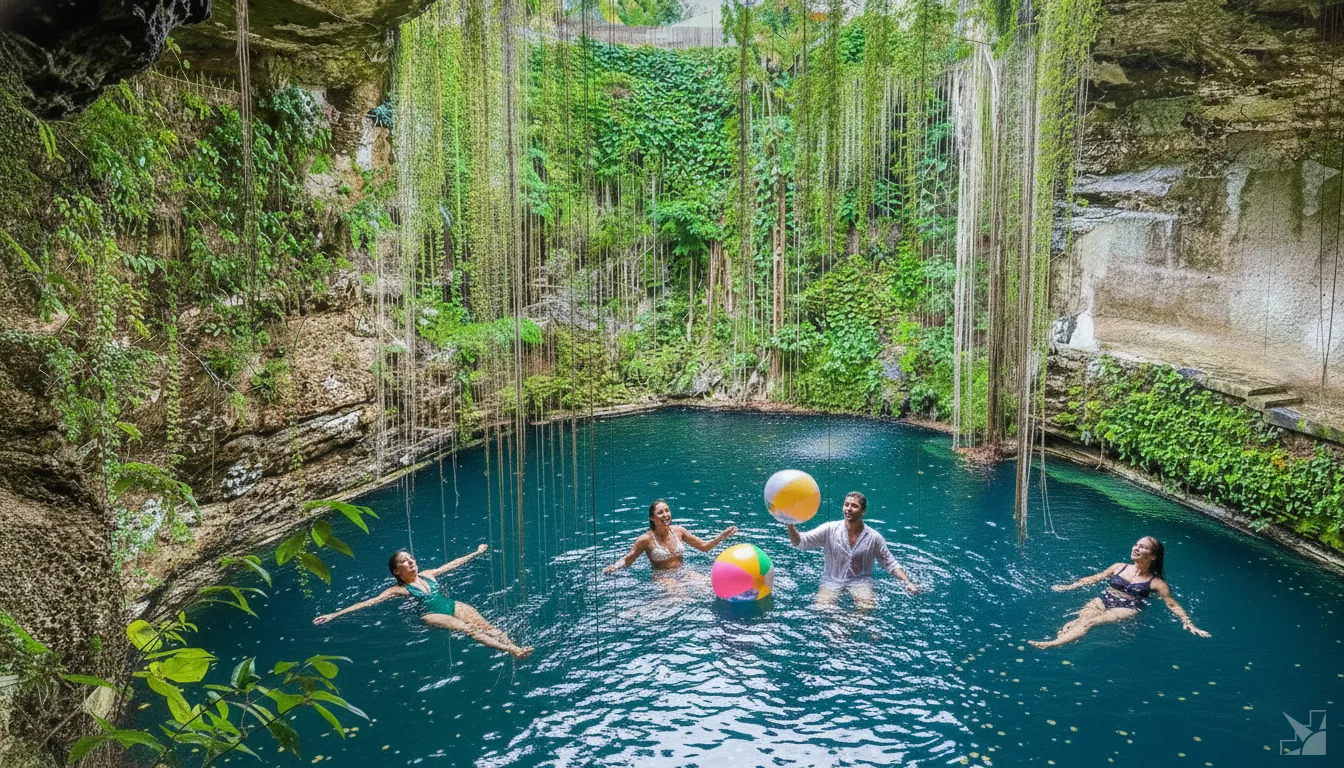
We explore Uxmal, the most elegant of the Mayan cities, with a private archaeologist. We swim in secret Cenotes (underground rivers) that are not on the tourist maps. We visit Chichén Itzá via the private gate at sunrise, avoiding the crowds entirely.
Day 8: The Return
Location: Mérida -> Home
Departure from Mérida International Airport (MID), refreshed, inspired, and carrying the energy of two civilizations.
The Logistics of Privilege
Anyone can book a flight to Mexico City. Anyone can buy a ticket to Chichén Itzá. But Luxury is not about "going"; it is about "how" you go.
At Ile Tours, we specialize in the "Invisible Layer" of travel. The security that you don't see but feel. The restaurant tables that are allegedly "fully booked" but open for you. The private gates at the archaeological sites. We remove the friction so you can focus on the experience.
"The world has changed. Your travel should too."
Mexico City is the new global capital. The Yucatán is its sanctuary. Experience the perfect duality of the "Aztec Supremacy" circuit.
PRIVATE DEPARTURES • 2026 SEASON
Ile Tours Intelligence
Curating ultra-private experiences in Mexico for the discerning global traveler. Specialists in logistics, security, and cultural immersion.