There is a photograph that haunts the feed of every traveler planning a trip to Mexico: a surreal landscape where cotton-candy pink water meets a bright blue sky, separated by mounds of white salt. This is Las Coloradas. But here is the hard truth: 90% of tourists do this trip wrong. They endure a grueling 3-hour bus ride from Cancún, stand under the baking sun for a 20-minute selfie, and leave exhausted and disappointed.
The luxury traveler knows better. The North Coast of Yucatán—comprising the biosphere of Río Lagartos, the fishing village of San Felipe, and the bohemian enclave of El Cuyo—is not a "day trip." It is a destination in itself. It is a region of raw, unfiltered nature where luxury isn't about marble lobbies, but about private boats, fresh lobster caught an hour ago, and beaches where you might be the only person walking for miles. This guide transforms the "Instagram trap" into a sophisticated, multi-day expedition.
1. The North Coast Manifesto: Redefining "Luxury" in Yucatán
| Why the Smart Money is Heading North, Not East |
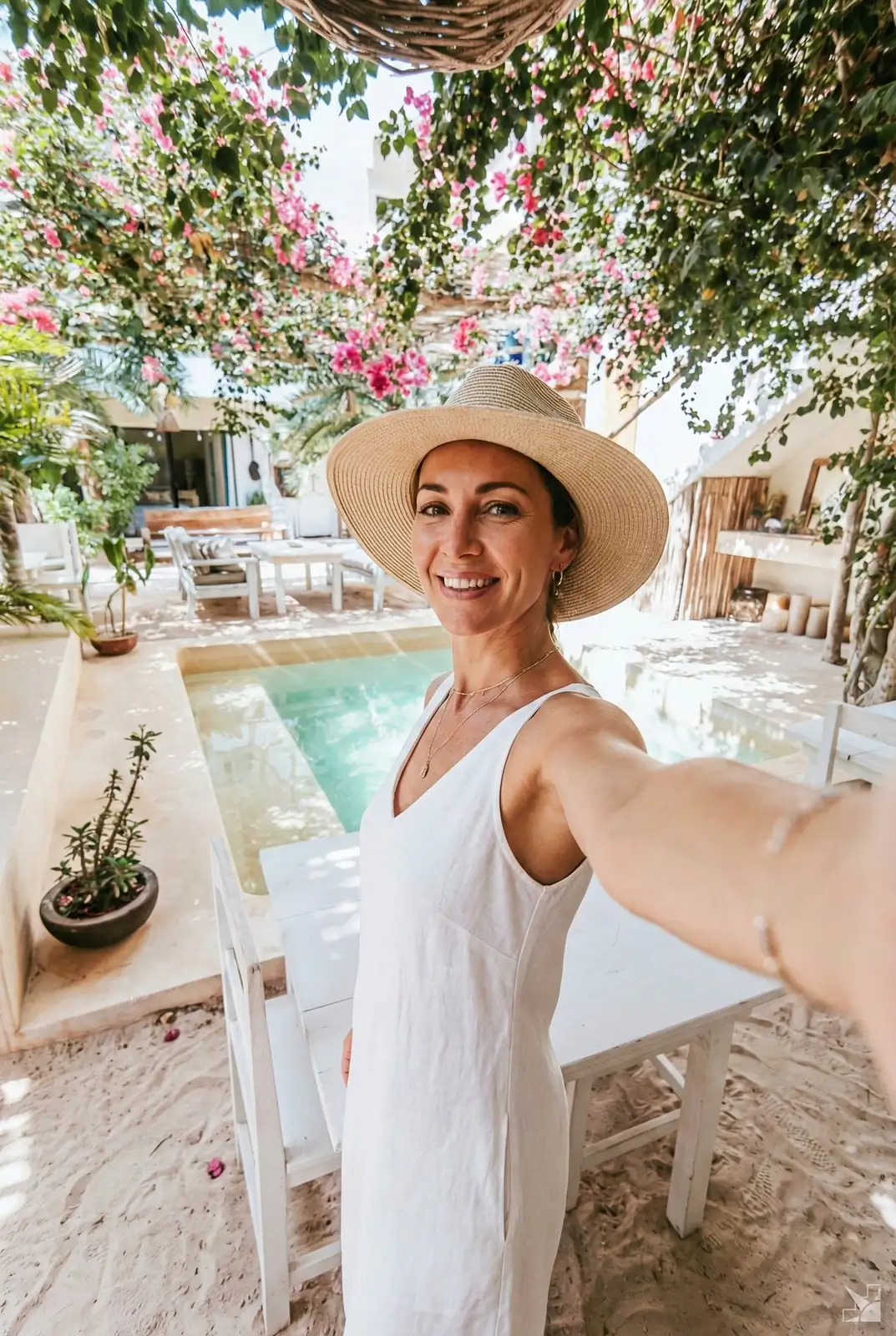
For the past two decades, the narrative of luxury travel in Mexico has been monopolized by the Caribbean coast. Tulum, Playa del Carmen, and Cancún defined what a "vacation" looked like: turquoise water, white sand, and an infrastructure built specifically to shield the American traveler from the reality of Mexico. But a shift is occurring. The hyper-development of the Riviera Maya—with its traffic jams, construction noise, and inflated pricing—has pushed the true connoisseurs of travel to look elsewhere. They are looking North. The North Coast of Yucatán, stretching from the port of San Felipe to the virgin beaches of El Cuyo, represents a different kind of wealth. It is the wealth of isolation. It is a region where the cell signal is spotty, but the connection to nature is absolute. Here, "luxury" is not a marble lobby or a butler service; it is the privilege of being the only boat on a 60,000-hectare biosphere reserve at sunrise. It is the exclusivity of walking on a beach where the only footprints are your own and those of a passing sea turtle. This guide is not for the tourist seeking a party scene or a generic all-inclusive experience. This is a blueprint for the traveler who wants to enter the "Deep Yucatán." It is a journey through pink salt lakes, prehistoric mangroves, and wooden fishing villages that look like film sets from a bygone era. We will break down exactly how to navigate this frontier with the comfort and safety that a high-end traveler demands. |
2. The Journey: Mastering the Drive (Mérida to the Biosphere)
| Route 176 and the "Cattle Guard" Country |
Accessing the North Coast is an adventure in itself. Unlike the federal highway to Cancún, the road to Río Lagartos (Highway 176) cuts through the agricultural heart of the state. Leaving Mérida, the landscape shifts from the urban colonial center to the "Henequen Zone" and finally into the ranch lands of Tizimín. A. The Tizimín Pit StopKnown as the "City of Kings" (Ciudad de Reyes), Tizimín is the cattle capital of the peninsula. It is not a tourist town, which makes it fascinating.
B. The Landscape ShiftAs you drive north from Tizimín towards Río Lagartos, the vegetation changes dramatically. The tall jungle trees disappear, replaced by low mangroves and savannah. The air becomes heavier, salty, and humid. You are entering the wetlands. Driving Advisory: The roads are paved and generally in good condition (2 lanes). However, this is ranch country. It is not uncommon to encounter a herd of Brahman cattle crossing the asphalt. Speed bumps (topes) in the small villages of Loche and Panabá are aggressive and often unpainted. A private driver with an SUV is highly recommended to navigate these obstacles smoothly. |
3. Río Lagartos: The Amazon of the Yucatán
| Inside the UNESCO Biosphere Reserve Ría Lagartos |
Ría Lagartos is often misunderstood. First, it is not a "river" (Río), but an estuary ("Ría")—a place where the saltwater of the Gulf mixes with the freshwater of the underground aquifer. Second, it is immense. Covering over 60,000 hectares, it is a protected UNESCO Biosphere Reserve. This designation means that mass tourism hotels cannot be built here. Nature rules. For the luxury traveler, Río Lagartos offers a safari experience that rivals Costa Rica or the Amazon, but with a unique Yucatecan twist. The ecosystem is dominated by the Red Mangrove, whose roots create intricate tunnels and canals that can only be navigated by small boats. |
The Private Sunrise Expedition (The Only Way to Do It)
| Avoiding the "Lancha" Crowds |
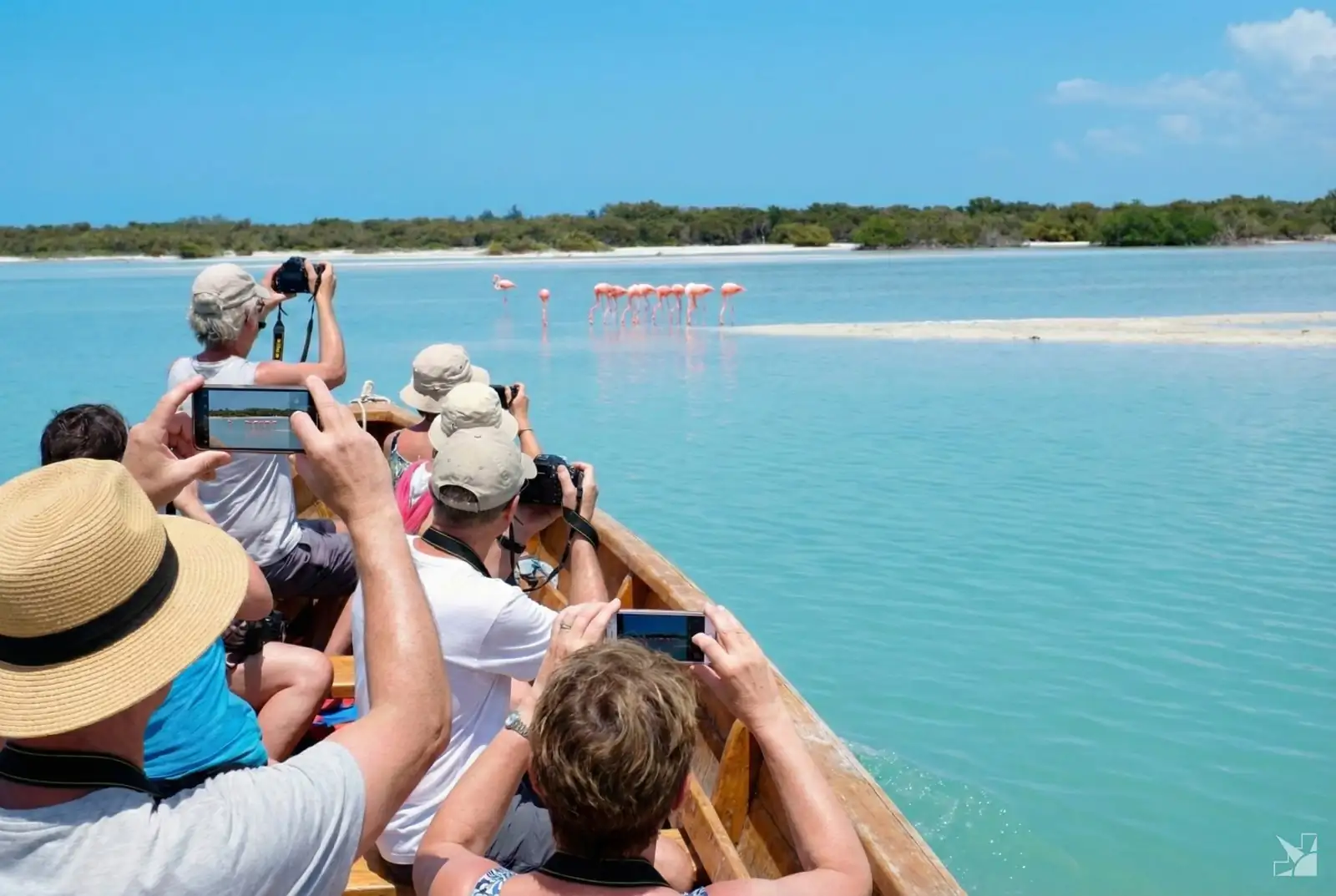
Most tourists arrive on tour buses from Cancún around 11:00 AM. By then, the sun is punishing, the birds have retreated into the shade, and the magic is diluted by noise. To experience the true luxury of the biosphere, you must follow the "Ile Tours Protocol": The Sunrise Launch. 05:45 AM: DepartureYou board a private boat at the boardwalk of Río Lagartos town just as the sky begins to turn purple. The town is asleep. The water in the estuary is like a mirror, reflecting the silhouettes of the fishing boats. 06:30 AM: The Feeding GroundsYour captain navigates silently towards the feeding grounds of the American Flamingo (Phoenicopterus ruber). This specific species is the pinkest in the world due to the high concentration of beta-carotene in the brine shrimp they eat here.
07:30 AM: The Prehistoric EncounterThe name "Río Lagartos" (Lizard River) was given by the Spanish conquistadors who mistook the crocodiles for giant lizards. They are still here. The Morelet's Crocodile dominates these waters.
|
The Mayan Spa Ritual: Sulfuric Mud & Pristine Beaches
| Exfoliation by Nature |
Deep inside the channels of the Ría, there is a specific spot known as "El Baño Maya" (The Mayan Bath). Here, the water is incredibly shallow and warm, and the mud at the bottom is pure white clay rich in sulfur, minerals, and salts. The Process:
|
4. Las Coloradas: Deconstructing the "Pink Lake" Myth
| The Science and Strategy of the Perfect Photo |
Perhaps no location in Mexico has been more misrepresented by Instagram filters than Las Coloradas. Travelers arrive expecting a natural pink wonder, only to find an industrial salt factory with fences. Managing expectations here is key to enjoying it. What it actually is: Las Coloradas is owned by Industria Salinera de Yucatán (ISYSA). It is one of the largest salt producers in Mexico. The lakes are actually man-made evaporation ponds. As the water evaporates and salinity increases, microorganisms (Halobacteria and Dunaliella salina) thrive. These organisms produce red pigments (beta-carotene) to protect themselves from the sun. The result is water that ranges from pale rose to blood orange. The Luxury Access Strategy: "The Safari"Until recently, you could only look through a fence. Now, the salt company offers tiered access. The standard ticket allows a 20-minute walk to a lookout tower. This is the "tourist trap" option. The VIP Option: You must book the "Safari Tour."
Critical Photography AdviceIf you go at 9:00 AM or 4:00 PM (usually the best times for photos), Las Coloradas will look muddy and dull. The High Noon Rule: For the water to look pink, you need the sun strictly overhead (between 11:30 AM and 2:00 PM). The sunlight needs to penetrate the water to illuminate the microorganisms. If it is a cloudy day, skip the trip. Without sun, there is no pink. A good private guide will monitor the cloud cover in real-time and adjust the itinerary accordingly, perhaps swapping the boat tour and the pink lakes to catch the light window. |
5. San Felipe: The Technicolor Fishing Village
| Where Wood Replaces Stone: A Vernacular Masterpiece |
Just 15 minutes west of Río Lagartos lies a town that feels like it belongs in the Caribbean rather than Mexico. San Felipe is a visual shock. Unlike the masonry colonial towns of the interior (Mérida, Valladolid, Izamal) built with heavy limestone, San Felipe is built almost entirely of wood. The Architecture of Resilience: The houses here are constructed from treated timber to resist the corrosive salt air. To combat the tropical sun, locals paint them in violently bright colors—lime green, electric blue, canary yellow, and hot pink. It is a photographer's dream. Walking the sandy streets feels like walking through a living box of crayons. The "Malecón" Culture: The life of the town revolves around the boardwalk. Here, dozens of "lanchas" (small fishing boats) bob in the harbor. There are no yachts, no cruise ships, and no jet skis. This is a working-class port where the rhythm of the day is dictated by the tide and the catch. For the luxury traveler, sitting on a bench here with a cold beer, watching the fishermen clean their nets as the sun sets, offers a form of honest, unpretentious peace that money cannot buy in Cancun. |
The Culinary Secret: Yucatán’s Best Seafood
| Ocean-to-Table (Literally) |
While Mérida has the fancy restaurants, San Felipe has the ingredients. The seafood here is caught hours—sometimes minutes—before it hits your plate.
|
6. The "Lost Highway" to El Cuyo
| Navigating the Gap Between the Biosphere and the Beach |
Looking at a map, El Cuyo seems close to Río Lagartos. However, there is no direct paved coastal road connecting them (unless you have a specialized 4x4 and intimate knowledge of the sand tracks, which is risky). To get to El Cuyo, you must drive inland and loop back north. The Scenic Route: The drive takes about 90 minutes. You will pass through the town of Colonia Yucatán, a surreal, planned logging town from the mid-20th century that looks like a calm American suburb dropped into the jungle.
|
7. El Cuyo: The "New Tulum" (Before It Breaks)
| Barefoot Luxury on the Kite Coast |
El Cuyo is currently the most coveted secret in the Mexican luxury travel community. It is often described as "Tulum 20 years ago," but that comparison does it a disservice. El Cuyo has its own distinct soul. It is a tiny beach town located inside the biosphere reserve, meaning large-scale construction is prohibited. The Vibe: There are no paved roads here—only sand. There are no chain hotels, no Starbucks, and no massive diesel generators humming all night. Just palm trees, sand streets, and a silence so profound it feels heavy. The Beach: Emerald vs. TurquoiseTravelers expecting the electric blue of Cancún should adjust their palette. The water in El Cuyo is a tropical emerald green, mixing the Gulf of Mexico with Caribbean currents.
The Wind: A Kitesurfing MeccaIn the afternoons, the thermal winds pick up. El Cuyo has become a world-class destination for kitesurfing.
|
8. Accommodation: The Rise of the "Eco-Villa"
| Design-Forward, Nature-First |
You won't find an all-inclusive resort here. Instead, El Cuyo excels in "Boutique Eco-Villas" and small design hotels run by expats who fell in love with the place.
|
9. Survival Logistics: The "Cash Only" Rule
| Critical Info for the Unprepared |
This is the single most important piece of advice for a seamless trip to the North Coast: Bring Cash.
|
10. Dining on the Edge: The Culinary Anomaly of El Cuyo
| Where Maya Tradition meets European Expat Culture |
One would expect a remote Mexican fishing village to serve only fried fish and ceviche. While those staples are excellent here, El Cuyo presents a culinary anomaly driven by its community of kitesurfers. Over the last decade, Italian, Argentine, and French expats have settled here, bringing their grandmothers' recipes with them. The result is a surreal fusion where you can eat world-class focaccia while your feet are buried in Yucatecan sand. The Wood-Fired Pizza PhenomenonIt is an open secret among travelers: the pizza in El Cuyo rivals anything in Mexico City. Small, family-run spots (like La Conchita or similar local favorites) have built massive wood-fired ovens.
The Argentine MorningMornings in El Cuyo have a distinct South American flavor.
|
11. The Morning Ritual: Sunrise on the Pier
| The Ultimate "Anti-Resort" Activity |
If you do one thing in El Cuyo, let it be this: Wake up 20 minutes before sunrise. Walk to the main town pier (Muelle). The Visual: The sun rises over the ocean (on the East side), painting the water in pastels of violet, orange, and soft pink. The fishermen are launching their boats. The lighthouse (El Faro) is built on top of ancient Mayan ruins—literally. The current lighthouse stands on a mound that was once a pre-Hispanic pyramid, a physical layering of history that you can touch. The Luxury of Solitude: In Tulum, sunrise is often a social media event. Here, it is private. It is just you, the pelicans diving for breakfast, and the vast, empty horizon. This moment of connection is what defines the "New Luxury." |
12. The North Coast Packing Checklist
| Technical Gear for the Biosphere |
This is not a poolside vacation. You are entering a Biosphere Reserve. Pack accordingly to ensure comfort.
|
Final Thoughts: The Ephemeral Beauty of Now
There is a sense of urgency to the North Coast. Everyone knows it is special, and everyone knows it won't stay this quiet forever. Paved roads are being discussed; larger hotels are being whispered about. But for now, right now, it remains a sanctuary.
Visiting Río Lagartos, Las Coloradas, and El Cuyo today is capturing a moment in time where Mexico feels wild, welcoming, and undiscovered. It is a trip for the traveler who values the journey as much as the destination.
Don't wait until the crowds arrive.
Contact Ile Tours to design your private North Coast expedition today.