Expedition Report: South Frontier
The Jade Labyrinth
Why The "Real" Mexico is Hiding in the Clouds of Chiapas
Part I: The Mountain Entry
There is a version of Mexico that is sold in brochures: turquoise water, white sand, and margaritas. It is beautiful, accessible, and partially synthetic. But there is another Mexico. A vertical one. A place where the air is thin, the coffee is strong, and the languages spoken on the street are not Spanish, but Tzotzil and Tzeltal.
This is Chiapas.
For the traveler who has already "done" Tulum and found it lacking in soul, Chiapas is the graduation. It is not a vacation; it is an immersion. Located on the southern border with Guatemala, this is a land of violent geography—massive canyons, neon-blue waterfalls, and ancient cities swallowed by the jungle. It is the most indigenous, mysterious, and visually arresting state in the republic.
"If the Yucatán is the face of the Maya world, Chiapas is its subconscious. Darker, deeper, and infinitely more fascinating."
01. The Geological Gate: Sumidero
Most journeys begin at the airport, but the entry into the Jade Labyrinth begins on the water. Just outside Tuxtla Gutiérrez lies a geological scar that defies scale: The Sumidero Canyon.
Imagine walls of rock shooting 1,000 meters (3,300 feet) straight up from the river. That is three times the height of the Eiffel Tower. We navigate this chasm in private boats. The scale is oppressive in the best possible way. You are small. Nature is big. Crocodiles sunbathe on the banks, and spider monkeys traverse the canopy above. It is a primal introduction that resets your perspective before we ascend into the highlands.
02. San Cristóbal: The City in the Clouds
After the heat of the canyon, we climb. The road winds up into the pine forests until we reach 2,200 meters above sea level. The air turns crisp. The light turns silver. We have arrived in San Cristóbal de las Casas.
San Cristóbal is not just another colonial town. It is a cosmopolitan enclave in the middle of indigenous territory. It has the architecture of Spain but the soul of the Maya. It is a place where you can find the best coffee in Mexico, sophisticated wine bars, and cobblestone streets that are pedestrian-only.
The Atmosphere
It smells of burning wood (ocote) and roasted coffee. In the mornings, the fog rolls through the streets, revealing red tile roofs and bright yellow facades. It feels closer to Cusco or Kathmandu than to Cancun.
The Luxury Stay
We stay at properties like Hotel Bo or Casa del Alma. These are design-forward boutique hotels that blend modern luxury with Chiapaneco textures. Fireplaces in the room are standard—and necessary.
03. The Church of Mirrors
This is the part of the journey that changes people. Just 10 kilometers from San Cristóbal lies the autonomous village of San Juan Chamula.
There are no cameras allowed inside the church. If you take a photo, you will be expelled, or worse. Why? Because what happens inside is not a "mass." The floor is covered in pine needles. There are no pews. Thousands of candles illuminate the smoke-filled air. Indigenous families sit on the floor, chanting in Tzotzil, performing cleansing rituals that involve eggs, posh (a local sugarcane liquor), and sometimes the sacrifice of a chicken.
The Ile Tours Access
Entering Chamula requires respect and a guide who is trusted by the community. We do not go as tourists to gawk; we go as guests to witness a syncretism (a blend of Catholicism and ancient Maya beliefs) that has existed for 500 years. It is intense, it is real, and it is profoundly moving.
End of Part I
Descending into the Green
We have touched the clouds and witnessed the living rituals. Now, gravity pulls us down.
COMING UP IN PART II: We leave the highlands and descend into the tropical rainforest. We will navigate the turquoise waters of Agua Azul and reveal the greatest secret of the ancient world: The city of Palenque, and why you must see it at dawn.
The Expedition Series
ii
Part II: The Descent into Green
In Part I, we breathed the thin, pine-scented air of the Highlands. We walked with the living mystics of Chamula. But the Jade Labyrinth is not static; it flows. To find the heart of the Maya civilization, we must leave the clouds and descend.
The journey from San Cristóbal de las Casas to Palenque is one of the most dramatic scenic drives in the Americas. In the span of five hours, you drop 2,000 meters. The vegetation shifts from alpine forest to cloud forest, and finally, to the dense, suffocatingly beautiful tropical rainforest. The temperature rises. The air becomes heavy with oxygen and humidity. You are entering the lungs of Mexico.
04. The Neon Waters
Midway through the descent, the jungle breaks open to reveal a color that looks photoshopped: Agua Azul.
These are not just waterfalls; they are a series of limestone cataracts where the water, rich in calcium carbonate, glows an electric turquoise blue. The contrast against the deep emerald of the jungle is jarring.
The Misol-Ha Moment
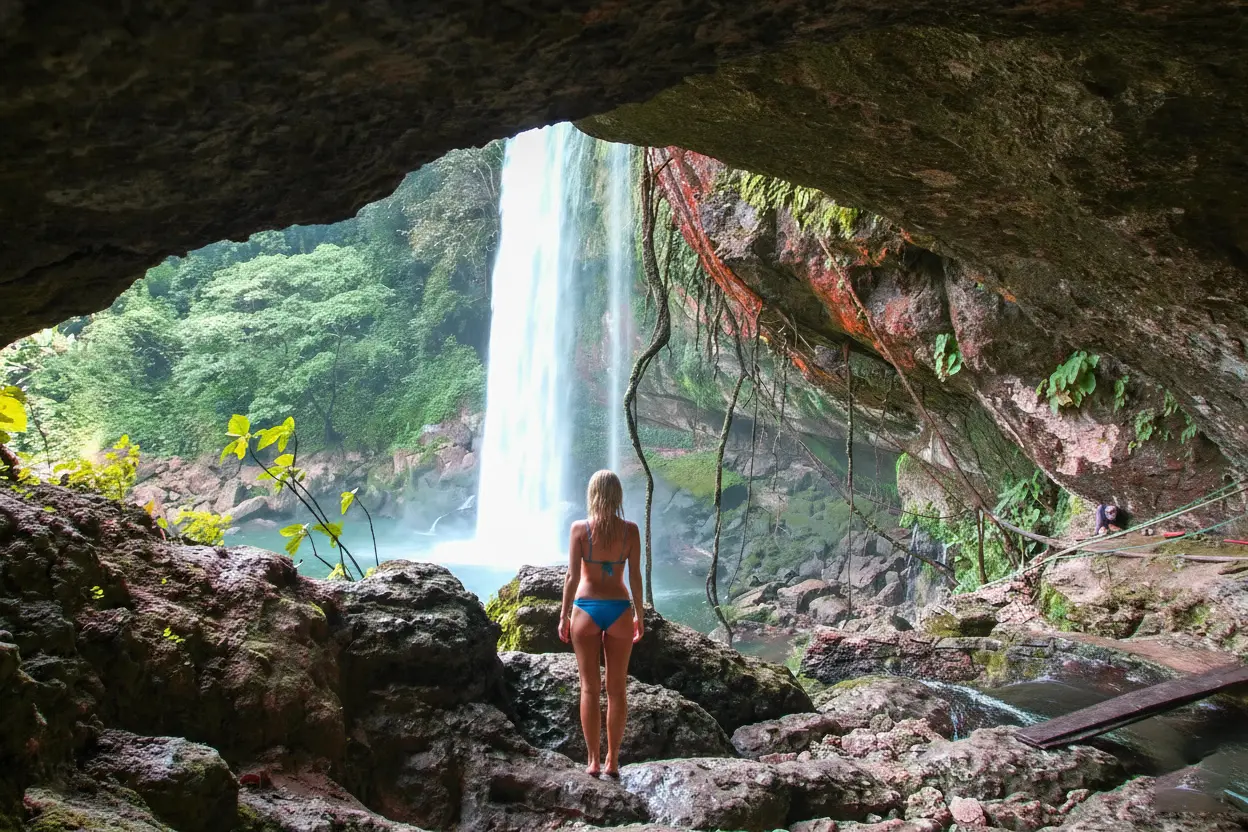
While Agua Azul is vast, our favorite stop is Misol-Ha. It is a single, majestic column of water falling 35 meters into a circular cenote surrounded by mahogany trees.
Here, we arrange a pause. Not a quick photo stop, but a sensory reset. Standing behind the curtain of water, in a small cave behind the falls, the roar is deafening. It drowns out the modern world. This is where the "Silent Luxury" begins—nature so powerful it forces you to stop thinking.
05. Palenque: The Throne of Jade
If Chichén Itzá is the brain of the Maya, Palenque is the heart.
Arriving at Palenque feels like discovering a secret. Unlike the open plains of Yucatan, this city is hugged by the Tumbalá mountains. The jungle is trying to eat the ruins, and the ruins are fighting back. The architecture here is lighter, more elegant, and more intricate than anywhere else in the Maya world.
The King
This was the home of Pakal the Great, the most famous Mayan king. His tomb (discovered deep inside the Temple of Inscriptions) rivals Tutankhamun's. He was buried with the famous Jade Death Mask, giving this route its name.
The Tower
The Palace features a four-story stone tower that looks almost medieval. It was an observatory. Standing there, looking out over the endless green canopy, you understand why they believed they were the center of the universe.
06. Jungle Nights
We do not return to the city. We stay in the jungle.
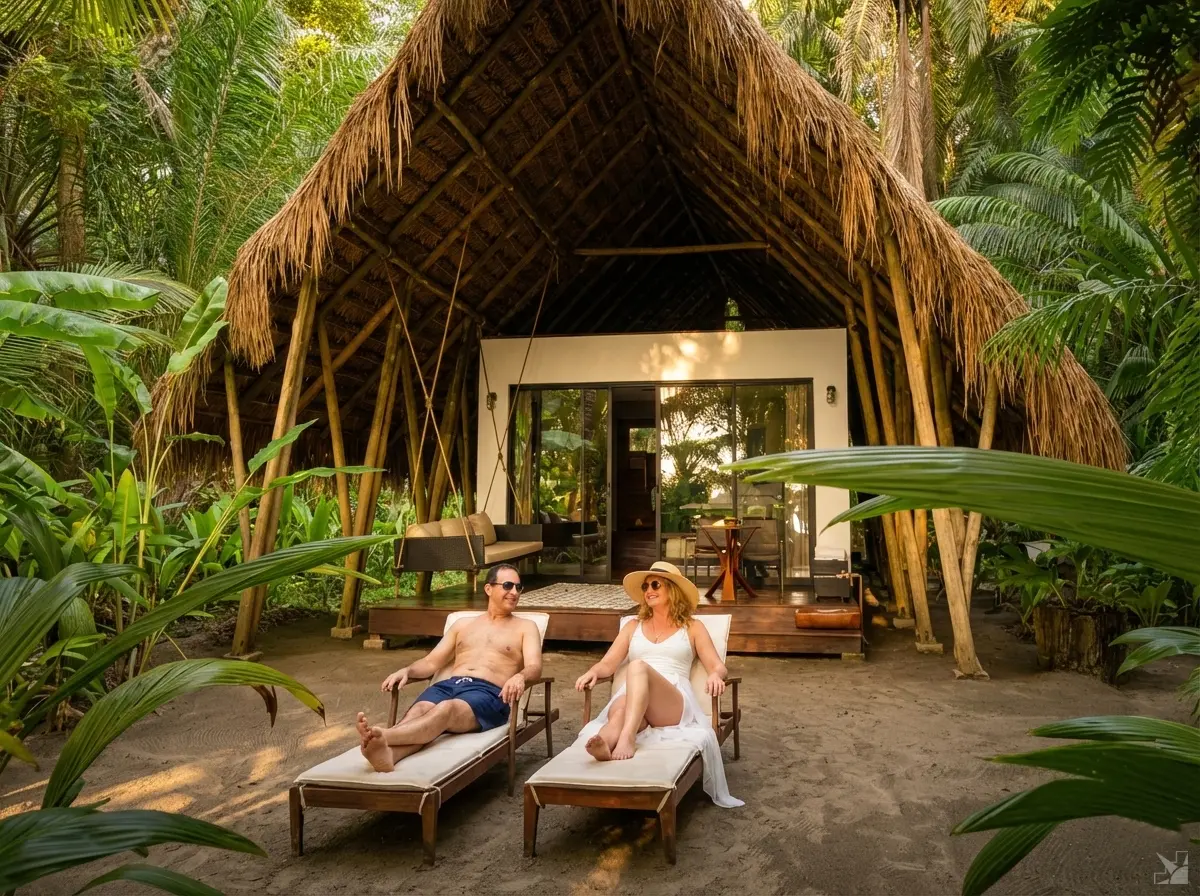
Luxury in Palenque is defined by integration. We book properties like Quinta Chanabnal, which recreate the classic Maya palace architecture. There are no glass towers here. Just stone, mahogany, and thatched roofs.
"The soundtrack of your night is not traffic. It is the roar of the Howler Monkeys (Saraguatos). It is a prehistoric sound, deep and guttural, reminding you that you are a guest in their territory."
This is where the "disconnect" happens. The Wi-Fi works, but you won't want to use it. Sitting by the pool at night, listening to the jungle breathe, is a form of meditation that no app can replicate.
End of Part II
The Circle Closes
We have explored the Highlands and the Jungle Ruins. The final piece of the puzzle remains.
COMING UP IN PART III (THE FINALE): We reveal the journey back to civilization—crossing into the Yucatan Peninsula to connect with the historic walled city of Campeche. We provide the full logistical breakdown of the 9-Day "Mayan World Circuit" and how to book this expedition.
The Expedition Series
iii
Part III: The Pirate’s Horizon
After the dense, suffocating magic of the jungle, the horizon opens up again. We leave the domain of the Howler Monkeys and drive north, crossing the invisible border between the wild Chiapas and the historic Yucatan. The air changes again—from humid earth to salty breeze.
Our destination is not a ruin, but a fortress. A place where the Maya world met the Spanish Main. We are heading to the only walled city in Mexico.
07. Campeche: The Pastel Fortress
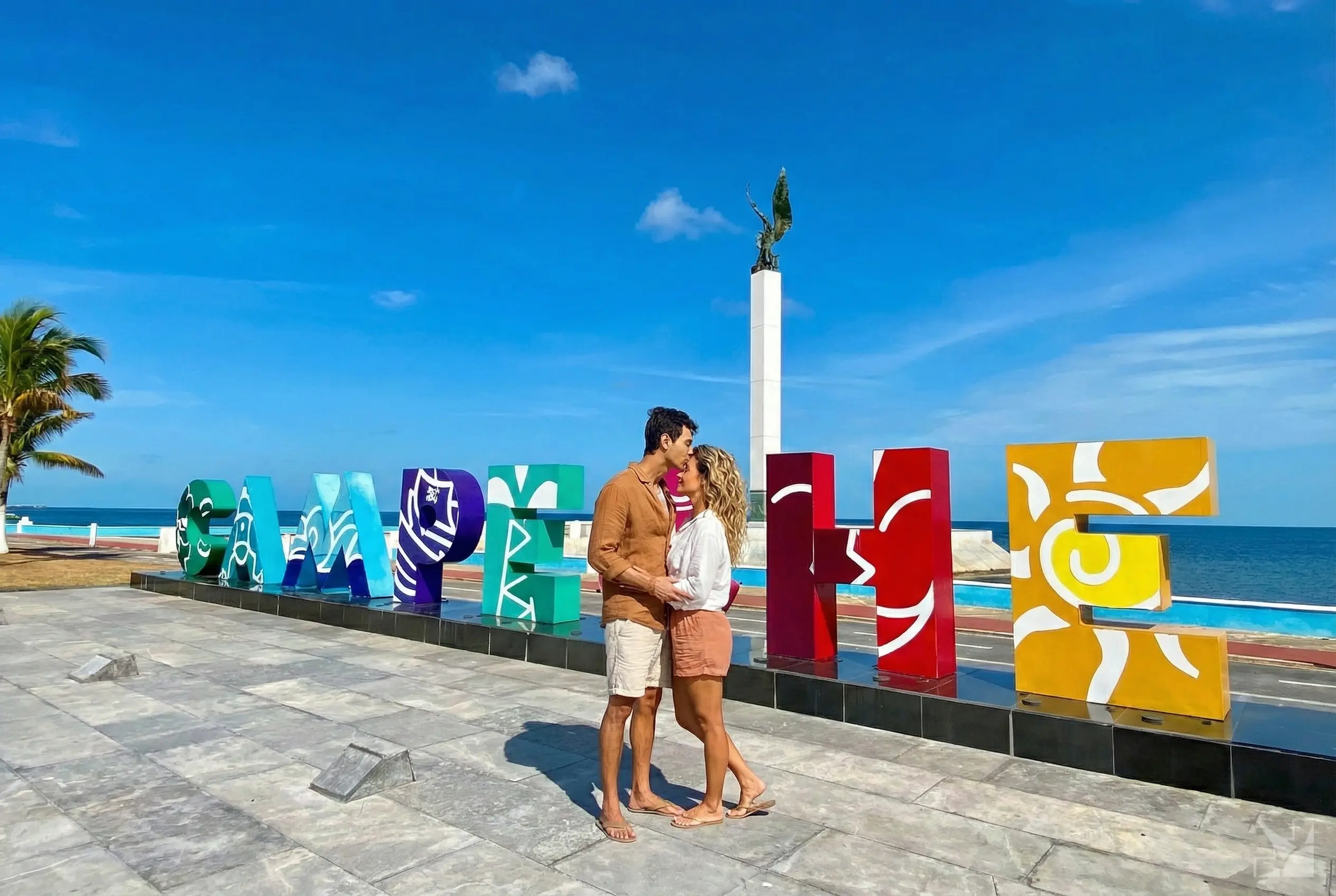
If San Cristóbal is mystique and Palenque is power, Campeche is pure romance. It is a UNESCO World Heritage site that feels like a movie set.
The streets are a grid of perfectly preserved colonial mansions painted in pastel pinks, yellows, and blues. But look closer. The thick stone walls surrounding the center weren't built for decoration; they were built to stop pirates.
The Sunset Ritual
We end the day on the Malecon (the waterfront). The sun sets directly over the Gulf of Mexico, turning the sea into liquid gold.
This is the moment of reflection. We have traveled from the pine forests of the highlands, down through the turquoise waterfalls, into the ancient jade cities, and finally to the sea. It is a journey through time, altitude, and culture that few travelers ever complete.
08. The Logistics of Wonder
This is not a simple route. The "Jade Labyrinth" covers difficult terrain, remote roads, and requires precision timing to avoid the crowds at sites like Palenque and Agua Azul.
Optimal duration to experience the Highlands, Jungle, and Coast without rushing.
Cloud Forest, Tropical Rainforest, and Coastal Plains.
Dedicated driver and expert guide throughout the entire descent.
You cannot do this effectively on a bus. You need the freedom to stop at the roadside stand selling Chiapas coffee. You need the ability to linger at Misol-Ha when the light is perfect. You need the safety and comfort of private transport.
Walk the Labyrinth
You've read the journey. Now live it.
From the mountains to the sea, we handle every detail.
Limited Availability for High Season (Nov - Apr)