The Deep Dive Series: Egypt
The Pharaoh's Paradox
The Definitive Guide to Luxury in the Land of Ra
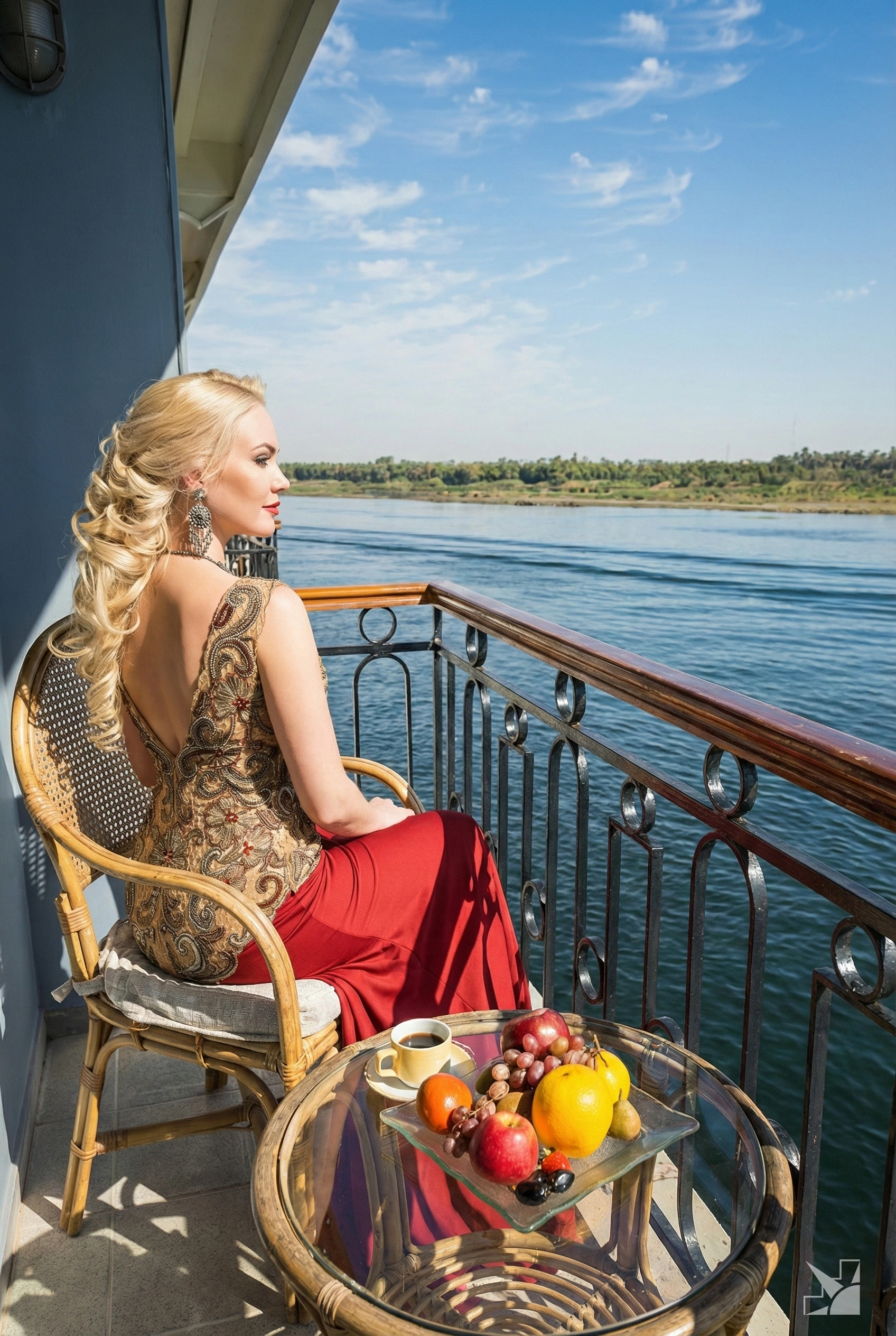
There is a specific frequency to Cairo. It is not the polished hum of Dubai, nor is it the organized chaos of Mumbai. It is a vibration composed of equal parts ancient dust, diesel, and 5,000 years of unbroken human ambition.
In 2026, Egypt sits at the intersection of history and modernity. The Grand Egyptian Museum (GEM) is finally open, changing the gravity of global tourism. The new administrative capital is rising in the desert. But for the American traveler, the question remains constant: "How do I navigate this?"
The answer lies in understanding the "Invisible Layer." There are two Cairos. There is the Cairo of the tour bus, the queue, and the aggressive street vendor. And then, there is the Cairo of the diplomat, the archaeologist, and the Ile Tours client. They occupy the same physical space, but they never touch. This guide is your blueprint to the latter.
"Luxury in Egypt is not defined by gold taps in your hotel room. It is defined by Access. The ability to stand alone in a room that is usually filled with a thousand people is the ultimate currency."
To conquer Cairo, you must first survive its noise. The strategic error most travelers make is booking a hotel "Downtown" (near Tahrir Square) thinking they are being central. In reality, they are positioning themselves in gridlock.
We operate with a strict "Shadow of the Pyramids" Protocol. We position you exclusively at the Marriott Mena House (Historical Wing). This was the former hunting lodge of the Khedive Ismail.
Why? Because logistics matter. The Mena House is located literally inside the Giza Plateau zone. While other tourists are sitting in 90 minutes of traffic from the city center to get to the Pyramids, you are eating breakfast on your balcony, watching the mist clear off the stones of the Great Pyramid of Khufu. You are 5 minutes from the entrance. You win the day before it has even started.
02. The Giza "Ghost" Protocol
The Giza Plateau is the most famous archaeological site on Earth. Consequently, it is a magnet for mass tourism. If you arrive at 10:00 AM with a standard ticket, your experience will be defined by endurance, not awe. You will be fighting for space.
We do not use standard tickets. We utilize Special Permission Access granted by the Ministry of Antiquities. This is not just a "fast pass"; it is a different set of keys entirely.
The Tourist Reality
The Restricted View
The Sphinx: You are relegated to a viewing platform 50 yards away. You are separated from the monument by a wall and a crowd of selfie-sticks. The scale is lost.
The Great Pyramid: You enter with 300 other people. The Ascending Passage is claustrophobic, hot, and noisy. You have 3 minutes in the King's Chamber before being ushered out.
The Ile Tours Access
The "Paws" Permit
The Sphinx: We open the gate. You walk down to the floor of the enclosure. You stand between the massive paws of the Sphinx, touching the granite "Dream Stele" of Thutmose IV. You are alone with the statue.
The Great Pyramid: We arrange an "After-Hours" private opening. The entire pyramid is unlocked for you. You can meditate in the King's Chamber in absolute silence.
03. The Cathedral of Civilization (GEM)
The Grand Egyptian Museum is the largest archaeological museum in the world. It houses 100,000 artifacts, including the complete Tutankhamun collection (5,000 pieces) displayed together for the first time in history.
But scale is a double-edged sword. Without a strategy, the GEM is exhausting. It is "Museum Fatigue" on a pharaonic level. Most visitors wander aimlessly, overwhelmed by the sheer volume of gold and stone.
The Narrative Strategy
We employ Egyptologists who are storytellers, not just academics. We do not try to see everything. We focus on the Humanity of the Divine. We bypass the rows of generic pottery to focus on the personal items of the Boy King: his sandals, his board games, his underwear, his walking sticks. By focusing on the intimate details, the gold mask becomes more than a treasure; it becomes the death mask of a teenager who loved to hunt. This emotional connection is what separates a tour from a pilgrimage.
04. The Edible Renaissance
The old guidebooks will tell you to eat "Koshary" on the street. While Koshary is a delicious carb-loaded necessity, the culinary scene in Cairo has evolved into something far more sophisticated.
We move away from the tourist traps and head to Zamalek, the island district in the middle of the Nile. This is the "Roma Norte" of the Middle East—leafy, diplomatic, and safe. Restaurants like Pier 88 or the reimagined classics at the Mena House offer dining experiences where you are suspended over the Nile, watching the Felucca boats drift by at sunset.
But the real secret is The Revolving Restaurant at the Cairo Tower? No. That is for tourists. We take you to the
Part II: The River of Time
Luxor, Thebes, and the Truth About Nile Cruising
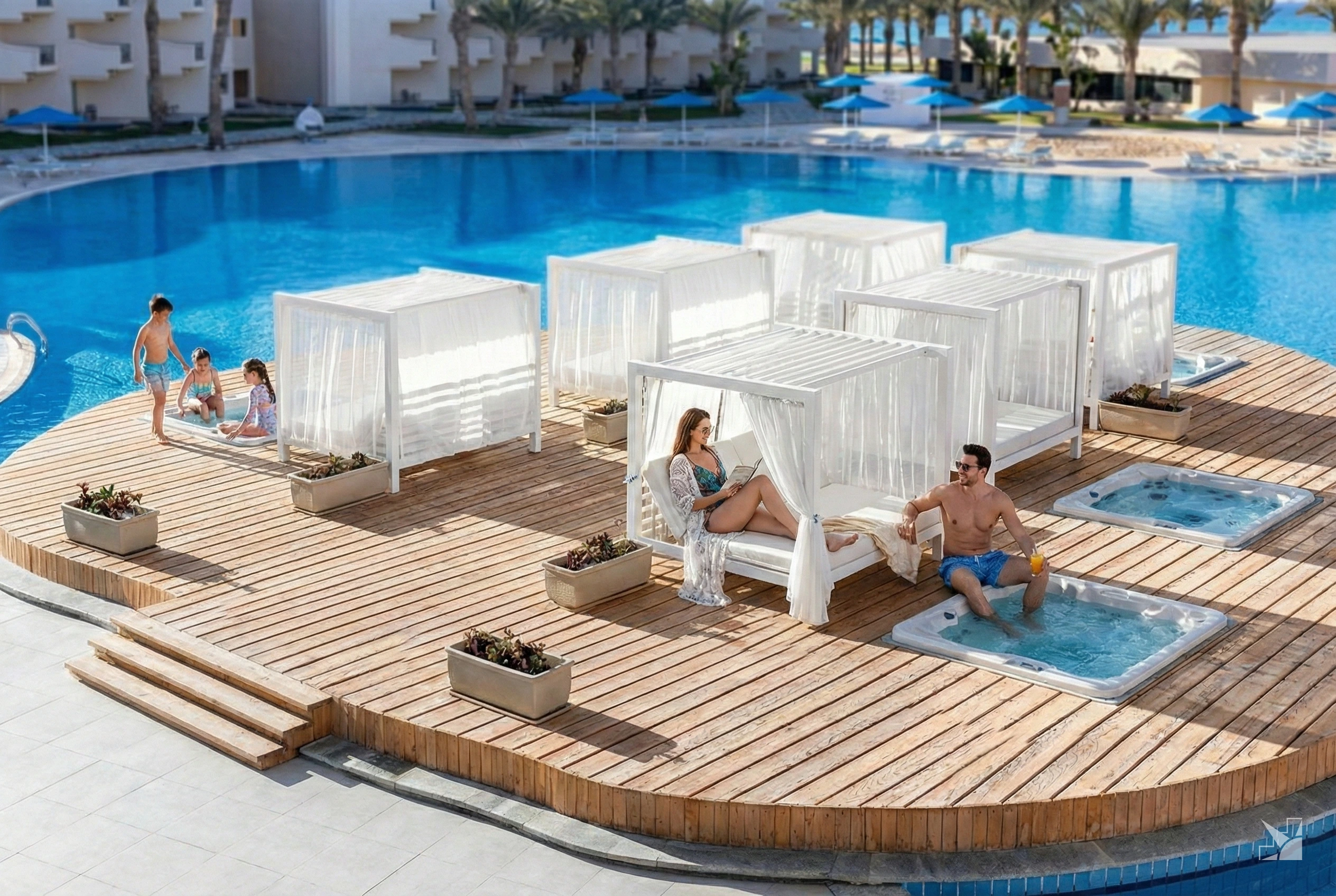
The transition from Cairo to the South is not just geographic; it is psychological. Cairo is adrenaline; the Nile is hypnosis.
You cannot understand Egypt without the river. It is the artery that feeds the desert. However, the "Nile Cruise" industry has become a victim of its own romantic mythology. The image of Agatha Christie's Death on the Nile has been replaced by 300-passenger floating hotels that dock ten-deep in Luxor, blocking the view of the sunset.
For the luxury traveler in 2026, the question is not "Should I cruise the Nile?" but "How do I cruise the Nile without feeling like cargo?" The answer lies in a return to tradition: The Dahabiya.
We need to have a frank conversation about "First Class" versus "Private Class."
The Commercial Cruisers (Oberoi, Sonesta): Even the best ships (like the Oberoi Zahra or Historia) are ultimately restricted by their size. They must dock at the major concrete piers. They run on strict schedules. You eat when they tell you to eat.
The Dahabiya (The Ile Tours Choice): These are two-masted sailboats with 4 to 8 cabins maximum. They have no engines (only a tugboat for calm days). Because they have a shallow draft, they can dock on private islands, sandy banks, and remote villages where the big ships physically cannot go. This is Slow Travel perfected.
THE DAHABIYA |
|
06. Luxor: The Greatest Open-Air Museum
We arrive in Luxor (Ancient Thebes). The sheer density of history here is overwhelming. The East Bank is for the Living (Temples of Luxor and Karnak), and the West Bank is for the Dead (Valley of the Kings).
The amateur mistake is trying to "do Luxor" in a single day. It results in what we call "Temple Blindness"—where every hieroglyph starts to look the same. We split the experience, and crucially, we manipulate the timing.
The Karnak Strategy
Karnak is not a temple; it is a city of God. The Hypostyle Hall, with its 134 massive columns, is large enough to contain the Notre Dame Cathedral. We arrive at 6:00 AM. This is non-negotiable. We want the "Golden Hour" light cutting through the columns before the heat and the crowds from Hurghada arrive.
07. The Underworld: Beyond the Standard Ticket
This is where the "Invisible Layer" of luxury travel is most apparent. The standard entry ticket to the Valley of the Kings allows you to visit three "standard" tombs. These are impressive, but they are often crowded and damaged by humidity.
The true treasures are behind locked gates. They require separate, expensive tickets that discourage 99% of tourists. We include these automatically.
The Tomb of Seti I (KV17)
The Cost Barrier: At roughly $50 USD per person just for entry, most groups skip it.
The Reward: It is the deepest and most vibrant tomb in the valley. The colors look like they were painted yesterday. The "Astronomical Ceiling" in the burial chamber is a masterpiece of ancient science. It is usually empty, allowing for profound silence.
The Tomb of Nefertari (QV66)
The Exclusivity: Located in the Valley of the Queens. Access is strictly limited to 10 minutes to preserve the humidity levels.
The Reward: Known as the "Sistine Chapel of Ancient Egypt." The level of detail in the paintings of Queen Nefertari playing Senet or offering to the Gods is unmatched. It is arguably the most beautiful room in Egypt.
08. The Aerial Perspective
To understand the geography of life and death, you must fly. The Nile Valley is a ribbon of green life surrounded by infinite yellow death (the desert).
We charter a Private Hot Air Balloon flight over the West Bank at sunrise. Unlike the crowded group baskets, a private charter allows for space and photography. Floating silently over the Ramesseum and the Colossi of Memnon as the sun hits the limestone cliffs is the moment where the scale of Thebes finally clicks into place. You see the workers' village, the nobles' tombs, and the pharaohs' hiding spots all in one panoramic sweep.
Part III: The Blue Horizon
The Red Sea Reset & The Logistics of Departure
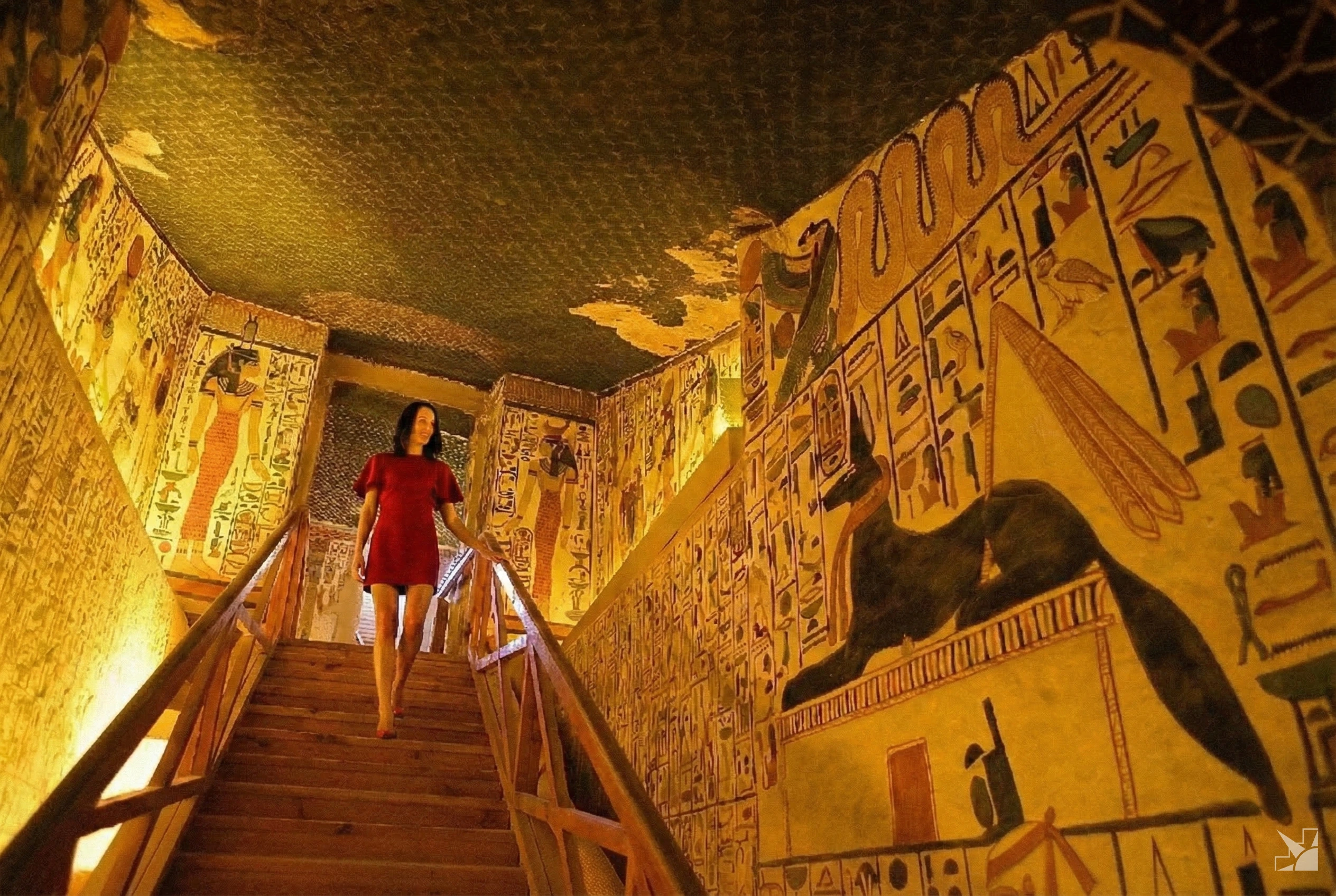
After seven days of granite, limestone, and the intense narrative of 3,000 years of history, the human brain reaches a saturation point. We call this "Temple Fatigue."
It is a biological necessity to counterbalance the dusty ocher palette of the desert with the deep, electric blue of the ocean. This is why no luxury itinerary in Egypt is complete without a tactical retreat to the Red Sea.
But the Red Sea coast is vast, and much of it has succumbed to the "All-Inclusive" mass market model that we strictly avoid. To find silence, you must know exactly where to look.
Not all beaches are created equal. The choice between Hurghada, Sharm El Sheikh, and El Gouna defines the end of your trip.
Sharm El Sheikh
The Vibe: The classic resort town. High security, massive properties (Four Seasons), world-class diving at Ras Mohammed.
Best for: Divers obsessed with pelagic life and shipwrecks.
El Gouna
The Vibe: The "Venice of the Red Sea." A private town built on lagoons. Sophisticated dining, kite surfing, and no aggressive vendors.
Best for: Couples and families who want a European-style resort experience.
Sahl Hasheesh
The Vibe: The "Silent Enclave." Located south of Hurghada. Home to the Oberoi Beach Resort, an all-suite hotel with private pools.
Best for: Absolute privacy and honeymoon-level seclusion. (Our Top Pick).
10. The Underwater Cathedral
The Red Sea is often called "The Aquarium of Allah." It contains some of the healthiest coral reef systems on the planet.
Even if you are not a certified SCUBA diver, the snorkeling here is transformative. The water clarity often exceeds 30 meters (100 feet).
The Private Yacht Strategy
We do not put you on a "Glass Bottom Boat." We charter a private yacht for the day. We sail away from the crowded house reefs to the offshore islands (like Giftun or Tiran). Here, you can swim with wild spinner dolphins in the open ocean. This interaction—unforced and wild—is the perfect counterpoint to the static stone monuments of Luxor. It is pure, kinetic life.
11. The Return to Reality
The end of a trip is usually the most stressful part. The "Post-Vacation Blues" set in the moment you enter the chaotic departure hall of Cairo International Airport (CAI).
We have engineered a solution for this. It is called the Ahlan VIP Service.
The "Invisible" Departure
- STEP 1: You fly from the Red Sea (HRG/SSH) back to Cairo (CAI). A private assistant meets you at the domestic terminal tarmac.
- STEP 2: You are transferred by private car to the International Terminal VIP Lounge.
- STEP 3: While you drink coffee, our team handles your luggage check-in and passport control. You do not stand in a single line.
- STEP 4: You board your flight home. The chaos of the airport never touched you.
"Egypt is not a destination. It is an origin story."
From the paws of the Sphinx to the silence of the King's Chamber, and finally to the blue depths of the Red Sea. This is the Pharaoh's Paradox: A land of ancient dust that makes you feel more alive than anywhere else on Earth.
PRIVATE DEPARTURES • 2026/2027 SEASON
Ile Tours
Curating ultra-private experiences in Egypt for the discerning global traveler. Specialists in logistics, security, and cultural immersion.