Species Positioning Strategy
Where You See Wildlife Matters More Than What You See
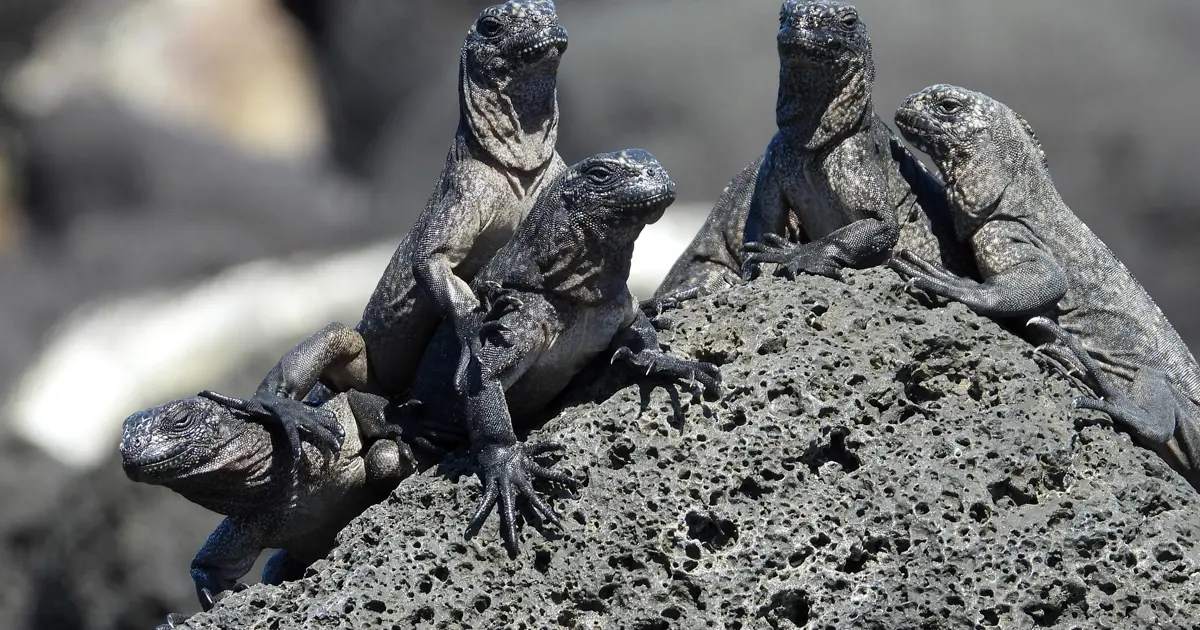
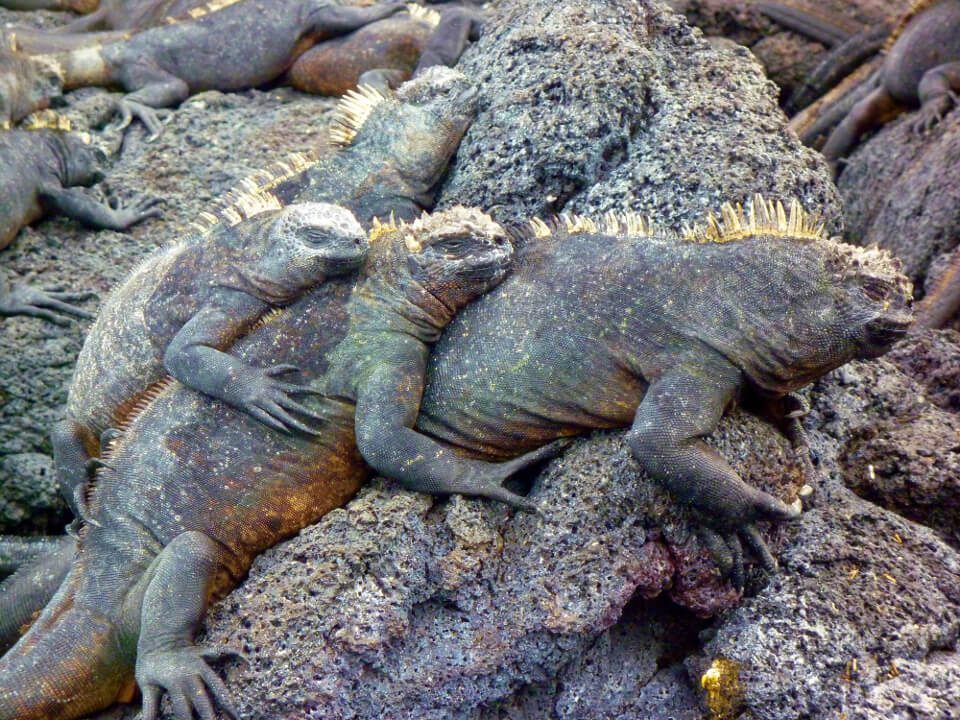
Marine Iguanas
High-density western islands concentrate feeding activity, but also attract the largest cruise overlap. Remote volcanic coastlines offer cleaner observation windows.
Blue-Footed Boobies
Nesting zones near common landing sites reduce behavioral authenticity. Secondary colonies provide more natural courtship and hunting sequences.
Darwin’s Finches
Variation between islands remains critical. Observing multiple micro-habitats reveals evolutionary differences often missed in fixed itineraries.
Route Intelligence
Fixed Itineraries Create Predictable Crowds
Traditional cruise routes follow regulatory loops that cluster vessels into the same landing windows. This reduces variability and compresses wildlife encounters into narrow timeframes.
Private yacht routing removes this constraint, allowing dynamic repositioning based on species activity, weather shifts, and real-time density conditions.
Low-Density Landing Windows
Access is defined by timing, not just location. Early or late positioning avoids peak vessel overlap.
Secondary Site Targeting
Less promoted sites often deliver higher-quality encounters due to reduced human interference.
Adaptive Movement
Real-time adjustments allow alignment with wildlife behavior instead of fixed schedules.
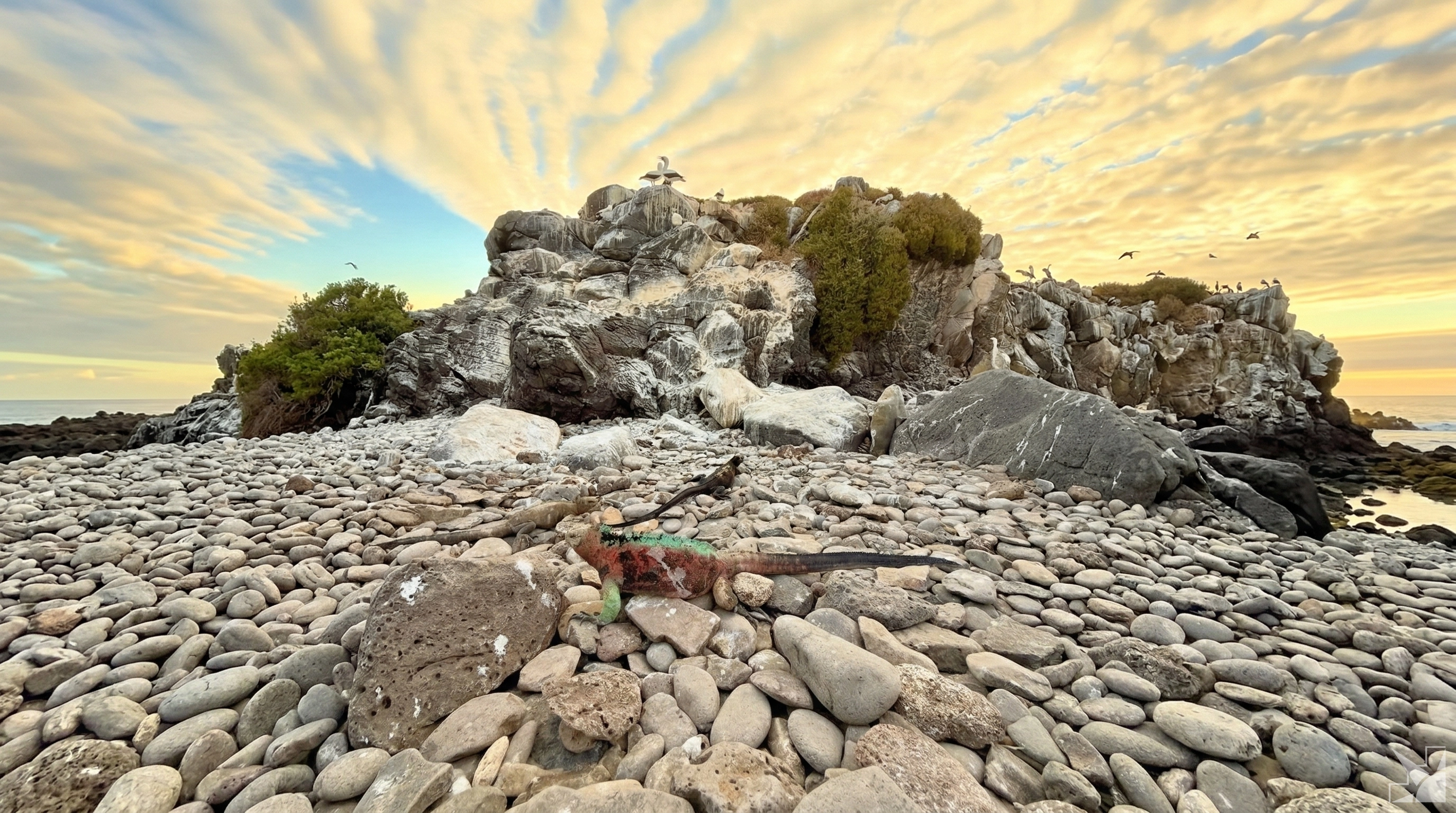
Adaptive Movement
Real-time adjustments allow alignment with wildlife behavior instead of fixed schedules.
Final Insight
The Real Advantage Is Not Seeing More—It’s Seeing Better
Most Galapagos itineraries promise wildlife visibility. Few deliver controlled conditions where species behave naturally. The difference is not access—it is execution.
By shifting from route-based travel to species-driven strategy, private yacht expeditions unlock a level of interaction defined by precision, not probability.
What Changes With Private Strategy?
Flexible positioning based on real-time wildlife activity
Access to secondary, low-density observation zones
Removal of fixed landing schedules
Higher behavioral authenticity in every encounter
Target the Exact Species You Want—Without the Crowds
Build a private Galapagos itinerary focused on marine iguanas, blue-footed boobies, and Darwin’s finches through adaptive routing and low-density access.