Most travelers return from Egypt exhausted. Stop fighting the logistics. A strategic briefing on why the Triangle Route (Cairo, Nile, Hurghada) is the only way to avoid burnout.
Strategic Travel Report 2026
The "Triangle" Protocol:
How to Conquer Egypt Without Burning Out
Egypt is a logistical heavyweight. Most travelers return home exhausted because they fight the country's rhythm. Here is the insider breakdown of why the Cairo-Nile-Red Sea circuit is the only way to survive the chaos and actually absorb the history.
Here is the brutal truth that most travel agencies are afraid to tell you: Egypt is not a vacation; it is an expedition.
It is a country of 110 million people, intense desert heat, and a logistical rhythm that punishes improvisation. We see it every day: intelligent travelers trying to build their own "unique" route, only to spend 40% of their trip stuck in traffic or arguing with taxi drivers.
After decades of operational refinement, we know there is only one "Golden Protocol" that works. It is not about checking boxes; it is about energy management. It requires a specific triangulation of three distinct zones:
The Core Strategy
"You need three energies to make the trip work: The Intellectual Challenge (Cairo), The Moving Hotel (The Nile), and The Biological Reset (The Red Sea). Remove one, and the tripod collapses."
Phase I: Decoding the Cairo Chaos
Cairo is a slap in the face. It’s loud, dusty, and magnificent. To conquer it, you need a strategy, not a checklist. The biggest mistake travelers make is rushing straight to Giza the morning after they land. If you do this, you ruin the narrative.
The "Evolution of Stone" Theory
Engineering didn't just appear perfectly at Giza. It was a painful process of trial and error. Our itinerary forces you to see the "Rough Drafts" before you see the Masterpiece. This is non-negotiable for understanding the scale of the achievement.
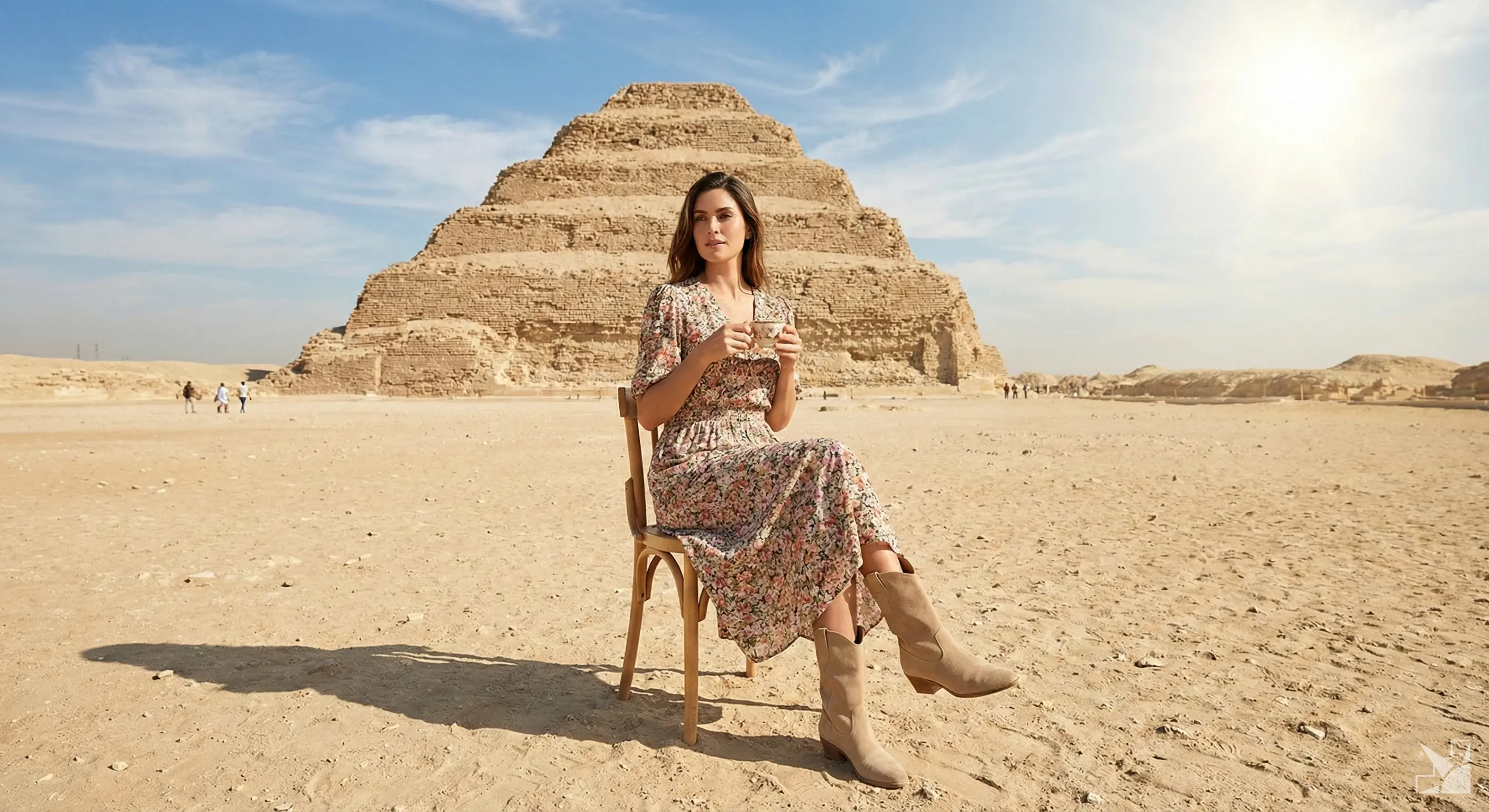
- Step 01: The Prototype Sakkara (The Step Pyramid) You start here. The Step Pyramid is jagged, uneven, and layered. It looks like what it is: a first attempt to reach the sky. The atmosphere is quiet, ancient, and dusty.
- Step 02: The Ego Memphis (The Colossus) You see the fallen Colossus of Ramses II. This gives you the scale of the ambition. It sets the political context: these were built by men who believed they were gods.
- Step 03: The Perfection Giza (The Great Pyramid) You arrive here last, in the afternoon. Because you saw Sakkara in the morning, the Great Pyramid hits you differently. You appreciate the smooth casing stones and the mathematical precision because you saw the "messy version" earlier.
The Silence vs. The Noise
Cairo isn't just stones. It's layers of civilization stacked on top of each other. You cannot leave without navigating the two extremes of the city's soul.
The Silence (Old Cairo)
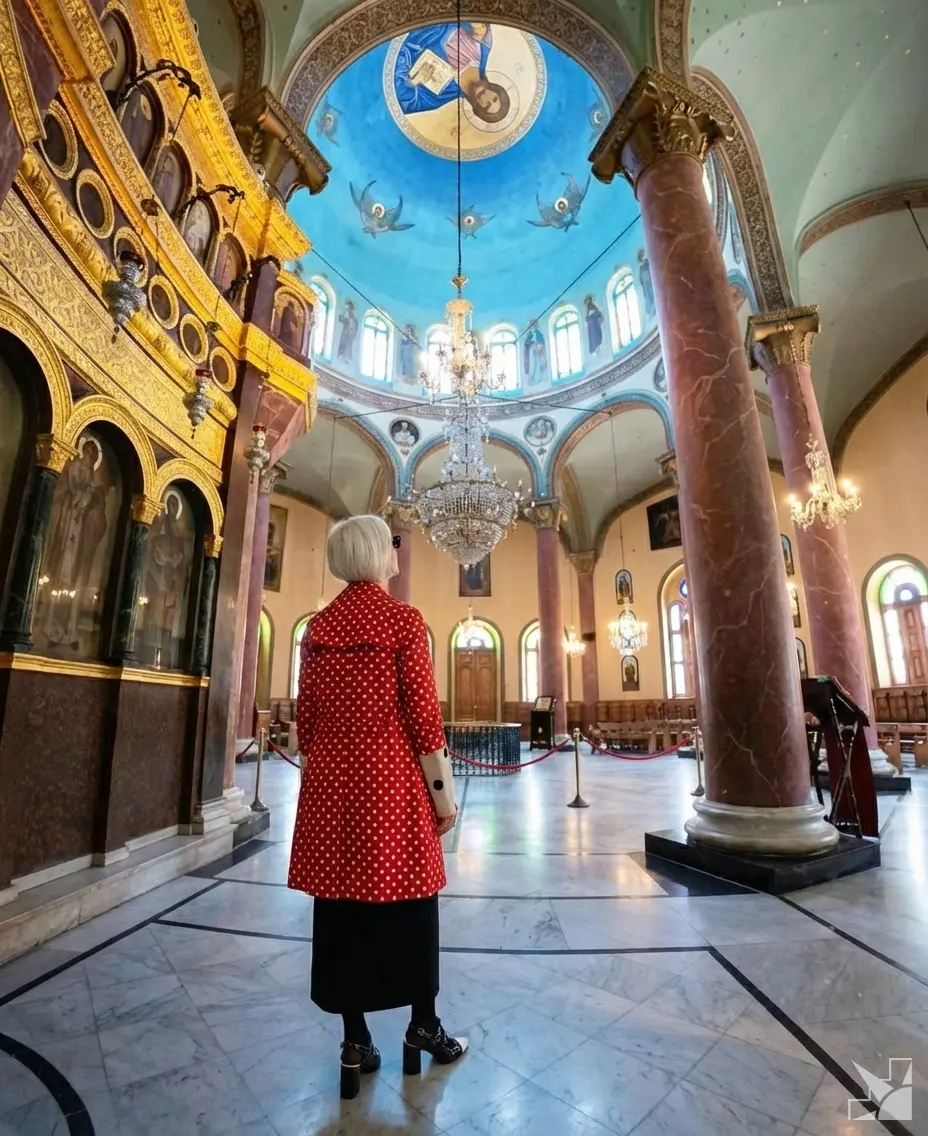
We take you into the crypt of St. Sergius in Coptic Cairo, where the air is cool and smells of incense. It is a fortress of peace inside the chaos. This is the Egypt that predates Islam, a quiet enclave that feels centuries away from the traffic outside.
The Noise (The Bazaar)
Then, we throw you into Khan El Khalili at sunset. It’s aggressive, loud, and vital. It is a medieval trading engine that hasn't stopped running for 600 years. Balancing these two energies is the only way to understand the city.
Next in Part II: Leaving the city behind. Why the Nile Cruise is a logistical necessity, not a luxury choice...
Phase II: The "Moving Hotel" Protocol
Once we leave the density of Cairo, the geography of Egypt dictates our strategy. The temples of the south—Luxor, Karnak, Edfu, Kom Ombo—are strung along the river like pearls.
Many travelers ask us: "Can we do this by car?" The answer is yes, but it is a strategic error. The distance between Luxor and Aswan is broken by checkpoints, speed bumps, and heavy truck traffic. Attempting to connect these sites via land hotels involves disjointed transfers and packing/unpacking daily.
The Logistics of the Boat
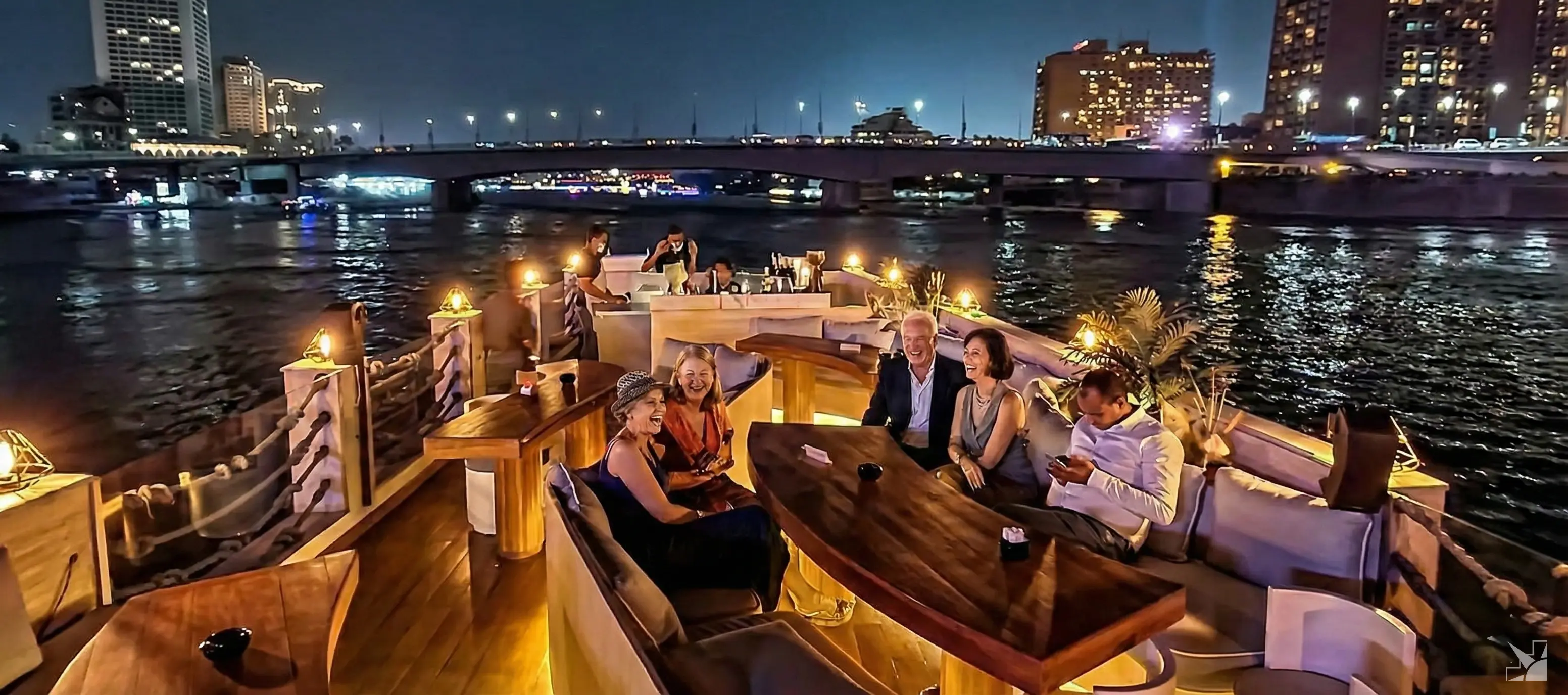
The Nile Cruise is not just a romantic "Agatha Christie" fantasy; it is a cold, hard efficiency tool. It acts as a Mobile Base. It moves while you sleep or dine. It recovers approximately 12 to 15 hours of vacation time that would otherwise be lost to transit. You unpack once in Luxor and don't touch your suitcase until Aswan.
Warning: The "Engine Room" Trap
This is the #1 complaint on TripAdvisor for Egypt, and it is entirely avoidable. Nile ships are powered by massive diesel engines located at the rear (stern). If you book a "Standard Cabin" blindly, you risk being placed directly above the vibration.
The Insider Fix
Always demand a cabin in the Forward Section (Bow). The further forward you are, the quieter the ride. We pre-filter cabins to ensure you are physically separated from the engine mechanics. Silence is the ultimate luxury on the Nile.
Navigating the "Temple Rush"
The river leg is intense. You are visiting some of the largest religious structures ever built. To survive, you need to understand the rhythm.
The Open-Air Archive (Luxor)
Karnak is overwhelming. It is a complex so vast it could hold ten European cathedrals. It is the "Vatican of the Ancient World."
Across the river lies the Valley of the Kings. This is not just a cemetery; it is an art gallery hidden in a mountain. The preservation of color inside these tombs—protected from the sun for three millennia—is shocking. It looks like it was painted yesterday.
The Contact Sport (Edfu)
The Temple of Horus in Edfu is the best-preserved temple in Egypt. But getting there is chaotic. The dock is swarmed by horse carriages.
The Tactic: Do not hesitate. Your guide acts as a shield. Once you get past the chaos of the dock and enter the temple, the noise fades. The structure is massive—walls 36 meters high—and cool inside. It is a fortress of silence.
The Strategic Imperative: Abu Simbel
Located 280km south of Aswan, near the Sudanese border, the Great Temple of Ramses II is the climax of Egyptian engineering.
On many itineraries, this is marked as "Optional." Strategically, it is mandatory.
To leave Egypt without standing before the four colossi of Ramses is to leave the story unfinished. It was carved out of a solid mountain and moved piece by piece to save it from the Nile. It is the visual finale of the southern chapter before we retreat to the sea.
Phase III: The "Decompression Chamber"
By Day 8, even the most dedicated history enthusiast hits a wall. We call this "Temple Fatigue."
Your brain has processed 5,000 years of history, heat, and visual data. If you fly straight home from Luxor, you return exhausted. This is a strategic error. You need a buffer zone.
The Biological Reset
"We don't schedule the Red Sea for 'sightseeing.' We schedule it for processing. The silence of the desert coast allows the chaos of Cairo to settle."
This is why the Red Sea (Hurghada) is mandatory. Unlike the frenetic energy of Cairo or the early wake-up calls of the Nile, Hurghada operates on "No-Agenda Time."
The Visual Contrast
The Red Sea contains some of the clearest water on Earth. The contrast of the turquoise water against the yellow desert is mentally restorative. It is a complete sensory break from the stone and dust of the temples.
The Logistical Flow
It is a short transfer from the Nile Valley. It integrates seamlessly into the "Golden Circuit," allowing you to rest for two days before your final flight back to Cairo for departure.
The Final Verdict
Egypt is not a place you visit; it is a place you survive and conquer.
If you try to hack the system, you will lose. But if you respect the Triangle Strategy—Starting with the intellect in Cairo, flowing with the logistics of the Nile, and resetting the body in the Red Sea—you will not just see the monuments; you will understand them.
Stop Guessing. Start Planning.
You don't need to piece this logistics puzzle together yourself. We have already built the infrastructure for the perfect 12-day loop.
Secure your dates for the 2026 Season