The Strategy Series: Itinerary Design
The 12-Day Blueprint
Engineering the Perfect Egypt Trip in 2026
Planning a trip to Egypt is not like planning a trip to Paris or Rome. In Europe, you can wander. In Egypt, you must strategize. The country is a logistical challenge disguised as a vacation destination. The monuments are massive, the heat is formidable (even in winter), and the crowds in 2026 are projected to be at record highs due to the full opening of the Grand Egyptian Museum (GEM).
tt
Most American travelers make a fatal mistake: they try to "conquer" Egypt. They download a standard "10-Day Egypt Itinerary" from a generic travel blog, which packs 4 temples a day, 5:00 AM wake-up calls, and internal flights every 48 hours.
The result is "Temple Fatigue." By Day 5, the majesty of the Pharaohs dissolves into a blur of sandstone and exhaustion. You stop seeing the history; you just want the air conditioning. This guide proposes a different approach: The Ile Tours Blueprint. It prioritizes geography, biology (your energy levels), and exclusive access over mere "checklist tourism."
The "Rule of 12"
Can you see Egypt in 7 days? Yes, but you will suffer.
Can you see it in 10? Yes, but you will rush.
The magic number is 12 days. This allows for the "Golden Triangle" (Cairo, Nile, Red Sea) with enough breathing room to actually process what you are seeing. It allows for a "decompression day" after the flight and a "recovery phase" after the desert.
01. The Cairo Calculus: Landing & Logistics
Your flight from JFK, Dulles, or LAX will land in Cairo (CAI) likely in the late afternoon or evening. Your instinct will be to start touring immediately the next morning. Do not do this. Cairo is a sensory assault—noise, traffic, dust, and energy. If you attack it while jet-lagged, you will hate it.
The first strategic decision of your trip is Where to Base Camp. In 2026, the center of gravity has shifted.
Strategy A: The Historic Immersion
LOCATION: GIZA PLATEAU
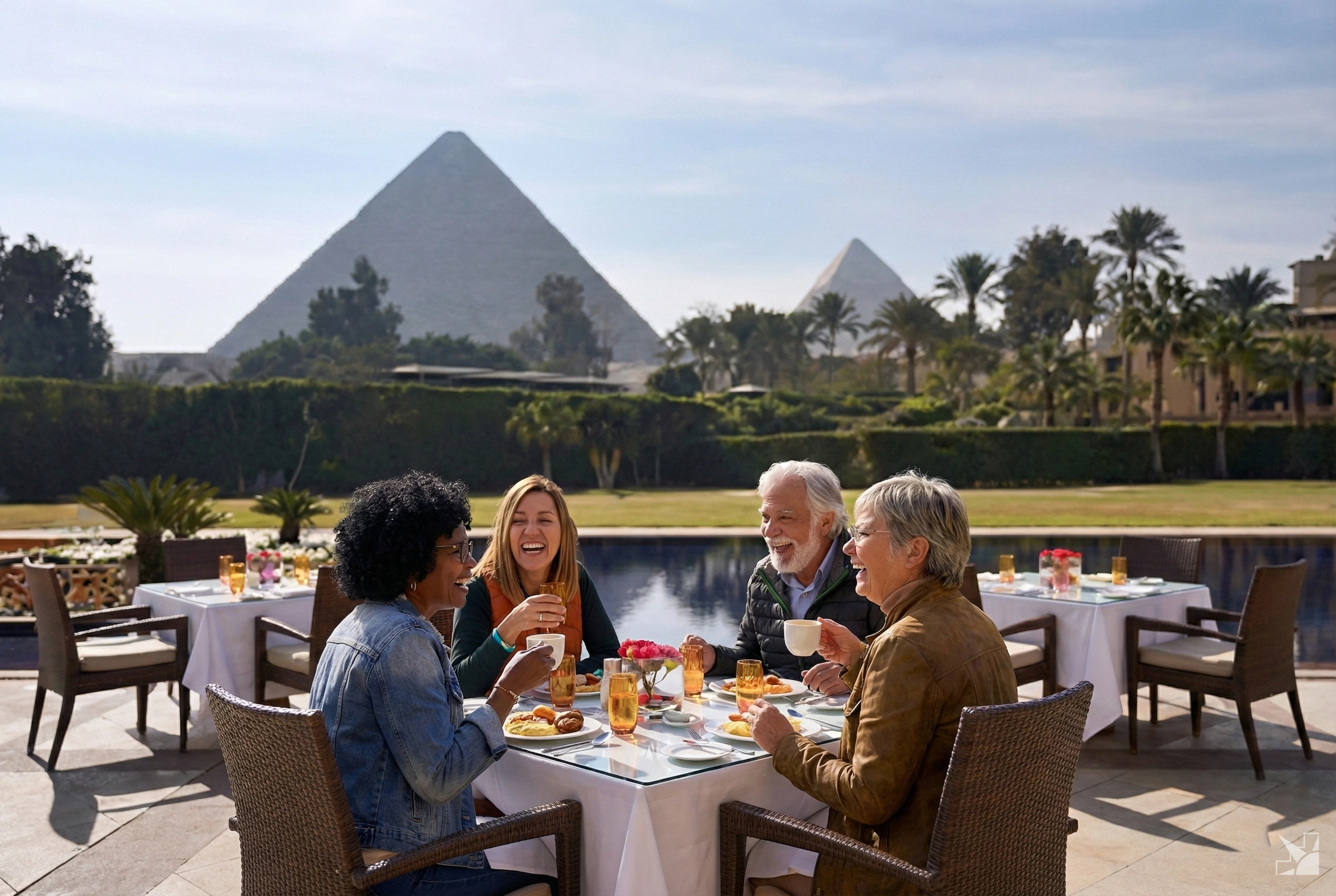
Marriott Mena House. You stay right next to the Pyramids.
Pros: You wake up looking at Khufu. You are 5 minutes from the Giza entrance and 10 minutes from the new Grand Egyptian Museum (GEM). You avoid the gridlock of downtown Cairo.
Cons: You are far from the medieval city and the airport (1 hour+).
Verdict: The Best Choice for 2026. With the GEM open, Giza is the new center of the action.
Strategy B: The Urban Core
LOCATION: NILE CORNICHE
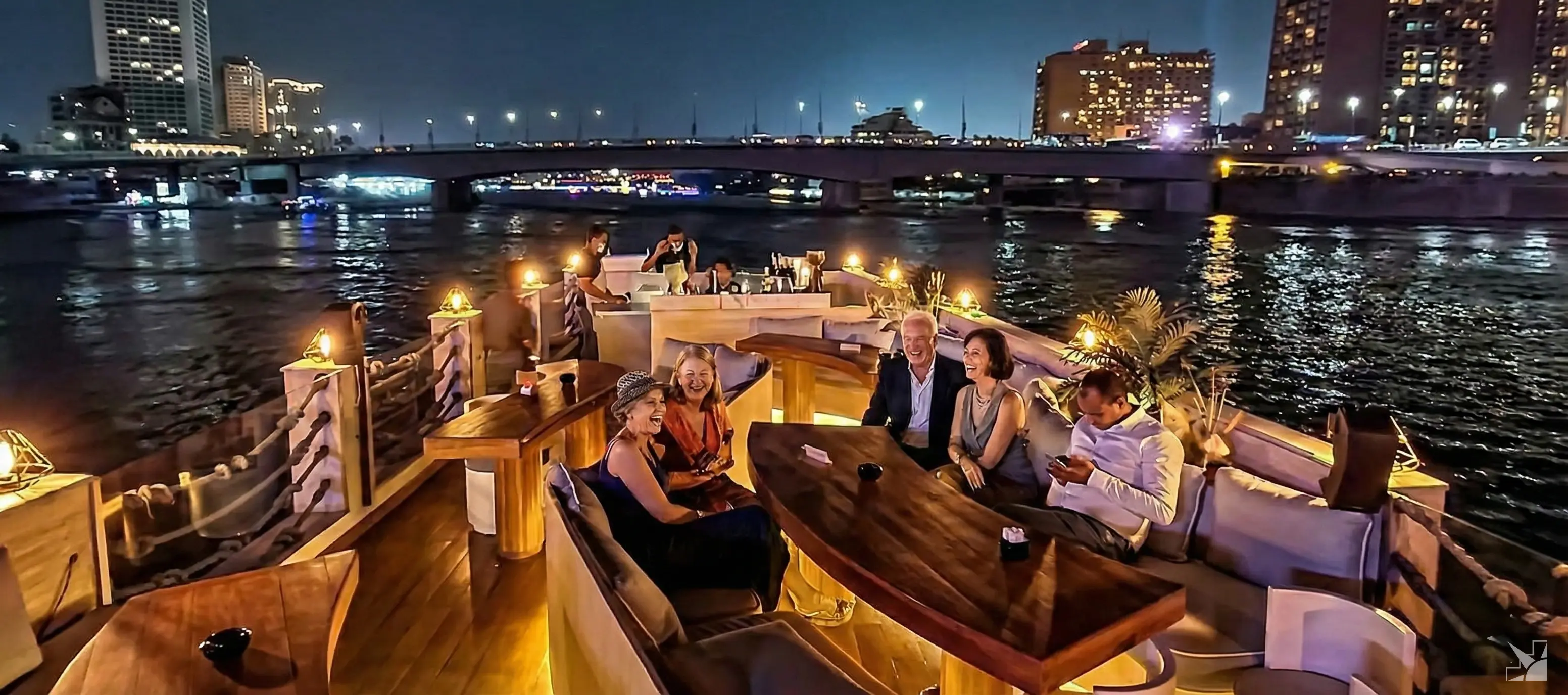
Four Seasons Nile Plaza / St. Regis. You stay in the heart of the city.
Pros: Incredible Nile views. Close to the National Museum (Mummies) and Khan el-Khalili bazaar. Better dining options at night.
Cons: The traffic to get to the Pyramids/GEM can take 90 minutes each way.
Verdict: Only if you are a "City Person" who thrives on urban chaos.
02. The "Ghost Protocol": Giza & The GEM
Day 2 is the most important day of the trip. It is the bucket list moment: The Great Pyramids.
The standard tourist experience at Giza is stressful. You are bombarded by vendors selling plastic camels, the sun is relentless, and thousands of buses unload simultaneously at the Panorama point. It is noisy and chaotic.
The Ile Tours Solution: Private Access ("The Ghost Protocol").
The Sphinx Paws Access
General admission tickets allow you to view the Sphinx from a crowded terrace about 100 yards away, looking down at its shoulder. You cannot get close.
The Upgrade: We secure a special government permit that opens the gate to the enclosure floor. You walk between the paws of the Sphinx. You stand directly under the chin of the monument. There are no crowds. Just you, your Egyptologist, and the Sphinx. This transforms a "photo op" into a spiritual experience.
The Grand Egyptian Museum (GEM): After the Pyramids, you do not go back to the hotel. You go to the GEM. It is located 2km from the Pyramids.
The strategy here is "Reverse Timing." Most groups hit the museum at 10:00 AM. We schedule your visit for 2:00 PM, after a private lunch. By then, the morning rush has cleared, and the light in the atrium (illuminating the statue of Ramses II) is golden. We focus on the Tutankhamun galleries first, which are the crown jewels, before fatigue sets in.
03. The Nile Strategy: Luxor
Once you leave Cairo, the logistics shift from "Traffic Management" to "Crowd Management." You fly to Luxor to begin the river journey. This is where the standard itinerary fails most travelers. The typical tour bus dumps 50 people at Karnak Temple at 10:00 AM. This is a strategic error. At 10:00 AM, Karnak is a furnace, and the light is harsh and flat.
The West Bank: Beyond King Tut
Most American travelers are obsessed with entering the Tomb of Tutankhamun (KV62). While famous, it is historically small and visually underwhelming compared to the giants nearby. If you only visit Tut, you have missed the point of the Valley of the Kings.
Essential Upgrade
The "Sistine Chapel" of Egypt
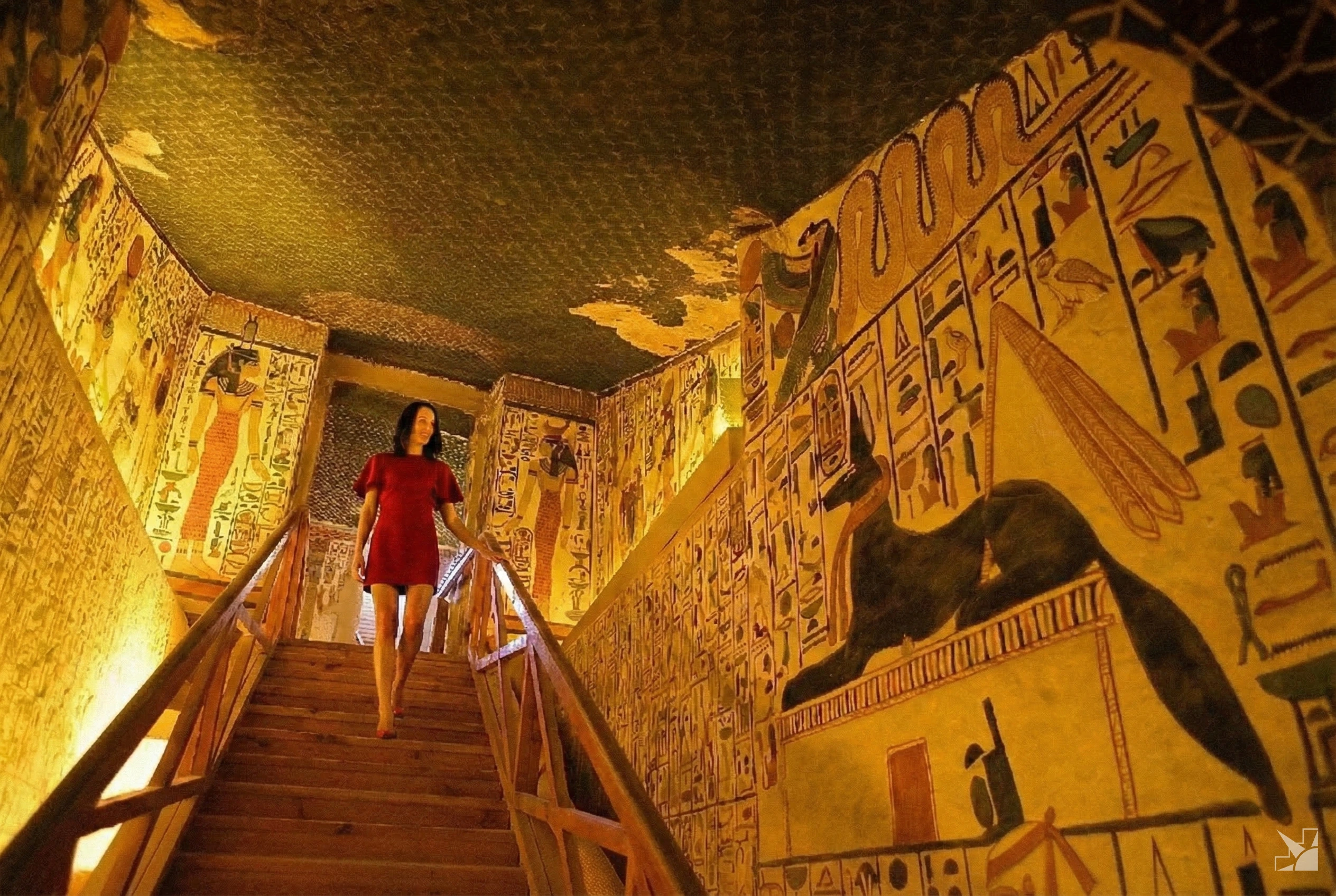
Queen Nefertari (QV66) in the Valley of the Queens.
This is not included in standard tickets. It costs approximately $100 USD extra per person, and access is limited to 10 minutes. Buy it. The colors are so vivid they look wet, painted yesterday. It is widely considered the most beautiful interior in the ancient world. Skipping this to save money is the biggest mistake a luxury traveler can make.
04. The Abu Simbel Decision
On Day 9, you reach Aswan. The question every traveler asks is: "Is the extra trip to Abu Simbel worth it?" The answer is Yes, it is non-negotiable. Ramses II’s sun temple on the Sudanese border is an engineering miracle. But the logistics define the memory.
Option A: The Convoy
The 3:00 AM Bus
- ❌ 4-hour drive through desert.
- ❌ Arrival with 500 other buses.
- ❌ Return trip exhausts you for Day 10.
Option B: The Air Bridge
The 45-Minute Flight
- ✅ Sleep until 7:00 AM.
- ✅ Aerial view of Lake Nasser.
- ✅ Back in Aswan for lunch by the pool.
The "Air Bridge" allows you to see the monument without destroying your circadian rhythm. It turns an endurance test into a seamless excursion.
05. The Red Sea Reset
After 9 days of temples, dust, flight connections, and intense history lessons, your brain will hit "Cognitive Saturation." You physically cannot process another hieroglyph. This is why the standard tour that flies you straight home from Aswan is flawed. You return home exhausted, needing a vacation from your vacation.
The Decompression Chamber: Sahl Hasheesh
We end the trip with 3 days on the Red Sea. But Geography Matters:
- Avoid Hurghada City: It is chaotic, mass-market, and crowded.
- Choose Sahl Hasheesh or El Gouna: These are gated, exclusive enclaves. The hotels here (like The Oberoi Sahl Hasheesh) are all-suite properties with private beaches.
The goal here is Biological Recovery. The Red Sea offers some of the best snorkeling in the world. Floating in the turquoise water creates a "Blue Mind" state that resets your nervous system before the long flight back to the US.
The 2026 Itinerary Snapshot
Phase 1: The Foundation
Day 1-3: Cairo & The Pyramids
Arrival logistics, Giza Plateau (Private Access), Grand Egyptian Museum (GEM) VIP Tour, and Old Cairo.
Phase 2: The Flow
Day 4-8: The Nile Corridor
Fly to Luxor. Board Dahabiya/Cruise. Karnak (Sunrise), Valley of the Kings (Nefertari), Edfu, Kom Ombo.
Phase 3: The Deep South
Day 9: Abu Simbel & Aswan
Abu Simbel (Air Bridge), Philae Temple sunset, Old Cataract Hotel tea.
Phase 4: The Recovery
Day 10-12: Red Sea & Departure
Private transfer to Sahl Hasheesh. Snorkeling, relaxation. Flight back to Cairo for international departure.
"Don't just visit Egypt. Execute a strategy."
The difference between a stressful trip and a life-changing journey is logistics. In 2026, access is the ultimate luxury. Let us engineer your blueprint.
Limited Availability for GEM Opening Season
Ile Tours Intelligence
Strategic Travel Planning for the High-Net-Worth Traveler.