Don't let the 22-million-person megacity ruin your Egyptian vacation. Discover our tactical guide to Cairo logistics, traffic avoidance, and safe, curated cultural experiences.
The Megacity Dossier
Why Cairo Breaks the Independent Traveler
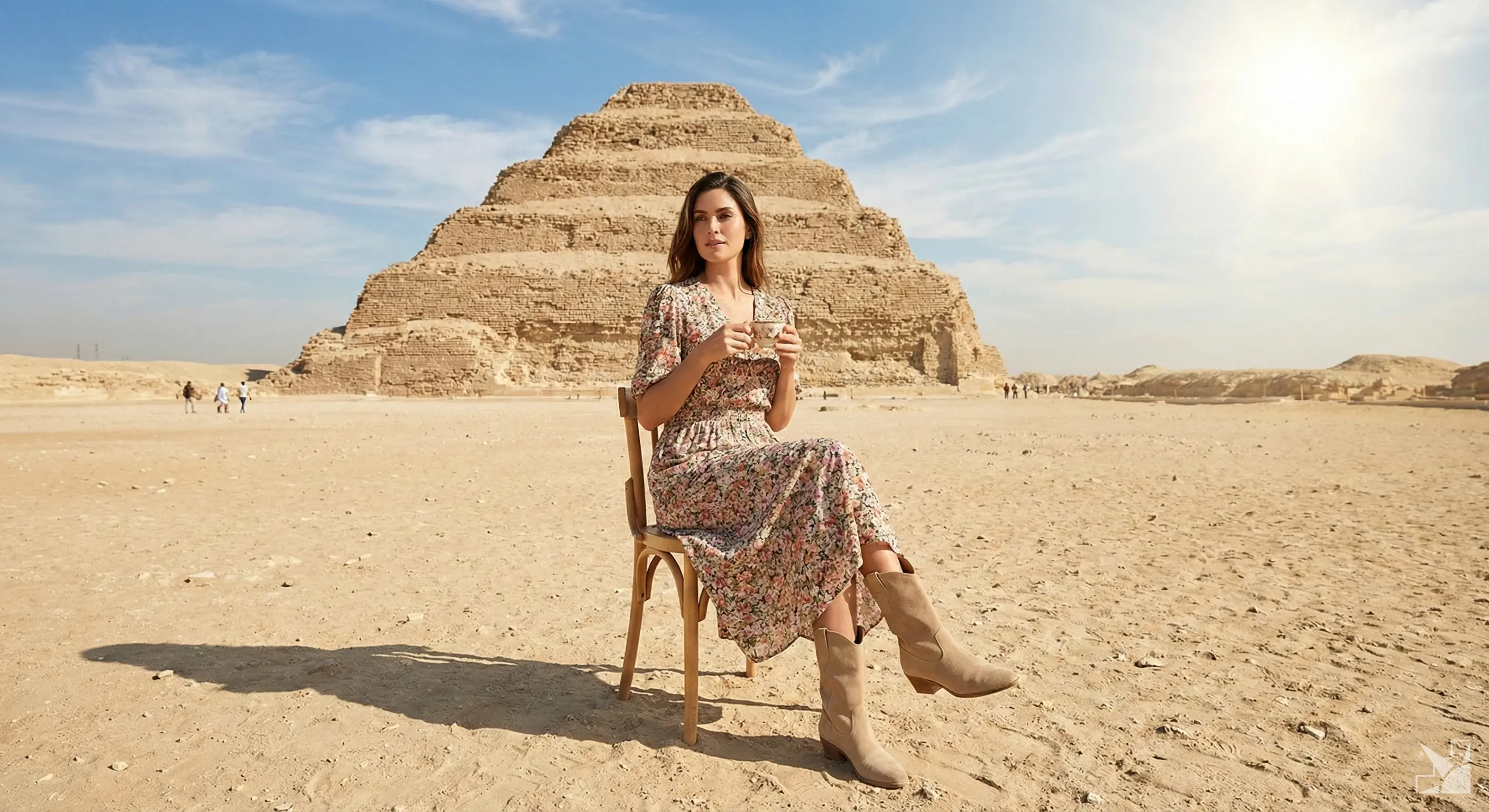
"You cannot be both the defensive urban navigator and the awe-struck observer. This dossier explains exactly why purchasing a pre-arranged 'Extraction Protocol' is the most intelligent logistical investment you will ever make."
One of the most financially damaging myths propagated by online travel influencers is that Egypt is a nation you can simply "figure out" upon arrival. They scan a map, observe a mere fifteen miles between Cairo International Airport and their discounted hotel, and falsely assume the logistics will mimic a European capital. This singular assumption routinely destroys the first forty-eight hours of a mature traveler's vacation.
Cairo is not merely a tourist destination; it is an unrelenting, hyper-kinetic, 22-million-person living organism. It demands immediate, high-stakes logistical negotiation from a Western traveler who is likely arriving jet-lagged after a 14-hour flight.
Without a highly structured entry plan, the city's sheer volume of traffic, noise, and aggressive commerce immediately places you on the defensive. You expend invaluable mental and physical energy merely attempting to survive the transit, energy that should be reserved for absorbing the majesty of the pyramids.
| I | The Terminal 3 Ambush |
The friction of Egypt begins the precise second you step off your airplane at Cairo International Airport (CAI). Because most flights from North America arrive in the chaotic early hours of the morning, you are already biologically compromised. What you face next is a multi-layered gauntlet designed to extract maximum capital from the unprepared tourist.
The Independent Reality
First, the DIY traveler must hunt down obscure bank kiosks to physically purchase a Visa-on-Arrival sticker with exact foreign cash. Once through passport control, the true psychological chaos begins in the arrivals hall.
You are immediately swarmed by aggressive, unofficial taxi touts physically grabbing at your luggage handles, men pushing inflated SIM cards, and fake "Uber drivers" attempting to lure you to unmetered vehicles in the dark parking lot.
"Inside-The-Perimeter" Extraction
We deploy our official, government-cleared representatives before you even reach passport control.
A vetted operative holding a placard meets you directly outside the jet bridge possessing your pre-arranged visa. They bypass the banking lines, guide you swiftly through a dedicated VIP immigration lane, handle your baggage, and act as a physical shield through the chaotic arrivals hall, escorting you directly into a pre-cooled luxury vehicle.
| II | Asymmetric Traffic Warfare |

Once secured inside a vehicle, you encounter the true defining characteristic of modern Cairo: its suffocating traffic density. Crossing the 15 miles from the airport to the Giza Plateau or the Downtown core can take anywhere from 45 minutes to three excruciating hours, dependent entirely on localized gridlock and your driver's tactical knowledge.
The "Time-Bleed" Illusion
Independent travelers frequently book hotels based purely on online aesthetic photos, ignoring the megacity's brutal geography. If your hotel is located near the airport, but your objective is the Pyramids of Giza at 8:00 AM, you will be physically trapped in two hours of horn-blaring, bumper-to-bumper rush-hour traffic every single morning and afternoon.
The Solution: Strategic Base-Camping
A premium logistical agency executes military-grade routing. Our ground operations team perfectly synchronizes your hotel location with your daily itinerary. If tomorrow's focus is the new Grand Egyptian Museum (GEM) and Saqqara, we position your base camp strictly in Giza, eliminating the cross-city transit. We leverage ring roads, avoid known urban chokepoints, and manipulate departure times to keep your momentum fluid.
| III | The Physics of the Crosswalk |
The psychological friction of navigating Cairo does not cease upon exiting your vehicle. For the mature traveler, the simple act of crossing a major intersection in Downtown Cairo or traversing the Nile Corniche presents a profound physical hurdle. Pedestrian infrastructure is virtually nonexistent.
To cross a street in Cairo, one must physically step directly into four lanes of moving, honking traffic and establish unspoken visual dominance with oncoming drivers, trusting the vehicles to flow around your body. Independent travelers frequently experience decision paralysis, remaining physically stranded on street corners waiting for a break in traffic that will mathematically never arrive. This fear forces them to abandon pedestrian exploration entirely.
This environment reveals the absolute necessity of a dedicated private Egyptologist. They do not merely recite historical dates; they deploy as your Physical Urban Facilitator. Understanding the exact rhythm of the Cairene asphalt, they step confidently into the chaos, raise a hand with absolute local authority to halt traffic, and escort you securely to the opposite pavement. They absorb 100% of the urban friction.
| IV | Sensory Overload in Khan el-Khalili |

The historic Khan el-Khalili bazaar is a sprawling, 14th-century labyrinth of incredibly narrow alleys, overpowering scents, and thousands of highly persuasive merchants. It is visually spectacular, yet it operates as a high-pressure commercial environment engineered to extract capital from the unescorted tourist.
The Unprotected Target
Independent tourists wandering the bazaar are instantly identified as prime, vulnerable targets. Merchants routinely block physical pathways, utilize aggressive "free tea" invitations, and execute high-pressure negotiation tactics designed to sell mass-produced souvenirs at hyper-inflated margins.
The compounding stress of continuous haggling, extreme noise density, and the entirely rational fear of geographical disorientation transforms a cultural excursion into an exhausting psychological battle.
The Curated Intelligence Asset
We fundamentally alter the architecture of the experience, transforming a chaotic commercial trap into an exclusive private exhibition.
Your dedicated guide steers you precisely past aggressive front-line vendors, navigating deep into the hidden alleys to introduce you strictly to authentic, generational artisans: the master coppersmiths and genuine antique dealers. They manage all complex cultural and financial negotiations, guaranteeing fair domestic pricing. You photograph the vibrant atmosphere fully shielded from predatory retail tactics.
| V | The Antiquities Labyrinth |
The Egyptian Museum and the Grand Egyptian Museum (GEM) house over 120,000 artifacts. However, thousands of world-changing relics sit in glass cases with minimal, faded, or missing labels. Navigating this without intelligence leads to severe cognitive fatigue.
| VI | The "Friendly Local" Intercept |
The most insidious trap for the independent traveler in Cairo relies entirely on Western politeness. Here is the anatomy of the scam and the required counter-measure.
A well-dressed English speaker approaches you, pointing out a "stain" on your shoe or claiming to recognize you from your hotel to force a conversation.
He casually mentions today is the "absolute last day" of a government papyrus exhibition nearby and insists on walking you there.
You are led into a high-pressure sales room and emotionally bullied into spending hundreds of dollars on worthless, fake merchandise.
The Operational Firewall
These psychological intercepts do not happen to our clients. Professional street hustlers recognize official agency guides and deliberately avoid them. We transport you directly to certified, government-approved institutes, entirely free from aggressive coercion.
Stop trying to "figure out" a 22-million-person megacity.
Cairo punishes the unprepared with physical exhaustion and wasted time. Invest in the logistical armor required to actually enjoy its profound history.