The Heritage Series • Vol. 1
The Blue Blood
of Mexico
Forget the shot glass. We are entering the land of the blue agave.
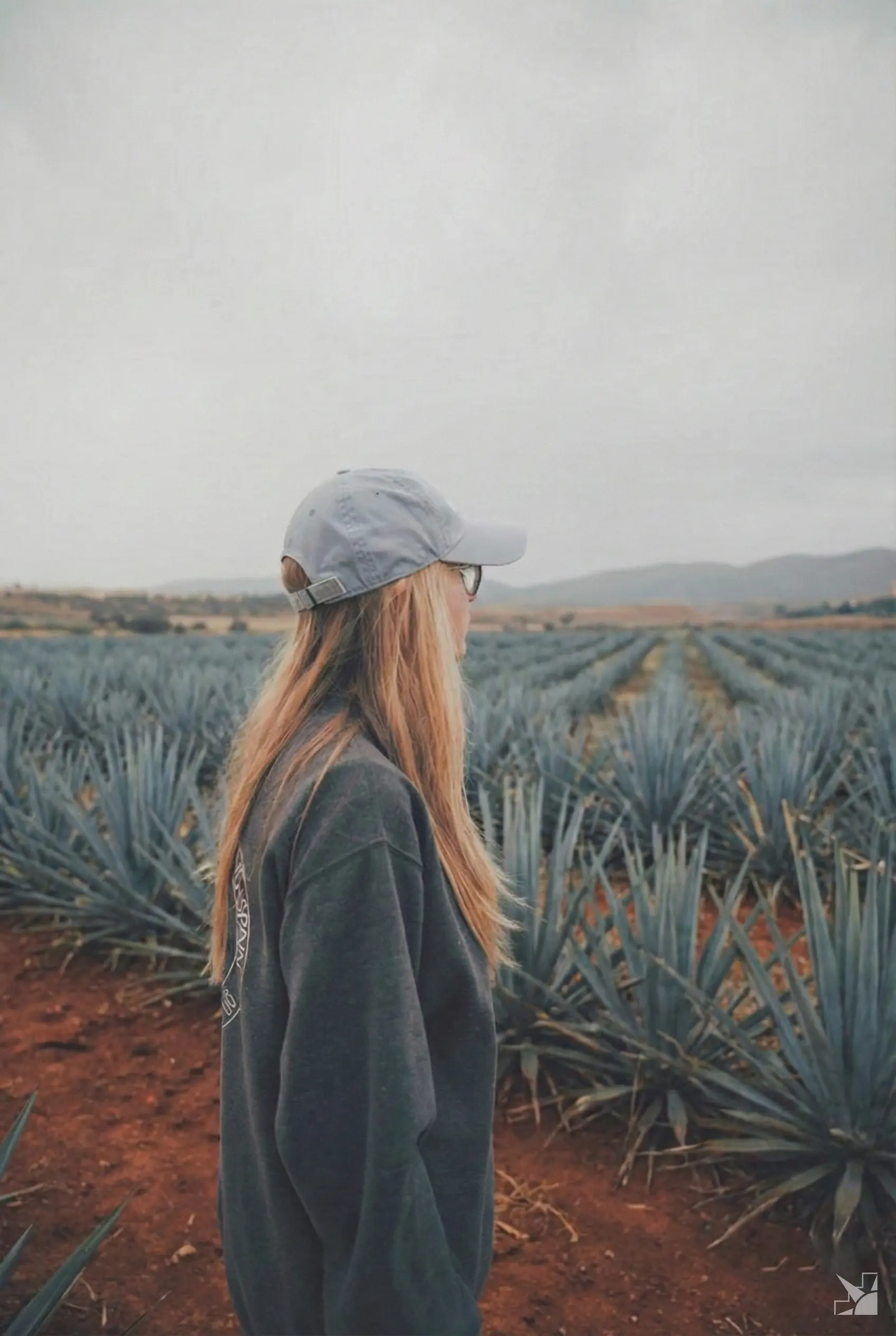
If you think Tequila is just a drink for spring breakers, you haven't been to Jalisco. Just a few hours inland from the Pacific, the earth changes color.
The soil turns deep red—rich in volcanic iron—and the horizon turns an unparalleled shade of blue. This is not the ocean. It is a sea of Agave Tequilana Weber, a plant that takes eight years to mature and holds the soul of Mexico in its heart.
The UNESCO Ocean
We begin our journey in the Agave Landscape, a UNESCO World Heritage site. To the untrained eye, it looks like a vineyard, but it is far more dangerous. The agave leaves are razor-sharp.
The Jimador's Craft
"Machines cannot work here. The harvest is a brutal ballet performed by men who slice 100-pound plants with a circular blade in seconds."
These men, the Jimadores, possess a skill passed down for generations. They must identify the exact moment the plant is "ripe"—too early, and it’s bitter; too late, and the sugar is gone. They strip the leaves to reveal the white "piña" (pineapple), the raw material that will eventually become liquid gold.
The Secret Cellars
We do not visit the commercial factories where tourists get drunk. We enter the private Haciendas—ancient colonial estates that feel more like castles than distilleries.
In a true Hacienda tasting, there is no lime. Lime is used to mask bad flavor. Here, we drink from crystal flutes. You taste the terroir: the volcanic minerals, the roasted sweetness of the earthen ovens, and the vanilla notes from French oak barrels. This is not a drink to be shot; it is a history to be sipped.
(End of Part I)
The Heritage Series • Vol. 2
The Gentleman’s
Sport
Where art is painted in fire and horses are treated like royalty.
Leaving the blue fields behind, we follow the Sun Road into the heart of the valley. We arrive in Guadalajara, but this is not the chaos of Mexico City. This is the "Pearl of the West."
Here, colonial heritage isn't preserved in a museum; it's worn. It is the birthplace of the two sounds that define Mexico to the world: the stomp of the horse and the cry of the trumpet.
The Sistine Chapel of the Americas
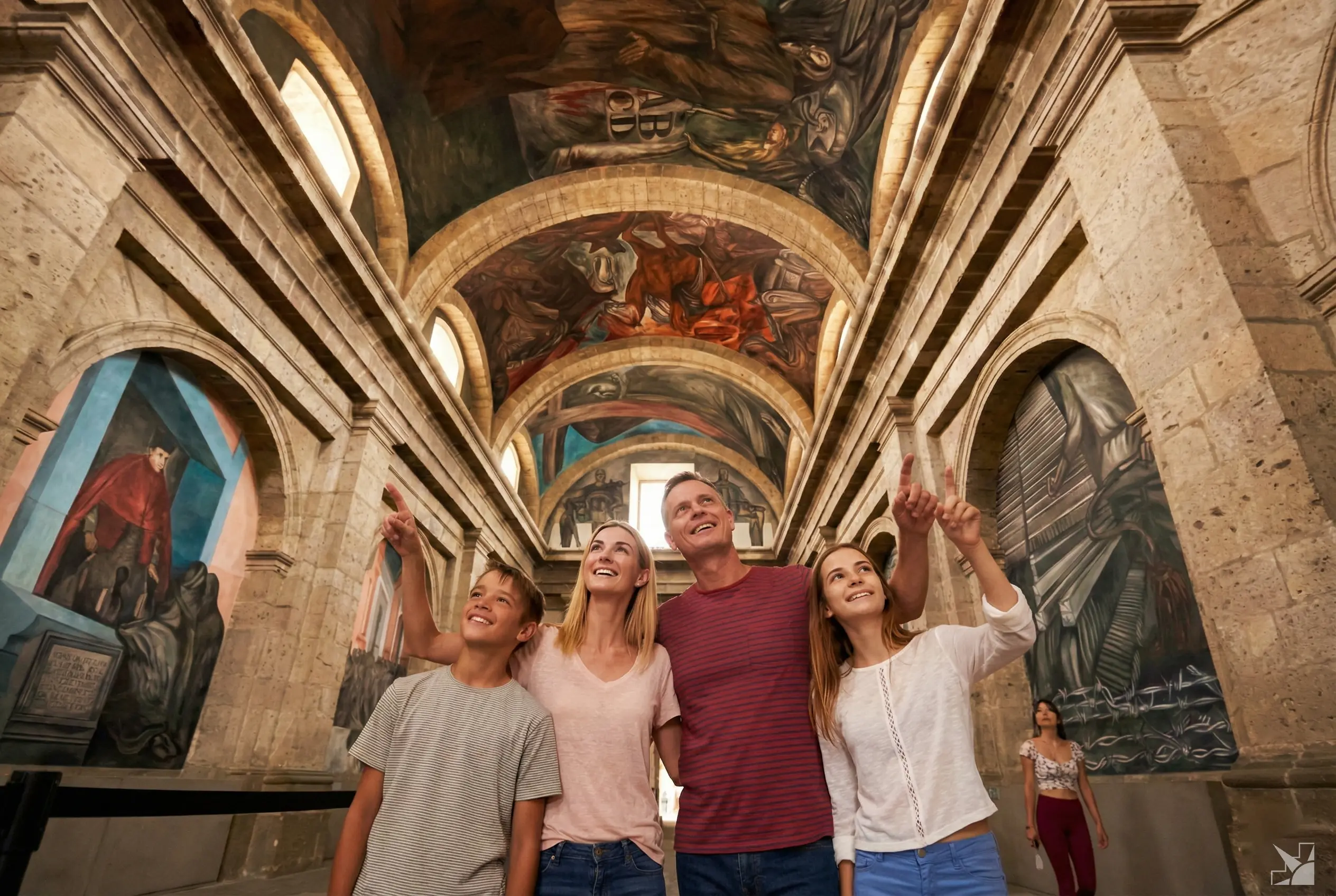
We walk into the Hospicio Cabañas. From the outside, it is a neoclassical masterpiece. Inside, it holds an inferno.
The walls and ceilings are covered in the murals of José Clemente Orozco. His masterpiece, "The Man of Fire," floats in the dome 27 meters above your head. It is widely considered the most important mural in the Americas. It is political, violent, and stunningly beautiful—a reminder that Mexican luxury is deeply intellectual.
More Than a Cowboy
"A Cowboy works. A Charro performs. It is the only sport in the world where style is scored higher than speed."
The Art of Charrería
Just outside the city, we witness Mexico's national sport: La Charrería. This is UNESCO Intangible Cultural Heritage.
We arrange a private viewing at a historic canvas. You will see the Charros (horsemen) dressed in intricate suits with silver buttons, performing feats of impossible balance. It is a display of elegance and control that dates back to the Spanish conquest. It is not a rodeo; it is a ritual of honor.
As the sun sets over the colonial architecture of Tlaquepaque, the sound changes. The acoustic guitars fade, and the ocean breeze begins to pull us west.
(End of Part II)
The Heritage Series • Vol. 3
The Green Flash
Where the Sierra Madre mountains crash into the sea.
The road ends here. We have tasted the fire of the volcano in Tequila and heard the thunder of hooves in Guadalajara. Now, the landscape shifts one last time.
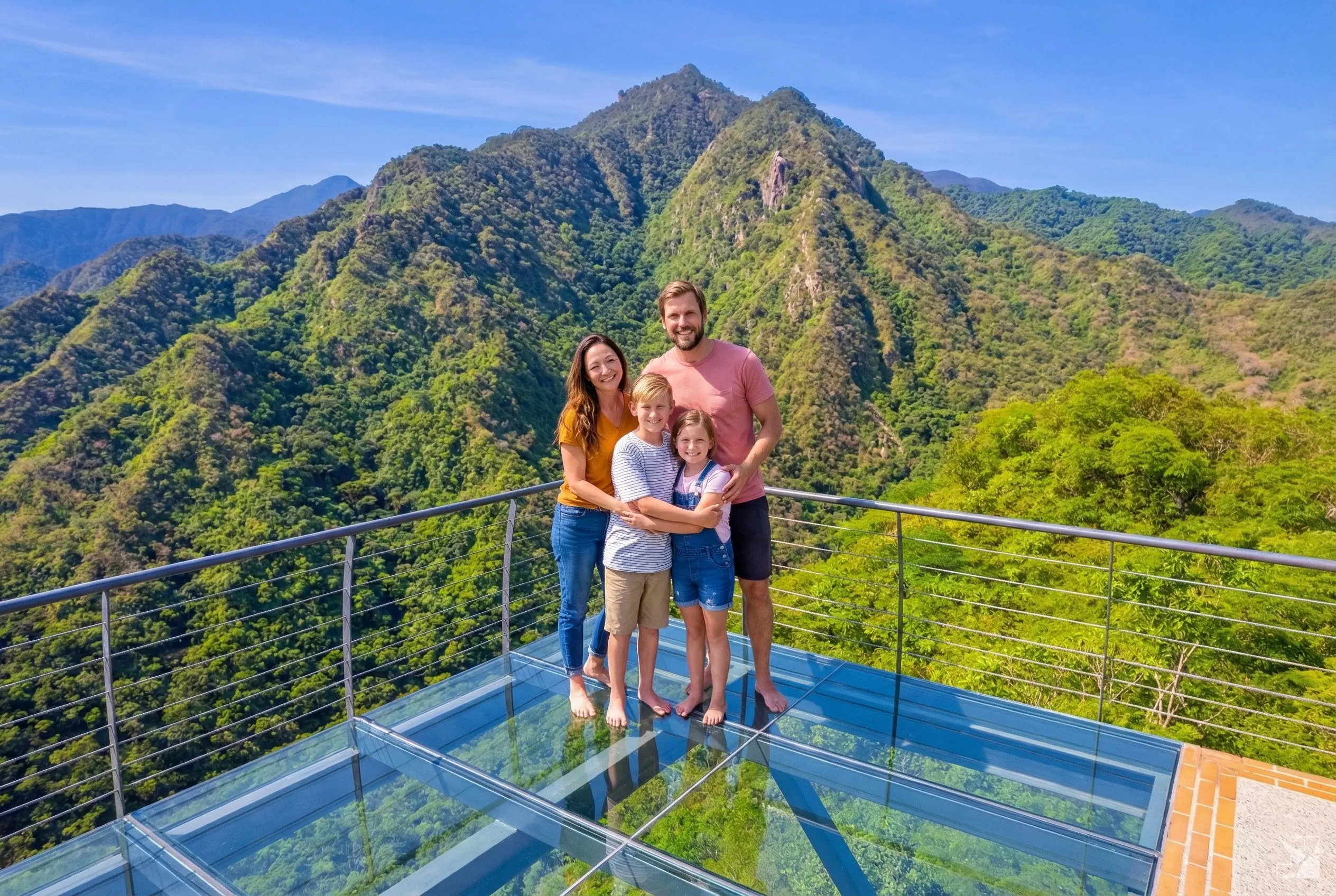
The dry red earth gives way to emerald green jungle. We wind down the mountains until the horizon explodes into blue. This is not the turquoise Caribbean; this is the Pacific. It is deeper, darker, and wilder.
The Coast of Kings
We arrive in Puerto Vallarta. But forget the cruise ships. We are exploring the "Old Town" (Zona Romántica) and the hidden coves of Riviera Nayarit.
In the 1960s, this was a sleepy fishing village until Elizabeth Taylor and Richard Burton brought Hollywood glamour to these hills. Today, it remains the most sophisticated beach destination in Mexico. The cobblestone streets meet the sand, and the architecture is strictly colonial—white stucco and terracotta tiles. No concrete towers here.
The Final Phenomenon
"Locals say if you don't blink at the exact moment the sun hits the water, you will see a flash of emerald green light. It is nature's final curtain call."
The Circle Closes
We end our journey on a private catamaran, watching the sun dip below the Banderas Bay. You have traveled the Sun Road. You have gone from the red earth of the agave to the gold of the colonial cities, and finally, to the blue of the Pacific.
Mexico is not just a destination; it is a texture. And you have just felt it all.
Walk The Sun Road
From the Tequila Volcano to the Pacific Sunset.
Experience the complete 6-Day Luxury Circuit.
Private Departures Daily • Year-Round Availability