While the turquoise waters of the Riviera Maya remain beautiful, a distinct shift is happening in luxury travel. Experienced U.S. travelers—fatigued by crowds, sargassum seaweed, and soaring prices in Tulum—are trading the beach for the sophisticated calm of Mérida.
Known as "La Ciudad Blanca," Mérida offers a blend of "Quiet Luxury", deep history, and culinary excellence that resorts simply cannot match. It is a city where culture isn't a show performed for tourists, but a living, breathing reality. This guide reveals why the Yucatecan capital is the ultimate upgrade for your next Mexican vacation, offering practical tips for a trip defined by privacy, authenticity, and comfort.
1. The Great Migration: Why the "Smart Money" is Leaving the Beach
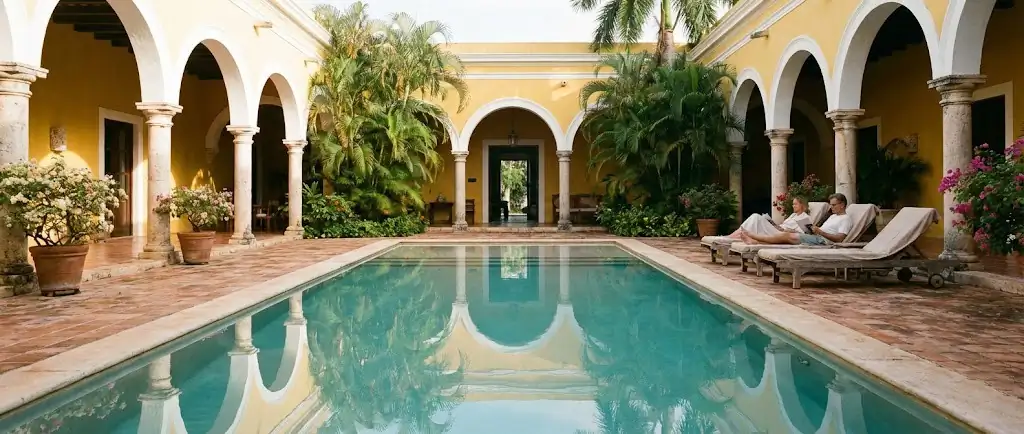
| The shift from "All-Inclusive" to "All-Immersive" |
For decades, the standard U.S. luxury vacation in Mexico followed a predictable script: a direct flight to Cancun, a private transfer to a gated resort in Riviera Maya or Tulum, and a week spent within the confines of a "tourist bubble." While undeniably relaxing, this model is showing cracks. Overcrowding, the persistent sargassum seaweed crisis, inflating prices for mediocre service, and a lack of genuine cultural connection have led seasoned travelers to seek alternatives. Enter Mérida. The shift isn't just geographical; it's psychological. The discerning traveler is no longer satisfied with a sanitized version of Mexico. They want the real Mexico—but without sacrificing comfort, safety, or elegance. Mérida, the colonial capital of Yucatán, has emerged as the perfect answer. It offers what we call "Quiet Luxury": the luxury of space, the luxury of silence, and the luxury of deep, meaningful history that hasn't been repackaged for mass consumption. This isn't about rejecting the beach entirely (it's only 40 minutes away), but about changing the base of operations. Instead of a generic hotel room, you stay in a restored 18th-century mansion. Instead of a buffet, you dine in chef-driven restaurants that are winning international awards. Instead of partying with thousands, you enjoy a private symphony in a leafy plaza. This guide is your blueprint for making that switch. |
2. Safety Audit: Deconstructing the "Safest City" Claim
| Why you can walk freely here (Data & Reality) |
One of the most common questions U.S. travelers ask is, "Is it safe outside the resort?" In Mérida, the question is almost irrelevant because the entire city functions with a level of security comparable to—or often better than—major U.S. or European cities. But why? It’s not just about police presence (though that is visible and professional); it’s about the social fabric of the Yucatecan people. The "Social Shield": In Yucatán, neighbors know each other. There is a profound culture of "vigilance through community." If you leave a camera on a park bench, it is likely someone will run after you to return it, or it will be sitting there when you come back. This isn't marketing hyperbole; it is the lived reality of the "Meridanos."
For the luxury traveler, this safety translates to freedom. You are not trapped in your hotel. You can explore a local cantina, visit a night market, or walk back from dinner without looking over your shoulder. That feeling of liberation is the ultimate luxury amenity. |
3. The Neighborhood Guide: Where to Anchor Your Stay
| Choosing your vibe: From Colonial Grandeur to Bohemian Chic |
Mérida is a city of distinct barrios (neighborhoods), each with its own personality, architecture, and rhythm. Choosing where to stay is crucial to your experience. Unlike a resort strip where every hotel faces the same ocean, here your location dictates your daily interactions. A. Paseo de Montejo: The "Champs-Élysées" ExperienceIf you appreciate wide avenues, tree-lined sidewalks, and European-style grandeur, this is your zone. Built during the "Green Gold" (henequen) boom of the late 19th century, this avenue is lined with Beaux-Arts mansions that rival those in Paris or Havana.
B. Santa Lucía & Santa Ana: The Pulse of the CityThese two neighborhoods, centered around their respective parks and churches, are the beating heart of Mérida’s social scene. If you want to step out of your door and be in the middle of the action, this is it.
C. Santiago: The Authentic "Barrio"For a glimpse into the daily life of Meridanos, Santiago offers a more residential, grounded experience while still being luxurious. It’s famous for its market and its weekly dance events.
|
4. Architecture as Art: The Hacienda & Casona Phenomenon
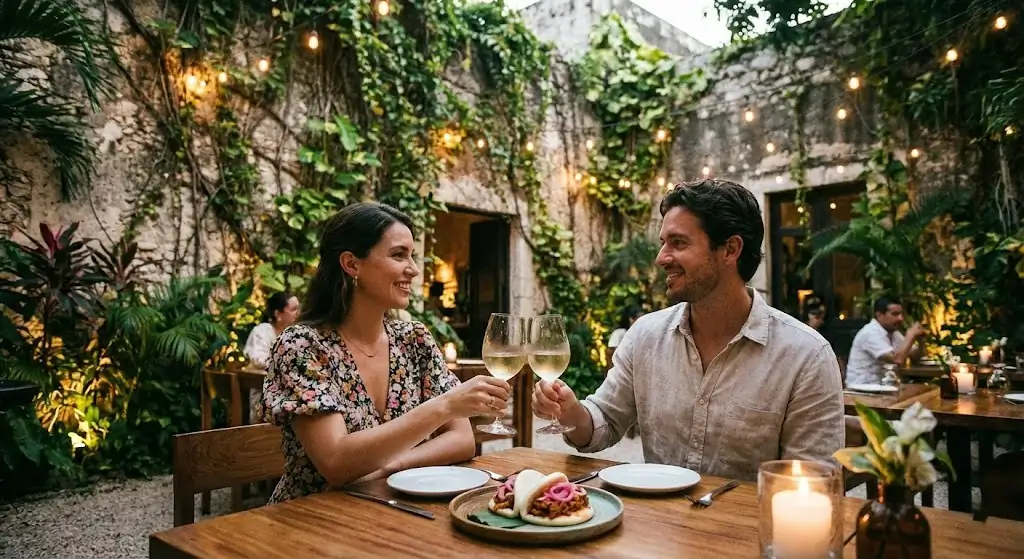
| Why a "Room" is not enough in Mérida |
In most destinations, the hotel is just a place to sleep. In Mérida, the accommodation is often the destination itself. The restoration movement in Yucatán has saved hundreds of colonial buildings from ruin, transforming them into some of the world's most unique luxury properties. The Casona Structure: Most luxury stays in the city are "Casonas." From the street, you see a modest pastel facade and a heavy wooden door. Step inside, and the world transforms. You enter a "zaguan" (foyer) that leads to a central courtyard, often with a fountain or pool, surrounded by arches. This design is ancient climate control—keeping the air cool and circulating. The Hacienda Experience: Just outside the city limits lie the Haciendas. These were once the engines of the global rope industry (sisal/henequen). Today, they are ultra-luxury resorts (like Chablé, Temozón, or San Jose) that define "Quiet Luxury."
This architectural richness adds a layer of depth to your trip. You aren't just looking at history; you are sleeping in it, bathing in it, and living it. |
5. The Culinary Landscape: Beyond Tacos (Part 1: Breakfast & Markets)
| The Morning Rituals of Yucatán |
To understand Mérida, you must understand its palate. Yucatecan cuisine is not Mexican cuisine in the standard sense; it is a distinct fusion of Mayan ingredients, Spanish techniques, Caribbean spices, and Lebanese influences. The journey begins at sunrise. The Market Breakfast: A luxury trip doesn't always mean white tablecloths. Sometimes, it means the best "Huevos Motuleños" of your life on a plastic stool in the Mercado Santiago.
Coffee Culture: Mérida has developed a sophisticated coffee scene. In neighborhoods like Santa Ana, you will find roasteries sourcing beans from Chiapas and Veracruz, served in restored courtyards that invite you to linger for hours with a book. |
9. Logistics of Luxury: Getting Here & Getting Around
| The Art of a Seamless Arrival |
The "Anti-Resort" philosophy begins the moment you book your flight. Avoiding the chaos of Cancún International Airport (CUN) is a strategic move for your mental health. The Airport Strategy (MID vs. CUN)Mérida International Airport (MID) is a boutique experience compared to the zoo of Cancún. It is small, efficient, and located just 20 minutes from the city center.
Navigating the City: Chauffeur vs. AppMérida is a walkable city, but the heat can be formidable.
|
10. The Seasonal Calendar: Timing Your Escape
| When to go (and when to avoid) |
Mérida is tropical. Understanding the weather patterns is the difference between a delightful cultural walk and a sweaty ordeal. The Golden Season (November – March)This is the equivalent of "dry season." The humidity drops, the evenings are breezy (sometimes even requiring a light shawl), and the sky is a piercing blue.
The Heat & The Harvest (April – August)May is historically the hottest month. Temperatures can soar. However, this is also when the flamboyant trees bloom in explosive reds and oranges.
The Soul Season (October – November)Hanal Pixán (Food of the Souls): This is the Mayan Day of the Dead. Unlike the parade-style festivities in Mexico City, Hanal Pixán is intimate and spiritual. Altars are set up in the main square, and families prepare "Mucbipollo" (a giant tamale cooked underground). It is a profound time to visit for those seeking deep cultural connection. |
11. Cultural Protocol: The Unwritten Rules of "The White City"
| How to act like a local, not a tourist |
Mérida is conservative and polite. Adapting to local customs will open doors that remain closed to the average tourist.
|
12. The Ultimate "Anti-Resort" Packing Checklist
| What to bring for a luxury city-jungle trip |
Pack for elegance and heat. Leave the polyester at home.
|
Mérida is not just a destination; it is a feeling. It is the warmth of the sun on ochre walls, the scent of bitter orange, and the sound of a city that knows exactly who it is.
Ready to trade the tourist trap for the traveler's treasure?
Contact Ile Tours to design your bespoke Mérida itinerary today.