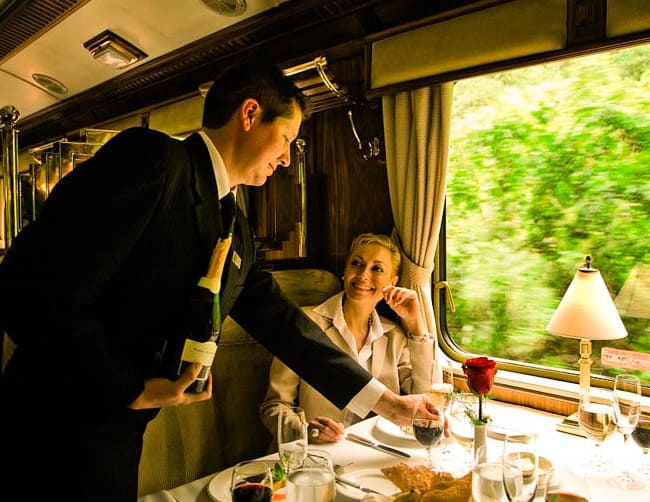
The Isabela II is a 40-guest vessel and the most luxurious yacht cruising the Galapagos Islands. It includes spacious cabins, 3 public decks, bar-salon, ample sun deck, a library with a large selection of reference, conservation, and nature books and videos, an elegant dining room, a reading room, jacuzzi, observation area, boutique, shop, and game room. One GP/doctor is always on board. Your three multilingual naturalist guides will soon become the highlight of your voyage as they delight you with superb on-deck natural history explanations, eye-catching lectures and multi-media presentations. Together with the Captain they will plan the next day's activities they will be escorting you on thoughout the islands. Be sure to look up and enjoy the nightly light show in the sky. Stargazing is an amazing nocturnal activity since the nearly cloudless, light-pollution free, pitch-black skies give you unprecedented views of the brilliant stars and constellations. The trained chefs daily prepare superb selections of a-la-carte meals while the warm staff attends to your every need. Tuesday - Baltra Island and North Seymour Island.
After lunch on your first day out you will disembark on dry landing for a walk along the coast and the interior of the island. This will be your first chance to observe the local bird colonies of blue-footed boobies, frigate birds, swallow tailed gulls and also sea lions and marine iguanas. A shorter walk is also available. At night get better acquainted with the captain as he welcomes you with a cocktail. Enjoy a fine dinner before your naturalist guides brief you on the next day's activities.
Wednesday - Gardner Bay (Hood Island) , Punta Suárez (Hood Island) - Day 12
Gardner Bay (Hood Island)
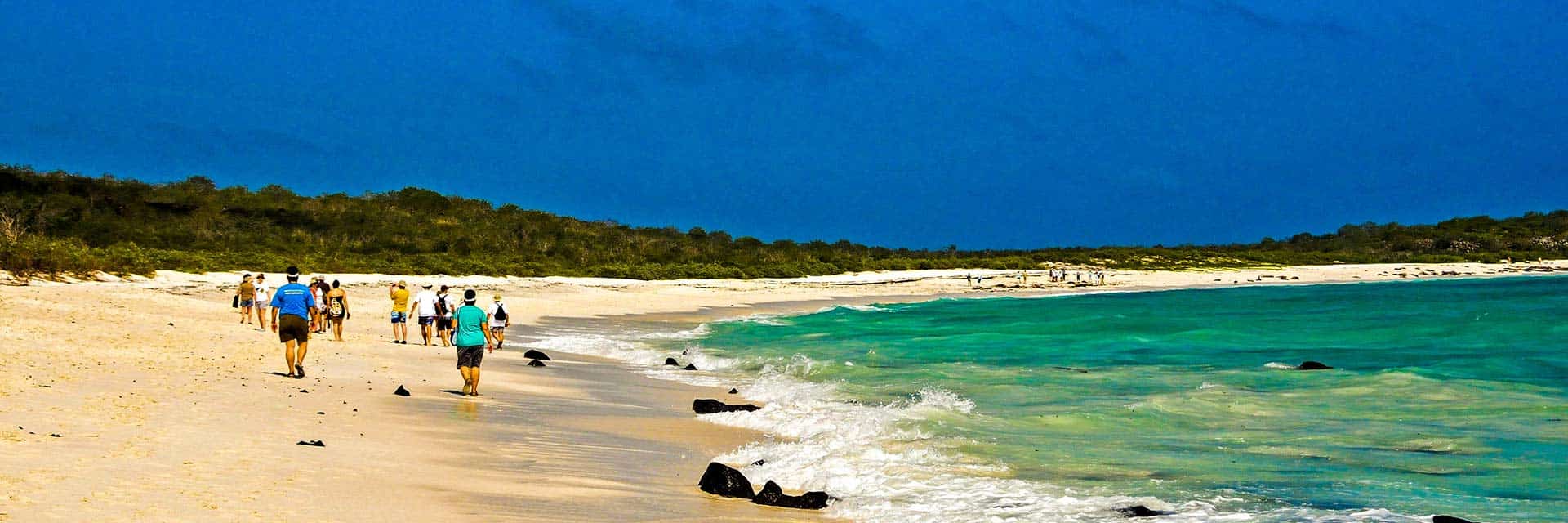
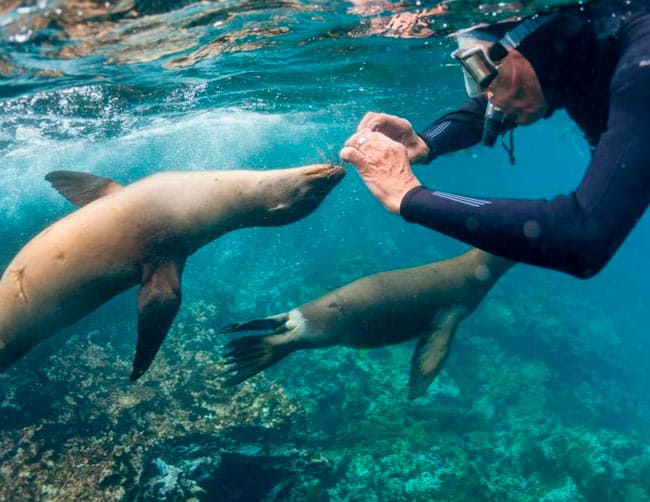
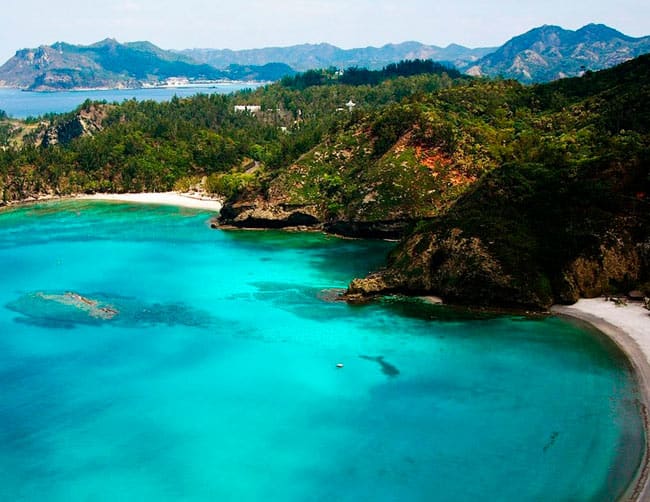
After breakfast disembark to a wet landing to white coral beaches where you can take a short walk and watch the sea lions, mockingbirds, finches or enjoy the beach. There is wonderful snorkeling in this area (snorkeling equipment is available for guests at no extra cost) or ride the glass-bottom boat to get a fish-eye of the marine life.
Punta Suárez (Hood Island)
After lunch disembark to a dry landing for an exciting walk on lava terrain and visit the island's unique sea bird colonies, including the Waved Albatrosses (May - December). Here the marine iguanas have a particularly striking red color. In the northeast of the island you will delighted by the site known as "The Blowhole' named for enormous geysers created by wave energy concentrated up through cracks in the rocks. A shorter walk is also available. Back aboard the Isabela II enjoy dinner and your naturalist's briefing on next day's events and activities and of course more fantastic stargazing on deck of the Isabela II.
Thursday - Point Cormorant (Floreana Island), Post Office Bay (Floreana Island) - Day 13
Point Cormorant (Floreana Island)
After breakfast disembark at Point Cormorant (wet landing), one of the older islands, for an easy walk to see the flamingos, other birds, ducks, stilts, sandpipers, etc. that inhabit the lagoon. There is also another great snorkeling opportunity at this site. Those who do not snorkel can enjoy a ride on the glass-bottom boat to view the marine life. Floreana is one of the few Galapagos Islands with a reliable fresh water source at the base of Cerro Olympus in the lush southeast highlands. Enjoy lunch back on board the Isabela II.
Post Office Bay (Floreana Island)
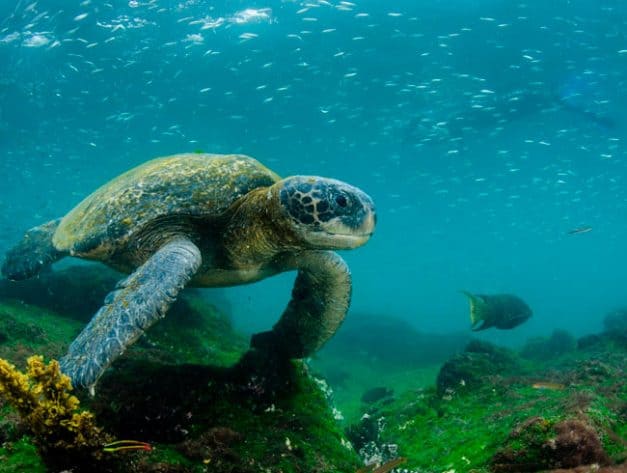
Wet landing at the historical Post Office Bay to learn about the human side of the islands, its early inhabitants and the adventures of pirates and whalers. Then enjoy a panga boat ride will it takes you to nearby islets to observe sea lions, rays and sea turtles, boobies and possibly the Galapagos penguin. Afterwards back on board the Isabela II you can discuss the day's events with your naturalist guides, get briefed on the next days's events, enjoy a great dinner and of course stargazing.
Friday - Santa Cruz (Dragon Hill) - Day 14
After breakfast disembark with a dry landing on Santa Cruz Island and see the peculiar Scalesia Trees. The Scalesia is a member of the daisy family but the only one to grow 50 feet high. You'll also see the deep twin pit craters (volcanic depressions); Los Gemelos. From December to mid-April, weather permitting, visit the giant tortoises in the wild may. Lunch at the Finch Bay Eco Hotel. After lunch you will visit the Charles Darwin Research Station, staffed with international scientists conducting biological research and conservation projects. Here you'll be able to admire the famous giant tortoises involved in the breeding program. Visitors can also admire the prickly-pear cactus forest and many land birds. Then stroll along the main street of Puerto Ayora before embarking on the Isabela II. Naturalist's briefing and dinner, and stargazing before turning in for the night.
Saturday - Darwin Bay, Prince Philip's Steps (Tower Island) - Day 15
Darwin Bay (Tower Island)
Your morning wet landing will precede an easy stroll observing thousands of frigate birds, red footed and masked boobies, gulls, herons, finches and mockingbirds. If you wish you can continue walking over sharp lava and uneven terrain, or just go back to the beach to enjoy swimming and snorkeling at this beautiful natural harbor. Those most adventurous can snorkel along the cliffs. By now you'll be ready for another great lunch on board the Isabell II.
Prince Philip's Steps (Tower Island)
On the east side of Darwin Bay the afternoon starts with a scenic panga ride along the rocky cliff ledges to Prince Phillips Steps. This ride will give you a great vantage point to observe the islands many shore birds. Disembark on dry land at the base of the steep cliffs. The 90 foot climb up the stairs is fairly easy for those with good balance, and a handrail helps make the journey more manageable. At the top of the steps the trail becomes relatively flat and bird life abounds. Once on top the walk levels out and you will reach a lava field past the forest buzzing with petrels looking for crevices to make their home. Back on board the Isabela II enjoy another night of stargazing, naturalist's briefing and a fine dinner.
Sunday - Tagus Cove (Isabela Island) , Punta Espinoza (Fernandina Island) - Day 16
While crossing the equator early risers will enjoy cruising right in front of the famous Volcan Ecuador. Its amphitheater-like shape was created when the eastern half dropped into the ocean. It is the most geologically puzzling formation in the Galapagos.
Tagus Cove (Isabela Island)
On the northwest of Isabela, secluded Tagus Cove was in past centuries a favorite anchor for pirates and whalers. Old graffiti is still found on its walls. The vegetation in the area includes the unusual Palo Santo trees. These white-barked trees are leafless and look dead most of the year. They leaf out and spring back to life in the short wet season, which usually begins in March or April. An uphill hike through palo santo forest takes guests to the back of Darwin Crater, filled with salt water. The view at the end of the trail is worth the climb. Darwin is one of Isabela's six volcanoes, a remarkable contrast to the lower islands to the east of the archipelago. Lunch back on board the Isabela II.
Punta Espinoza (Fernandina Island)
The afternoon brings us to the youngest island, Fernandina. Disembark (dry landing) for a one-mile walk. Punta Espinoza has an amazing combination of barrenness with lots of wildlife. Having no introduced mammals, Fernandina has a very unique environment with the highest density of marine iguanas, sharing their space with sea lions, sally-light foot crabs, hawks, penguins and the flightless cormorant., Naturalist's briefing, dinner and evening stargazing on board the Isabela II.
Monday - Puerto Egas (James Island) - Bartolome Island - Day 17
Puerto Egas (James Island)
Wet landing for a mid-length walk. Most of the landscape is tuff-stone layers and lava flows. This is a great opportunity to see land and marine birds. At low tide, marine iguanas graze upon the algae beds and there is a colony of fur-sea lions. Good snorkeling and swimming from the beach after the walk. Lunch on board.
Bartolomé
After lunch dry land on the beautiful white sand beaches of Bartolomé to see moon-like landscapes and volcanic formations such as lava bombs, spatter, and cinder cones. After hiking to the summit you can enjoy a great view of the surrounding islands, including Pinnacle Rock's eroded tuff cone. On the way to the summit you'll often see colonies of marine iguanas, lava lizards, tiquilla and various cacti. You'll be able to snorkel and see the Galapagos penguin, sea turtles, and white tipped sharks from a safe distance. There will be time for a panga ride around Pinnacle Rock to observe penguins, enjoy the beach (wet landing), snorkeling and swimming from the beach, or a ride on the glass-bottom boat. Farewell departure briefing and cocktail..
Tuesday - Flight - Galapagos - Quito - Day 18
After breakfast you will depart to the port and be taken to the airport for your flight to Guayaquil airport and connecting flight to Quito. Your driver will be waiting for your private ride to the pre-selected luxury hotel and dinner.
Return Home - Day 19
After breakfast your driver will greet you at your hotel for a private transfer to the Quito airport for your international flight home home. This brings your tour and our services to an end.
Price available upon request